

Being a woman in Aghanistan
By Hasina Safi
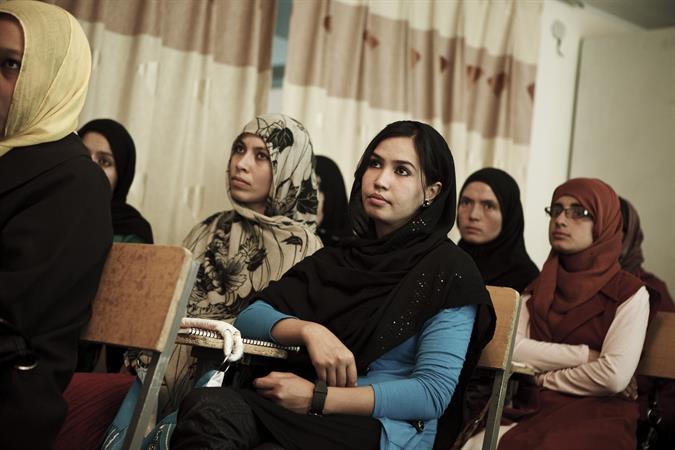
Afghan Women’s Network (AWN) is the largest women’s network in Afghanistan consist of women-led and women-focused organisations and individual women dedicated to ensuring women’s empowerment and equal participation in Afghanistan.
Hasina Safi currently serves as the Executive Director of AWN. She is widely regarded as a leading expert and advocate for women’s rights in Afghanistan. She represents civil society in the steering committee for the Government of Afghanistan’s National Action Plan on UNSCR 1325. She has recently been contributing as an advisor to the High Peace Council.
Here, Hasina blogs about the lives and rights of women in Afghanistan.
Believing in women’s rights
I believe in women’s rights because I am confident about their vital role in the development of the society. I have lived through the great contributions women’s rights have made and all the challenges and constraints they have had. Women’s rights have been observed as a part of a successful system and process starting from home, moving to the community and society. I believe in women’s rights, as they are one of the strong and fundamental pillars of a developed society.
What it’s like to be a woman in Afghanistan?
Being a woman in Afghanistan has many realities and it differs based on family backgrounds and approaches, education and decision-making in the home or outside. There are also many times when women have deeply struggled to identify themselves as agents of change due to the discriminations they have been through.
Despite all this, women have secured the identity of peaceful change agents. However, they still remain victims of patriarchal structures in many parts of society. We must consider the challenges of education, acceptance, conflict and practicalities within the context of Afghanistan.
The women’s movement in Afghanistan
The women’s movement in Afghanistan was started many decades ago and it has had many internal and external ups and down. It has had initial success and has passed some important milestones, but there is still work to be done. Today, we have reached a point where the movement is focussing on coordination, solidarity and mutual respect, which I believe are the first fundamental steps towards sustaining a movement.
Women all over Afghanistan have struggled to define their issues as one message due to differences in their own contexts and experiences. Women struggle to engage with all three generations (pioneers, middle and youth) and the women’s movement had been struggling in various ways to have quick results. Yet today, plans are being formed (across all spheres) in order to bring about long-term and sustainable change. This will come with its challenges, including gaps between generations, but the women’s movement is more united than ever before.
Concerns for Afghan women
The greatest concern for women in Afghanistan is overall security, implementation of the laws into practice and protection of the working women (government and non-government). There needs to be more and more opportunities for women in decision-making positions at different levels of society and working environments within organisations need to be more supportive of women, helping them to build self-esteem and confidence.
The international community can help by placing emphasis on meaningful participation of women in all spheres and by consulting women prior to planning and designing programmes for women. It can also help by giving a specific allocation of their budget for women in all upcoming financial support to Afghanistan and by providing opportunities for women’s rights organisations at all levels (newly established, established and highly established) through the women themselves.
Our network for women
Afghan Women’s Network (AWN) is currently has three focus areas: women’s peace and security; women’s political participation and leadership and women’s social and legal protection. Based on these, we have prioritised international laws and conventions such as the Security Council Resolution 1325 and the Convention of Elimination of Violence against Women (CEDAW).
We have also prioritised the implementation and monitoring of the Afghanistan National Action Plan 1325 along with the localisation of the Elimination of Violence Against Women (EVAW) law. We try to use these approaches of awareness, advocacy, capacity building, and networking with our 130 member organisations and more than 3,000 individual members. For political participation, through our programmes we support women with anything from registering as a voter to running for elections.
The future women in Afghanistan
In the future, I want AWN to be the voice of Afghan women and to facilitate opportunities for women through developed policies and frameworks and access all harder to reach women through their communities and homes. We need to hold these coming years as one of the greatest opportunities to sustain our achievements within the women’s movement and to build a bright future for the generations of women ahead of us. I believe our struggle never ends, so we need to be more cautious and creative with our approaches and strategies in order to be efficient and effective in our communities.


