Powering the feminist revolution
By Sally Akinyi
‘’In no era of history have movements been completely extinguished’’- Srilatha Batliwala
Feminist movements globally have been an anchor in driving action towards creating a gender equal world where young girls, women and people of all genders can enjoy their rights and fully participate in all areas of society. But the journey towards liberation has not been easy! More so in building strong feminist movements centering the voices of all women from all walks of life.
Historically, we have witnessed how resourcing and organising are critical in fueling movements. From the Aba Women’s riot in Nigeria (an organising of its kind) against colonialism, to what the women’s suffrage sparked worldwide, to the women’s marches of today, it is evidently clear that the reckoning power of strong movements cannot be silenced. This has essentially re-imagined ‘movement strengthening’ and what it means to champion women’s rights.
Unite through movement strengthening
What is movement strengthening and how does it look like in an ideal feminist world? Movement strengthening harnesses the power of self-agency to collectively push for structural change in attitudes, policies, systems and beliefs in enabling sustainable change.
Building solid movements is not new in social justice. In fact, this is how communities have jointly mobilised to push for causes they firmly believe in. However, in many parts of the world movement building is slowly becoming constrained within rigid organisational systems and structures thus losing its agency and autonomy as a force.
On 20 June 2023, Womankind Worldwide together with our sisterhood partners, allies and friends convened to explore the current context around sustainable feminist movements and how to strengthen them. Additionally, the gathering discussed what building solidarity, allyship, centering wellness and self-care, flexible funding and collective action mean, particularly at a time when the civic space is shrinking and even closing in many parts of the world.
The webinar drew discussions around these current realities through Hope Chigudu’s paper: ‘’Nurturing the beating heart of feminist movement- lessons drawn from Womankind’s Movement Strengthening Fund’’ presenting a silver-lining to staying committed to the power of organising especially in these unprecedented times.
Opening the event, Srilatha Batliwala- a feminist and longtime women’s rights advocate set the appetite through thought provoking questions to bust myths held within feminist movements, their sense of identity and power.
‘’Where is this movement we are all seeking to belong to? ‘’
‘’From whom do we seek recognition and inclusion?’’
‘’Where do we need to shift this power?’’
‘’What forms of power need to be shifted?’’
Safe spaces, centering well-being and collective action
Four partners shared their experiences and lessons learnt from Womankind’s Movement Strengthening Fund (MSF) and what they’re keen on accelerating as best practices in their different contexts.
Agness Chindimba, Executive Director of Deaf Women Included in Zimbabwe highlighted how the fund renewed their approach in organising and creating a safe space where women with disabilities can freely share their experiences without shame or fear. ‘’We also embarked on a journey of self-discovery as a collective in the quest to identify what we need to flourish,’’ she added.
Patience Mandishona, Director of Pakasipiti– an organisation that advocates for the rights of LBTQI+ women in Zimbabwe affirmed the importance of wellbeing and self-care, particularly for activists on the frontline. ‘’Our approach was grounded in several pillars: collective care, self-care, solidarity and the power of collective synergies. Your typical traditional funding does not consider healing as fundamental in movement building but the MSF accorded us the opportunity of actively championing this,’’ she said.
Jackie Pinyoloya, Programme Assistant at the Strategic Initiative for Women in the Horn of Africa (SIHA) in Uganda narrated how collective action was quite significant in solidifying the grassroots movement. ‘’Through the MSF Fund, we leveraged not only on collective action to demystify negative perceptions around feminism but also opening the space to include more diverse voices.’’ she explained.
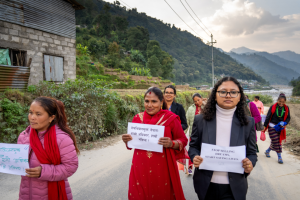
Pema Lama, Programme Coordinator at the National Indigenous Women’s Federation (NIWF) in Nepal shared how the flexible funding from the MSF allowed them to set and drive their own agenda as a movement, especially in centering the diverse voices of indigenous women across the country. ‘’The nature of our work makes it financially difficult to undertake movement building activities, but MSF’s flexible funding allowed us to navigate this.’’ she said.
Pushing on amidst challenges
Any strong feminist movement is not immune to challenges. And this convening offered a space where partners could collectively share unique challenges they encounter in their movement strengthening work.
Activists and civil society groups in Zimbabwe for example continue to witness a new wave of homophobia sponsored by fundamentalist groups and the government. Through the new Private Voluntary Organisations (PVO) Bill, civil society organisations will be highly scrutinised by the government limiting the right to freedom of association and restricting civic space making it difficult to register LGBTQI+ organisations.
Nepal’s geographical terrain has presented a barrier in organising especially in ensuring inclusion and equal representation of indigenous women across the country.
Deeply entrenched patriarchy in Uganda has been a cultural barrier for women’s full participation in society with feminism looked upon as a vice that is breaking families. And for women with disability in Zimbabwe, they continue to challenge a litany of myths and conceptions preventing their full participation in movement building.
Remaining hopeful
While these challenges may seem like a deterrent towards a feminist future, they’ve only fueled a firm commitment towards remaining true to this vision and making it possible to experience a gender equal world.
Womankind’s Movement Strengthening Fund is part of our ongoing commitment to this. As we draw to the end of the second cycle of the fund, we see the need, value and impact of flexible funding for movements.
Get in touch to find out how you can support the Movement Strengthening Fund. Email Disha Sughand, Director of Fundraising & Marketing – Disha@womankind.org.uk or Laura Brown, Programme Manager, Movement and Network Strengthening– laurab@womankind.org.uk