
“Being a feminist is about understanding that we hold up not just the sky, but that we are the sky.”
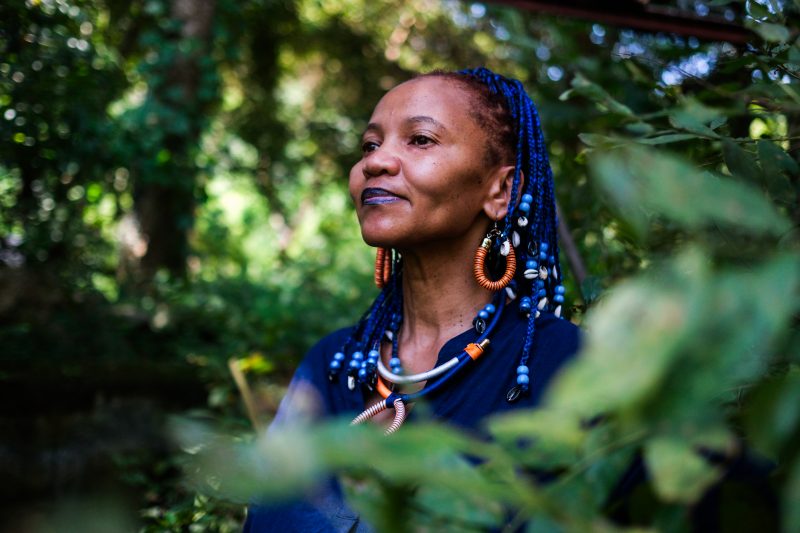
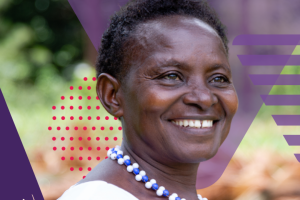
Liepollo Lebohang Pheko is a South African political economist and feminist with experience spanning over 25 years in policy, business and social enterprise within private, public and development sectors across the world. A mountain is where she feels most at peace.
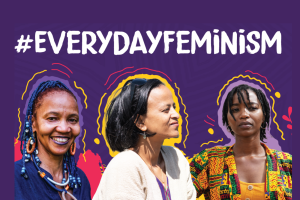
Her other happy place is her city: Johannesburg, which for Liepollo is ‘undoubtedly the greatest city in the world’ that she calls the city of life. We hear from Liepollo on why we need #EverydayFeminism.
My experience with activism 
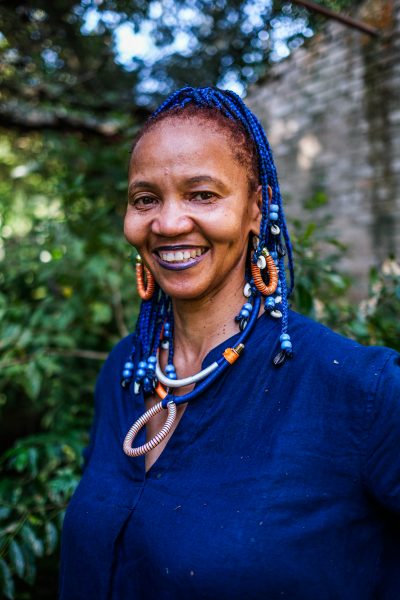
Activism found me. I went into it step by step until I realised that I was knee deep and shoulder deep in the, in the waters of activism. I started as a trade justice activist and I’ve encountered a myriad of experiences across the world post the 1990s generation and the Beijing Declaration in 1995. Growing up as a migrant in the diaspora always nudged in me a sense of othering and trying to find my identity while being part of the struggle for liberation. All of these things for me have led me to the understanding that feminism is the only anchor that brings all of these struggles together.
My experience with feminism
Now, feminism is radical. It is an understanding that it’s not just about women, it’s about a systemic change. Being a feminist is about understanding that we hold up not just the sky, but that we are the sky.
It’s about power. It’s anti-colonial, anti-imperial, anti-racist and anti-Zionist. It’s also a liberatory framework. I encompass all of these by choice, but also because of the circumstances I grew up with. My parents were anti-apartheid liberation fighters. I was born into intersectional struggles and I also understand othering and what that means to be in spaces where you feel that you don’t belong.
Some people think that there’s something anti-Christian about being a feminist. When we were growing up, there was the idea that feminism and lesbianism were the same thing, though there’s nothing wrong with either of those. The other thing is the notion that you’re a man hater and a problematic woman. It’s incredible how these sorts of constructs and urban myths, urban legends have infected people’s ideation and attitudes towards women who call themselves feminists.
It took me a long time to arrive at being a feminist. For many people in our political geography, feminism was for privileged white women and it was associated with a particular kind of womanhood and whiteness. People for a long time found it difficult to call themselves feminists. I grew up calling myself a womanist because that had more resonance to me, because it was about black women.
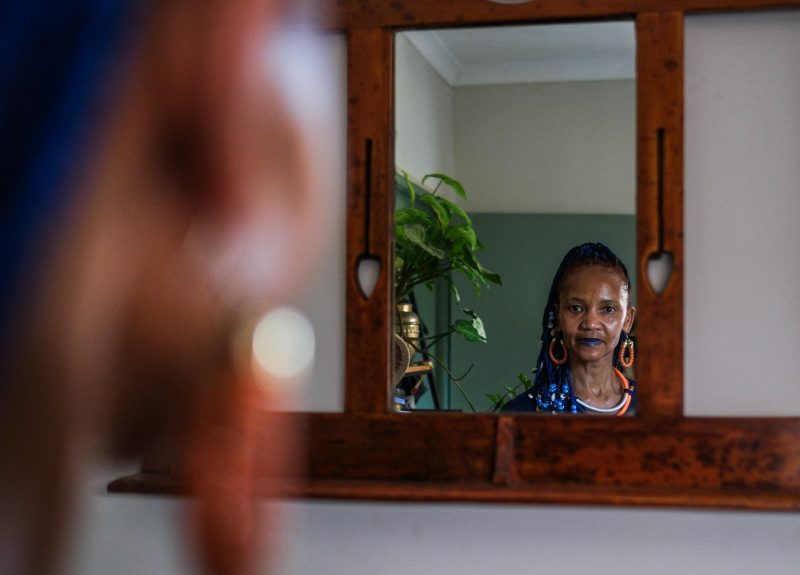
Some of the work I’ve been doing in the last couple of years is around feminist wellbeing economics, on how we name the work that women do in particular. The idea that care work is work is real work is one that I’m extremely committed to.
There are many of us who have made it our business to work with rural communities, particularly those who work with inner city movements for landless people, unhoused people and sex workers. Those are the sorts of marginalised voices that we don’t necessarily like to explicate because they make society very uncomfortable and remind the state of how much they are failing.
It’s important to always name the sort of voices who aren’t able to speak anymore. Like Constance Mogale, who’s my very good friend who recently passed away. She was a landless people’s activist for about 25 years. She died in great pain, very impoverished and unrecognised. It’s the business of people like myself to say her name.
What #EverydayFeminsim means to me
Feminism isn’t an event, it’s a way of being. It’s a way of thinking. It’s an ethic. It’s the way we are, it’s the way we are towards each other and the way we are towards ourselves.
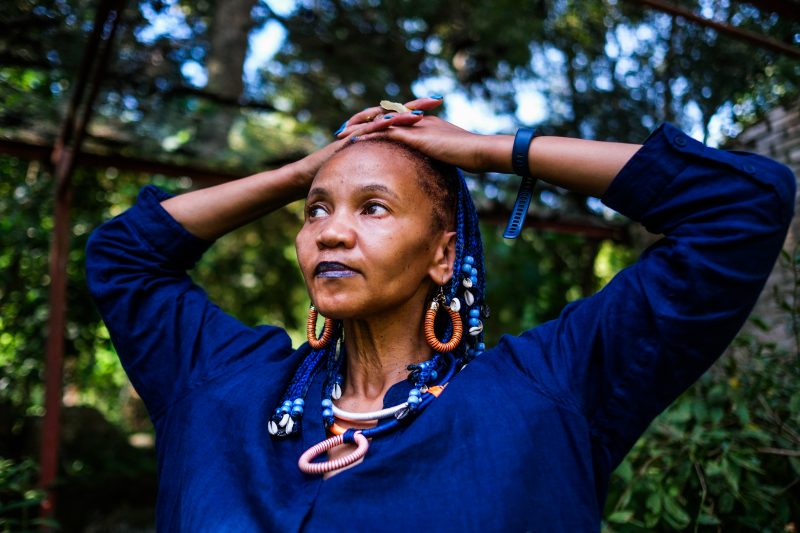
It includes showing up with kindness and with courage. I think it also includes being able to give loving critique and radical love for each other despite disagreements. Because the struggle is long. It’s difficult. It’s sometimes treacherous and it’s sometimes very, very strenuous.
Furthermore, it’s the way we take up space, allow and enable each other each other to have a voice. Everyday feminism is about finding ways to nourish ourselves daily and to nourish each other daily whilst dismantling the constructs, the isms, the structural and the systemic isms. And to have lots of fun every day.We’re not supposed to be all grim and wretched and feminist, miserably. Feminism is joy.
Follow Liepollo @Liepollo9 @tradewarriors
< View all stories