

‘G’ for gender inequality: the Alphabet of Illiteracy
By Sally Airey
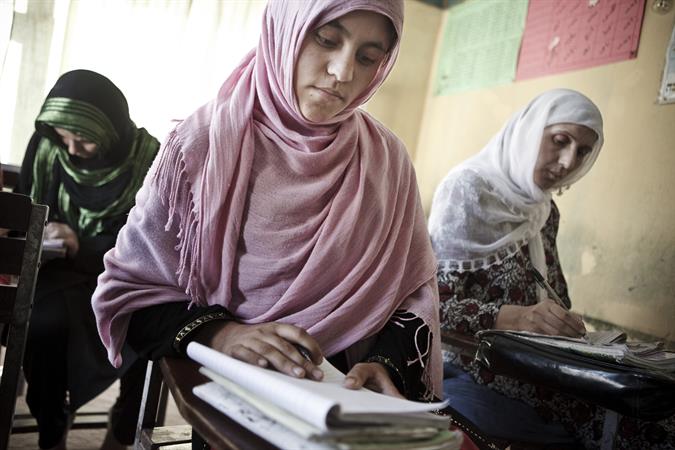
This week, Womankind Worldwide helped to launch Project Literacy – a campaign to end illiteracy on a global scale. We are representing ‘G’ for gender equality, because out of the 757 million adults who can’t read or write, two thirds of them are women.
We joined ambassador Lily Cole, David Gandy and Stephen Twigg MP at the Houses of Parliament to introduce the alphabet and make a stand about illiteracy, which can be the root-cause of the issues women face globally.
We support our partners to help women access the skills and resources they need to gain economic empowerment, to have a voice in their communities and to transform their lives for the better. In Afghanistan, we support the Afghan Women’s Resource Centre (AWRC) to provide literacy classes for women so they can escape domestic violence, participate in local council meetings and become leaders in their community.
Surya’s story of hope
AWRC supports women like Surya, from the Chilsitoon community. When Surya was young, girls could not go to school and she was prevented from attending by her family. Her life consisted of staying at home and taking care of her 8 children.
Surya studied at AWRC on their basic education course, attending classes at the centre for one year. Before she came to the centre, she says she didn’t know anything – she couldn’t read the shop signs and if she needed medicines, she didn’t know where to go to get them. Thanks to AWRC, she can now buy her medicine and her family is very happy she is learning to read.
At the centre, she has not only become literate, but she has also learned about health issues (such as Hepatitis B and blood pressure) and her rights as a woman. What’s more, now that she has learned to read, she is teaching her four year old daughter to read the alphabet and to count.
Women often don’t know their rights in Afghanistan
Surya lived for 7 years in Iran as a refugee and, when she returned to Afghanistan, she was surprised by how her life changed. In Afghanistan, there is little social mobility and it is more difficult for women to leave their houses; women often know very little about their rights.
AWRC also offers Surya social support and, when attending classes, she is able to meet other women and to share their similar problems and issues. After attending the ‘Women in Islam’ training provided by AWRC, she encouraged other women from her community to come and learn their rights.
‘We didn’t know we had the right to come out of home, or that we have money, divorce and inheritance entitlements,’ said Surya.
One of the most important things for Surya was Womankind’s long-term support of the centre to enable other girls and women to attend in the future – ‘Thank you,’ she said.
You can find out more about our work in Afghanistan here.
If you’re interested in finding out more about Project Literacy, watch this short film.


