

Zero tolerance to FGM: FIDA Kenya involves the whole community
By Estelle Bloom
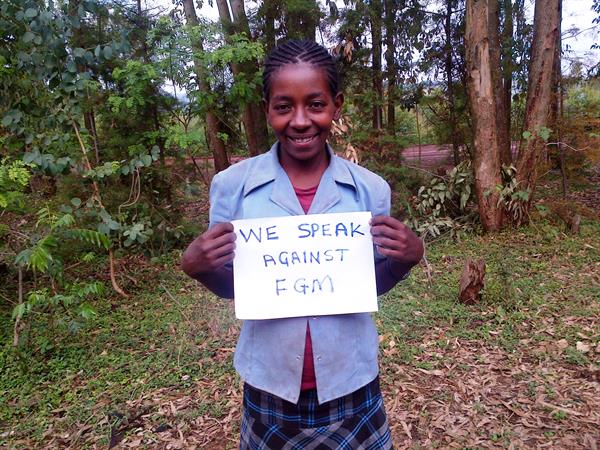
International Day of Zero Tolerance for Female Genital Mutilation on 6 February aims to wipe out the scourge of FGM by raising awareness of its terrible consequences and encouraging action to end it.
The new research published this week by UNICEF shows that over 200 million girls and women worldwide are thought to have undergone FGM. Not only is removing or injuring healthy parts of female genitalia a violation of women and girls’ rights, it’s incredibly dangerous. Often carried out in unsanitary conditions, FGM can lead to lifelong pain, severe bleeding, infections, infertility and even death.
In Africa alone, an estimated 3 million girls each year are at risk of FGM. Despite being outlawed in many African countries, the practice resolutely continues – if not openly, behind closed doors. Hidden ceremonies pose particular problems as they are so hard to detect.
Given this context, it’s understandable why so many believe that wiping out such a deeply entrenched tradition is nigh on impossible.
The power of partnership
Thankfully, real hope exists with relentless work happening at community level to tackle FGM. Our partner, FIDA Kenya, is achieving amazing results by challenging – and changing – the deep-rooted attitudes that fuel FGM.
Despite being outlawed in 2001, FGM is still a big problem in Kenya, particularly in remote parts of the country. FIDA Kenya has adopted a multi-pronged approach, working at community and country level to encourage everyone to join in the fight against it. All play their part, including law enforcers, government agencies, community leaders and chiefs, churchgoers, schools, and of course the women and girls at risk.
Initiatives include training law enforcers and setting up gender units, where survivors of FGM and violence can seek help. Another is empowering girls who have escaped the mutilation to be ‘community level champions’, supporting other girls to defend their rights.
Meanwhile the wider community is encouraged to act as FGM ‘whistleblowers’, a task which many have enthusiastically taken up. Indeed, working with those who have historically stood in the way of progress is a key aspect of the programme. FIDA Kenya is working with FGM practitioners to educate them on FGM’s effects and empower them to find alternative work. Men and community elders are also being involved, educated and transformed into powerful agents of change.
Many inspiring role models have emerged as a result. Harrison Ole Meigun, an community leader, has openly denounced FGM, saying: “Practices like Female Genital Mutilation need to stop, and as a role model I have married an uncircumcised woman.”
Still “a journey to go”
FIDA Kenya is sowing the seeds of lasting change and coordinated efforts have so far led to a 6% reduction in FGM. But the work doesn’t end there. Boosted by matched funding from the UK government, many other activities are planned for zero tolerance day and beyond, including community radio broadcasts on FGM and early marriage, women’s rights training and social media campaigns.
FIDA Kenya’s executive director, Christine Ochieng, sees the key to success as building strong community alliances and refusing to give in: “We will not lose our vision and mission, because for us we say we have come a long way, but we still have a journey to go.”
Find out more about our work in Kenya here.


