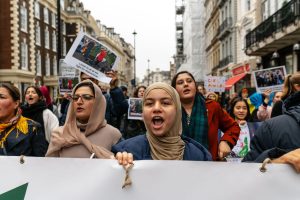

“We continue to hope for dignity, peace and equal opportunities”
When women were barred from leading governmental and non-governmental organisations after the Taliban takeover, Asma* stepped back from their role leading Organisation X*, which provides services to people with disabilities in Afghanistan. They now focus on women’s rights work and capacity building, though they remain closely connected to Organisation X’s work.
Few women work in the disability sector, but Organisation X’s office includes both men and women, and because the organisation works in healthcare, its services are widely accepted by the community. “We have witnessed a growing need for support among people with disabilities, while opportunities for women to participate in community life and employment have significantly declined. Despite these challenges, our organisation remains one of the strongest in this field,” they say.
Five years on since the Taliban takeover
Asma describes a country unrecognisable from the one before 2021. Then, women could study, travel, attend conferences and apply for scholarships, even if conditions were far from perfect. Today, educational institutions and employment are largely closed to women, a shift that has reshaped Afghan society and everyday life.
“In the past, many households relied on two incomes, with both the husband and wife working to support their children, provide better education, and improve their quality of life. Now, families that once had several working members often have only one or two, largely because women are no longer allowed to work,” they say.
For Asma, the term gender apartheid reflects their lived experience. “Women have been excluded from education, employment, and many aspects of public life. There is an urgent need for solidarity and a unified international response because half of Afghanistan’s population is being denied its fundamental rights. Illiteracy is itself a form of oppression, and many women feel as though they are merely surviving rather than truly living,” they add.
Asma’s activism did not begin five years ago. “I lived through the Taliban’s first period of rule too, working in health facilities while wearing the burqa.
A call to action to the international community
Funding has become increasingly limited over the past five years, Asma says, even as international organisations continue to voice concern about the situation of Afghan women. That concern has not translated into sustained financial support, making it harder for organisations like Organisation X to maintain services and reach those they exist to support.
“The international community is well aware that half of Afghan society is being denied access to education and employment. The United Nations and donor countries should make girls’ education and women’s right to work a condition for providing assistance. If these conditions were attached to international aid, it could encourage meaningful change because Afghanistan’s economy depends heavily on such support,” they say.
“Many international actors speak about the suffering of Afghan women, but we have seen very little practical action. We need sustained support, not only statements of concern,” they add. Asma wants countries with influence to use every available opportunity to press the authorities to allow women and girls to work and to continue their education, at least through the twelfth grade. “Girls who leave school after grade six are still children and remain at significant risk of poverty and early marriage.”
Women inside Afghanistan have very limited opportunities to raise their voices publicly, Asma says, and often rely instead on written messages or confidential conversations, since speaking out can carry serious risk. “Although the international community regularly condemns these restrictions, these statements alone have not resulted in meaningful change,” they say, calling instead for practical support and sustained advocacy that helps women regain access to education, employment and their basic rights. Confidential formats, such as the telephone interviews Womankind has organised, they say, offer women safer ways to share their experiences than public international forums.
“Many people survive by collecting rubbish and gathering firewood for the winter. One working family member cannot feed an entire household under these conditions. We have endured decades of conflict and hardship, yet we continue to hope for dignity, peace, and equal opportunities,” they say.
Never lose hope
What sustains Asma is the resilience of Afghan women and girls, and the allies around the world who continue to raise their voices for Afghanistan. They now work only three days a week, spending the rest of their time at home, but follows the news daily, hoping for signs of progress.
“It is heartbreaking that women are no longer allowed to study medicine or nursing. Many experienced female doctors have left the country, and very few new female health professionals are being trained. As a result, many Afghan women continue to lose their lives during pregnancy and childbirth,” they say.
Asma has twice left Afghanistan for their daughter’s sake — once arranging their marriage at sixteen during the first Taliban regime to protect their future after their schooling was interrupted, and later travelling to the United States, before choosing to return because they felt a responsibility to Afghan women. During the first Taliban regime, they taught girls at home who could no longer attend school.
Their message to Afghan women and girls is this: “Never lose hope. Continue learning in every way you can, support one another, and believe in your own strength. Difficult times do not last forever, and your resilience will help build a better future for Afghanistan,” they say.
*Real names witheld to protect identity
< View all stories