
“I am deaf but I can do this on my own”
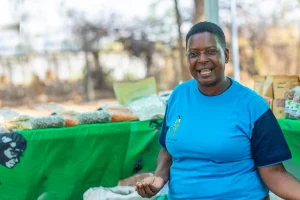
Magret, 39, was teenager, working as an assistant to a carpenter when she was raped and infected with HIV. As a deaf woman, she has faced challenges throughout her life in accessing adequate information, particularly in relation to her sexual and reproductive health. After meeting Deaf Women Included, she has gained confidence and now supports herself and her family, selling goods in the local town.
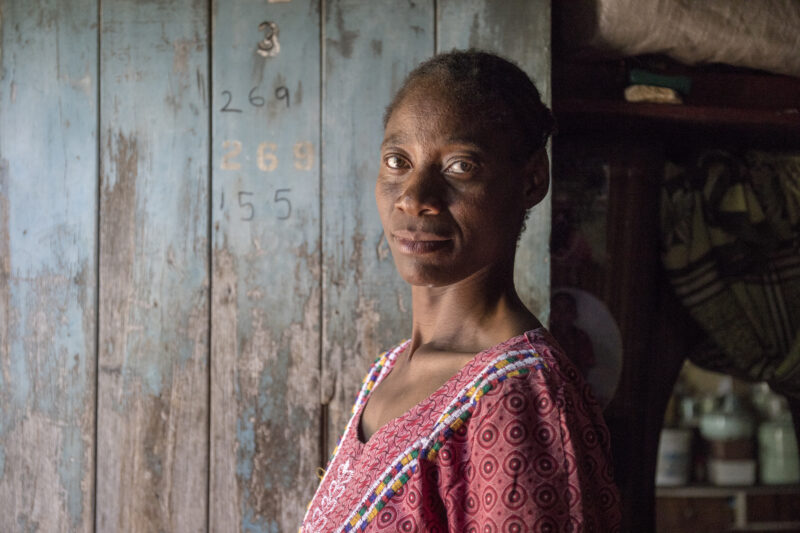
“Before I never had the opportunity to clearly communicate using sign language. A lot of men used to come up to me, they used to ask me for sexual favours which I used to reject. They would still sneak up behind me. They wanted to force me to have sexual intercourse with them.
With time I was raped by one of the men. It took time before I reported to the police I simply kept quiet. I was very cross about it, I had never agreed to what he did to me. I was raped and I was infected with HIV.
I didn’t go to the hospital so I ended up delivering a baby who is also HIV positive. The same man came back and raped me again. When I gave birth we were both given medication. The same man came back and raped me again. As I was taking medication, the second child was born HIV negative.
A lot of deaf women are being raped and it is going unreported. I believe what happened to me is happening to other women as well. As deaf women we have a lot of challenges. A lot of deaf women are looked down upon; they are believed to be women who cannot be paid bride price. For example I know another deaf woman who she was raped. She has four children, all are products of rape. Another challenge is when you need medical care, we need information to be transferred to us, we need interpreters. But they need payment – who can pay? This remains a challenge.
As deaf women we need to work together. I need us to share information on how we can solve issues. I found out about Deaf Women Included (DWI) from a friend who invited me to their workshop.
Before we didn’t have clear information or communication. Now DWI are a helping hand to women with deafness. They helped us to access a lot of information to do with abuse and sexual violence. They supported us to do with information to do with HIV and AIDS. As deaf people we were taught not to just sit down and cry over issues. We have to unite with others, work together, share information. Those are some of the things that DWI helped us with.
I was born deaf so I grew up signing but a lot of information was missing. We couldn’t understand some of the terms in health education, for example. DWI helped us to understand what was being said in health, sexual reproductive health and the like.
Before a lot of people used to refuse to work with me or play with me or befriend me because I was HIV positive. Now that I have met DWI I was taught to tell others that you can unite regardless of anyone’s status. They taught me how to unite and share problems. I now work with my three friends as a vendor in town, selling phone credit, sweets, cigarettes and corn. I don’t want to rely on begging, saying ‘can I have?’, ‘can I have?’. I want to stand on my own feet.
DWI’s work is important and it helps. It helps to empower me. Now I can do everything on my own. Bringing women with disabilities together is important – it promotes integration regardless of your disability. Regardless if you are deaf, blind, wheelchair bound or physically challenged you learn to work together as a group.
I need a lot of people to learn from me. I need to help them – be it a deaf person or anyone I don’t know. I have to tell them, I am deaf but I can do this on my own.”
< View all stories