Safe women, safer societies
By Linda Kroeger

Realising Women’s Right to Leadership
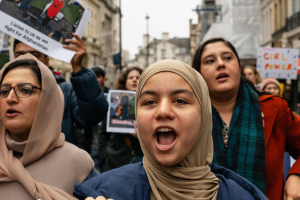
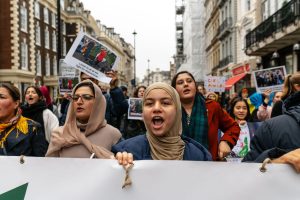
Globally, women in all their diversity are organising, resisting, and leading in the face of regression, adversity, shrinking funding and the blatant disregard for human rights bordering against polycrises. The women’s movement remains resilient as it has before – adapting strategies and remaining unwavering in their clarion call for gender justice and equality. It is a more turbulent time for women in leadership and the communities they serve. This hostile environment has shown that values driven leadership is needed to change the tide, and on the flip side that injustice exists at all spheres in the patriarchal echelons of society.
Around the world, women’s limited representation in government, especially in high level executive and legislative bodies, limits their influence over governance and public policies. Arguably, women’s participation in decision making is essential for ensuring equality and the protection of their rights. Where women have meaningfully participated in influencing public policy, they have been able to raise the visibility of women’s issues and work toward ending gender discrimination. But women have made slow progress in the political arena, even while making gains in other areas such as education, employment and health.
Furthermore, compounding forms of discrimination continue to hamper the progress towards realizing and affirming the rights of women to lead. We have seen a dominant manifestation of violence against women in politics. Violence Against Women in Politics (VAWP) is a form of gender-based violence that is often invisible band enduring, looking to silence women in politics.
Context analysis
In Uganda, just after the 2026 general elections, we have seen an unprecedented rise in violence against women in political leadership and participation in the electoral process. Women leaders have reported continued psychological intimidation, physical torture, threats, and online abuse that features a targeted assault on their character and political careers. There have also been reports around surveillance, arbitrary arrests, and intimidation by security forces against women political leaders and women rights actors and human rights defenders. A documentary by Africa Uncensored in Kenya also highlighted documented these arrests and in one instance an attack that led to the killing of an opposition politician’s campaign staff and supporters – they were mostly women.
In Kenya, ahead of the 2027 elections, campaign mode is in full swing. Authorities and civil society report an increase in cases of cyber stalking, cyber bullying including coordinated online harassment, manipulated images of women political leaders and aspirants, doxxing and rendered misinformation targeted at women candidates. Womankind partner Badili Africa also highlighted the impact of VAWP for the electorate and campaign staff on the ground. Grassroots women mobilisers are a target for grievous bodily harm. In one example, a mobiliser in one of Nairobi’s urban settlements was targeted for her robust work campaigning for her candidate in the community. The assailants used a razor blade to scar her face during a political rally.
Nepal has experienced persistent violence against women in local politics, despite improvements in women’s representation. Media and election monitoring organisations have documented assaults and intimidation of women candidates during local elections, online abuse targeting female politicians. These further include threats designed to discourage women from contesting leadership positions with sexualised rumours questioning women’s morality or competence. Several elected women representatives at municipal level have reported harassment by male colleagues and efforts to exclude them from decision making.
Afghanistan is the starkest reality of what a society looks like without women in leadership at the political level and across all facets of society. Referred to as gender apartheid, the Taliban’s return to power in 2021 has translated to women being politically excluded, an erasure of their presence in facets of everyday society unless accompanied by or in the presence of male guardians. They’ve received death threats, restrictions on freedom of movements and the overall elimination of political participation for women.
Zimbabwe presents one of the most extensively documented patterns of VAWP in Southern Africa. Violence has been particularly acute around the 2022 by elections and the 2023 general elections with evidence showing that women experience both gender specific abuse and broader politically motivated violence. Recent research also points to a growing shift towards technology facilitated violence against women in politics.
Lastly, for Ethiopia the political environment and the complexity of civil unrest and armed conflict make documenting VAWP more difficult. Unlike Kenya and Uganda, Ethiopia’s cases are often embedded within the broader conflict violence rather than election specific reporting. Common forms of violence include online harassment, political intimidation, conflict related threats and silencing of women peace builders.
Call to Action
Duty bearers as the name suggests, owe a duty of care, responsibility and accountability to their constituents, communities, peers and society in general. Their leadership is one of service and as such it is pertinent that they guarantee and fully implement the rights of women to power, leadership and decision making. It is pertinent that they implement the necessary legal reforms, including quotas and address cultural and patriarchal barriers to ensure all women’s full participation in leadership and decision making.
To curb and eliminate VAWP, it is pertinent that they implement effective legal frameworks at global, regional, and national levels to enhance women’s rights to safety and protection from all forms of gender-basedviolence – in political participation, processes, and leadership. They must also enforce laws to protect women with disabilities, young women, women dwelling in rural areas from political violence and impunity by investigating, prosecuting, and punishing perpetrators of VAWP.