Collective solidarity as the key to our feminist future – reflections from Nalafem
By Linda Kroeger, Movement Strengthening and Feminist Funding: Policy and Advocacy Manager
In a society where the good is defined in terms of profit rather than in terms of human need, there must always be some group of people who, through systematised oppression, can be made to feel surplus, to occupy the place of the dehumanised inferior. Within this society, that group is made up of black […] people, working class people, older people, and women. (Audre Lorde)
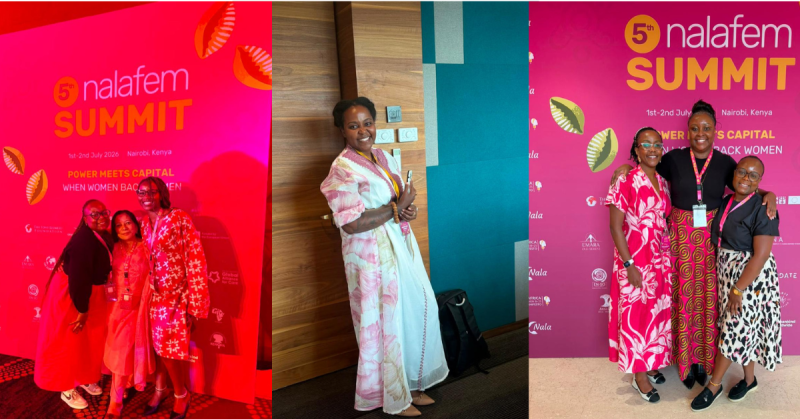
This year’s fifth Nalafem summit was under the theme of power meets capital: women backing women – an apt euphemism for the above quote by Audre Lorde. More often, than not – those of us from the majority world are banded together as a form of oppression and discrimination. However, in this discriminatory classification, there lies powers in numbers. In whichever minoritised group we have been classified under – women, adolescent girls and young women, LGBTQI+, disabled women. There is power as movement holders of these minoritised/marginalised communities as well as together. We are indeed the majority world.
If systems built on exclusion derive their strength from dividing us, then feminist movements derive theirs from connection. When women back women -across generations, borders, movements, and sectors -we do more than resist injustice. We redefine power, reshape capital, and build the conditions for lasting feminist transformation.
It is a radical concept that we can transmute discrimination into power. However, it is not a novel strategy for resistance and dissent. It can be envisaged for example, in history’s remarkable French Revolution when the starving oppressed population in rage turned the tables. We also saw it again during the Gen Z revolution in Nepal where the youth population grew tired of the elitist political class hogging power for decades and anchoring nepotism therein. And, even closer to home, the wave of decolonial political participation and leadership in Burkina Faso – supported by the majority population yearning for a change in tide from colonial and neo colonial policies. The key: the majority is much more powerful together and in support of each other as opposed to centring their power with the minority.
Our time at Nalafem
Womankind Worldwide was immensely honoured to attend Nalafem this year with our partners from 6 of our focus countries – Nepal, Afghanistan, Kenya, Ethiopia, Zimbabwe and Uganda. Across these regions, partners are working in extremely difficult conditions catalysed by shrinking civic space, gender apartheid, reduced gender funding, censorship, and even enforced disappearances. Having partners with us in person was resilience in practice and more so, dissent towards the ever-growing regression on gender and human rights protection.
A speaker during the summit asserted – they go low we go underground – this speaks towards the potential we hold in organising and collective solidarity and more-so in nuancing how power manifests in both public and private spheres of society. Dialogue centred on bridging the gap between the profit and nonprofit worlds and how women in all their diversity, leading and working in these spaces can back and support each other.
Funding was at the centre of the agenda. Feminist movements remain severely under resourced with less that 1 percent ODA financing going to women’s rights organisations. According to AWID’s “Where is the money” report, this is by design and frontline movement holders do not directly receive funds, yet they carry out the impactful work and change in their communities. Consequently, without flexible and trust-based funding models, juxtaposed with the barriers aforementioned – realising gender equality is more of a mirage rather than a dream.
A collective call to action
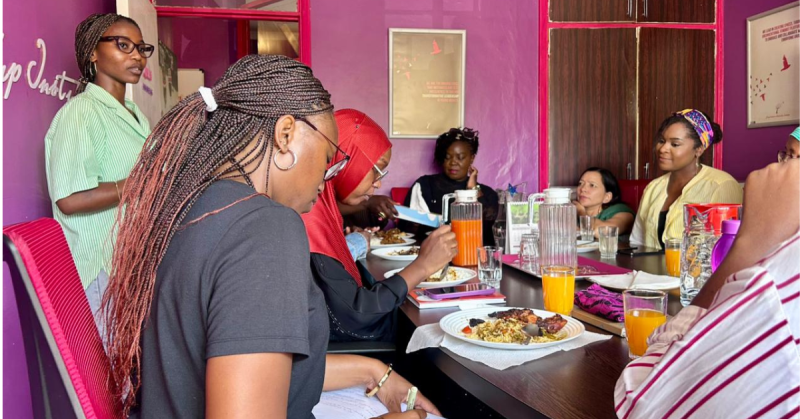
A clarion call from our partners and our feminist allies rings true: our resilience and adaptability is only as strong as our collective solidarity. As such, without a strengthened movement the feminist agenda will be weakened by a hostile environment and thus remain unrealised. It is from our collectivity that we draw strength, can influence from power and harness the innovation and ‘unconventionality’ needed to address our longstanding problem of being under resourced. Womankind and partners call for:
- Our feminist future must be ‘digital proof’. Eliminate all forms of tech facilitated gender-based violence and realise technology and digital literacy for all women and girls in their diversity.
- Flexible and trust based funding is the only way to realise our feminist agenda. Freedom and autonomy start with being resourced and power is reinforced in this reality.
- As feminist actors, we must hold space in collective solidarity and adapt our strategies to support those who are forced into silence. In hostile environments, the women’s and feminist movement is still at work, holding the ground and protecting the gains.
As the summit closed, one truth remained unmistakable: our greatest power lies not in proximity to capital or institutions, but in each other. The Nairobi Declaration, alongside the commitments developed through Womankind Worldwide’s partner roundtable, affirms that feminist movements are not simply responding to crises – they are actively shaping new futures rooted in justice, solidarity, and collective care.