Navigating non-traditional partnerships in a time of cuts and backlash
By Alexandra Webber, UK and Global Policy and Advocacy Manager
Funding is shrinking, but need isn’t. With sweeping cuts to aid budgets globally and an aggressively well-funded anti-gender movement on the rise, many NGOs are moving towards engaging the private sector more in advocacy. But how can we do this effectively whilst staying true to our values?
FCDO allocations announcement
The recent FCDO announcement on how funding will be allocated (within an aid budget shrunken from 0.5 to 0.3 per cent of Gross National Income by 2027) is indicative of the evolving system we’re operating in. For, while ‘women and girls’ are named as a priority, we’re also seeing reductions in bilateral aid from £818m to £688m (although the exact extent of impact is unclear due to country allocations not yet being available). Mitigating measures, like increasing the proportion of aid that prioritises women and girls to 90 per cent of bilateral programmes, are welcome. But the plans also include a shift in emphasis from long-term sustainable funding to short-term initiatives, and increased redirection of funds to private sector models. We will continue to speak out on the need to return to funding levels that will not put vital gender equality programmes at risk, but what else can we do to promote gender equality in the current reality?
It appears that the UK government will, in some cases, function less as a funder and more as a connector to groups like high net-worth individuals. This growing shift from statutory funding to increased interactions with less regulated private sector channels feels uncomfortable. But exploring ethical ways to engage with it, could be an important way to fight back against the global rollback of gender equality at a time when options are increasingly limited. This is particularly significant considering opposition movements are benefitting from billions of dollars of private sector investment to carry out anti-gender agendas.
Lessons from Womankind’s corporate partnerships
At Womankind, we’re not entirely new to working with the private sector. In common with many civil society organisations, we benefit from funding from corporations and philanthropists, and we can take lessons from how we do this ethically as we extend our advocacy. One way is by carefully evaluating who we work with. Our donor acceptance policy helps us choose appropriate corporate partnerships, avoiding corporations with questionable practices. This helps us honour our external calls, as part of the corporate justice movement, for accountability for companies that harm people and the planet. In the same way, advocacy with non-traditional partners must be selective, involving interactions with corporations aligned with our values that are well-positioned to strengthen and amplify our Majority World partner’s agendas.
Global Partnerships Conference
Such strategies will be important to keep in mind when Womankind attends the Global Partnerships Conference on the 19th and 20th of May. Co-hosted between the UK and South Africa, it aims to “drive global growth and prosperity and tackle global challenges head on.” It will include sessions on key themes relevant to our work, including violence against women and girls (VAWG), AI and technology, and climate change. A key focus of the conference will be championing diverse forms of finance and, as well as civil society allies, we will encounter business and tech leaders, investors and philanthropists. Moreover, based on what we’ve learnt from the FCDO announcements, engaging with the UK government could also involve private sector interactions.
Our recommendations
As ever, our advocacy will be guided by our Majority World partners’ priorities, in the form of our partner-informed research reports and forthcoming policy brief setting out our calls to the UK government.
Key calls will include:
- A UN Binding treaty to regulate corporate activity and prevent and mitigate harms and a UK Business, Human Rights and Environment Act.
- Support to end impunity to femicide, enact survivor-centred VAWG laws, such as States’ ratification of the Istanbul Convention, and stop workplace harassment and abuse through States’ ratification of ILO 190.
- Support for flexible funding that can be used for core activities, and engagement with women’s rights organisations (WROs) and movements that respects their autonomy and expertise in their contexts.
- Actions to counter tech-facilitated gender-based violence (TFGBV), such as support for global governance and regulation, strengthened legislation and enforcement, and the development of community-driven technologies.Such actions should seek to redefine online safety not only as protection from harm but as freedom from surveillance, harassment, and silencing. They should take place alongside efforts to disrupt the continuum of TFGBV by identifying patterns of harm, generating critical evidence for advocacy, and translating research into actionable recommendations that strengthen partner strategies and inform and coordinate policymaker and tech sector engagement and responses.
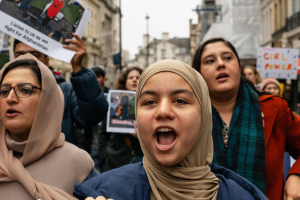
- Support for a UK National Plan on Afghanistan that centres Afghan women’s voices and supports girls’ education and women’s freedoms in all walks of life.
As we pursue our advocacy agenda as well as those of our partners at the Global Partnerships Conference and beyond, we’ll consider how we can get the best out of new rooms and non-traditional partnerships, while staying true to ourselves and our pursuit of a world where women and people of all genders enjoy equal rights and freedoms and can live in joy, choice, and dignity.