Informal worker rights are human rights: calling for an end to state abuse in Zimbabwe
By Wisborn Malaya, Secretary General, Zimbabwe Chamber of Informal Economy Associations

Zimbabwe Chamber of Informal Associations (ZCIEA) aims to alleviate poverty through transforming informal economy activities into mainstream activities and promoting decent standards of living for all Zimbabweans in a stable economy.
The world’s second largest informal economy
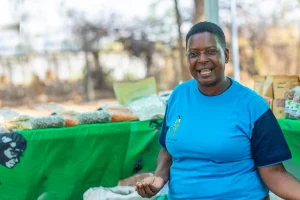
Currently in Zimbabwe 76.5% of workers are in the informal economy – around 5.2 million people who make up the backbone of the economy. Informal workers describes a number of professions: vendors, cross border traders, hair dressers, back yard welders, carpenters, mechanics, tuck shop owners, basic house hold small scale manufacturers, artisanal miners, flea market traders, fruit and veggies traders, subsistence farmers, and more – as long they are not illicit activities. Our membership is made up of traders like these – 68% of which are women.
Informal workers in Zimbabwe have been critical to the country’s economy for the past two decades. However, the laws of the land have never been friendly to informal workers or recognised the contribution this sector adds to the country’s GDP (currently at 48%).
No safe space for women
Women who work in the informal sector suffer from gender-based violence and harassment by local and other government authorities which includes sexual and physical violence, emotional abuse, confiscation of goods and products, and over taxation. The abuse of women who work in the informal economy is common because there is no regulation of the industry, no protections available and little access to routes of justice.
“They take our goods and ask for a bribe so that I trade, at the same time they ask me for sexual favours because I am a woman.” – Anonymous member of ZCIEA
COVID-19 and increasing abuses of power
Most informal workers live from hand to mouth due to the economic situation that has been bad for a long time. When the COVID-19 crisis started , no one was prepared for it. At the same time the government demolished traders’ operational places whilst they were under lockdown. This caused people to suffer from hunger, stress, gender-based violence, unwarranted deaths and teenage pregnancies. Violence and harassment has always been an issue for women in the informal economy, but COVID-19 gave state forces more opportunity to abuse their power and harass women.
“The Municipal and Zimbabwe Republic Police must know that I am not a criminal, I am selling to feed my family, a suckling baby and two who are going to school. My husband died and I am a single mother. I am not a public nuisance, I am a Zimbabwean citizen who deserves a right to life. STOP harassing me, or if you want me out of vending give me a job, I am tired.” – Anonymous member of ZCIEA.
Demanding recognition, respect and rights
Workers in the informal economy are human beings and citizens whose human rights equally have to be protected. Violence and harassment in the world of work is a total abuse of human rights of the workers. This is the message we want to get across for 16 Days of Activism.
For 16 Days we are holding strategic dialogues with the Zimbabwe Republic Police and local authorities to try and promote better relationships between authorities and women in the informal sector at local level. We also are using this space to disseminate information to members and key stakeholders on ILO Convention 190 ending violence and harassment in the world of work and how it can be ratified and domesticated and brought into Zimbabwe law.
Our key demand is recognition of the informal workers on the work they do to feed their families and keeping the country ticking. This should be supported by a policy that decriminalises informal economy work as well as the provision of a decent working environment without any form of abuse or harassment. We also call for informal traders to be able to operate in an environment where they can trade freely and fairly. Finally, we want to see informal workers brought in from the margins and meaningfully included in all the decision-making processes of interest in the country. Our hope for the future of informal women is legislation that promotes recognition and respect of their socio-economic rights and political endeavours. Informal workers’ rights are human rights.