Wake up and smell the misogyny: what is femicide and why is it on the rise?
By Clemmy Manzo
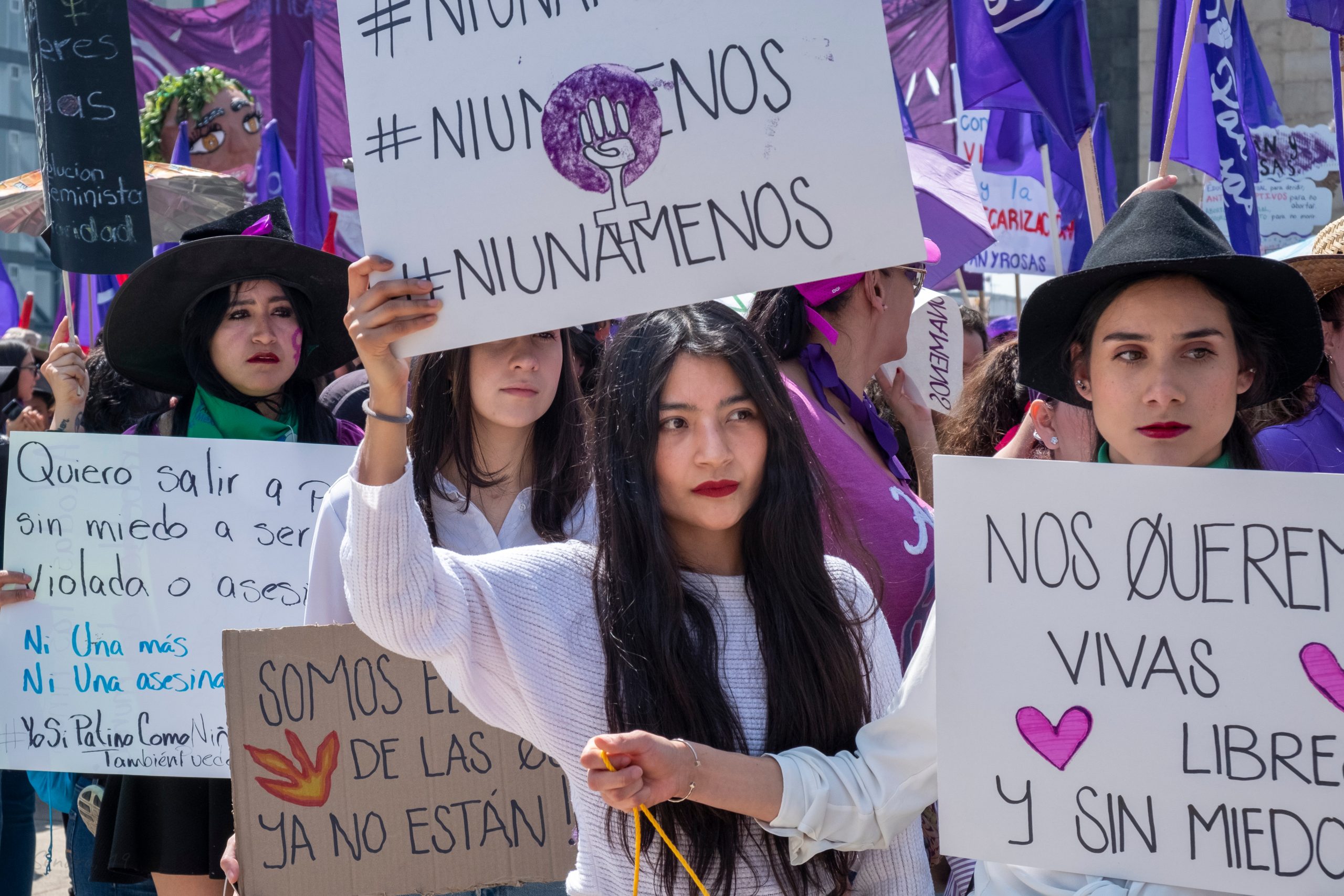
“It seems to me that violence against women has been tolerated for so long that the world has become numb to it,” author and activist Zainab Salbi once said. With global femicide rates on the rise, never have her words resonated more.
But let’s start with the basics: What is femicide, exactly?
While contexts vary greatly, the definition of femicide is generally accepted to involve the “intentional murder of women because they are women, but broader definitions include any killings of women or girls.”
Femicide can be divided into two main categories, says the UN’s former Special Rapporteur on violence against women, Rashida Manjoo. What she calls direct femicide includes killing as a result of intimate partner violence as well as honour-related killings – there are an estimated 5000 murders in the name of ‘honour’ each year worldwide, mainly in parts of the Middle East and South Asia. Gender identity and sexual orientation-related killings and indigenous and ethnic-related killings are further examples of direct femicide.
On the other hand, indirect femicide ranges from deaths due to unsafe poorly conducted abortions and deaths linked to human trafficking, to deaths from simple neglect, and deliberate acts of omission by the state.
How bad is it?
Here’s a scary fact: home is the most dangerous place for a woman.
Data shows that intimate partner killings are the most prevalent type of all femicides. A total of 87,000 women globally were intentionally killed in 2017, more than half of them by current or ex-intimate partners or family members. Intimate partner femicide rates from 2017 were highest in Asia (20,000 that year), followed by Africa (19,000) and the Americas (8,000). More than two thirds of all women (69%) intentionally killed in Africa in 2017 were killed by intimate partners or other family members. And in South Africa, a woman is killed every four hours. As shocking as these statistics are, major data gaps mean the numbers are likely to be significantly higher.
Worse still, intimate partner killings are escalating globally. And while recent media reporting on femicide has raised public awareness, with cases such as Sarah Everard and Sabrina Nessa making headline news in the UK, femicide rates for 2020 and 2021 are predicted to rise, partly due to COVID-related lockdowns and restrictions. Throughout the pandemic, women across the world have been stuck at home with abusers, cut off from their support systems. Budget cuts to women’s refuges in the UK and elsewhere haven’t helped either.
Why does it happen?
There are many types of femicide, and it’s important to note that the risk is higher for marginalised women, such as LBTQI, women with disabilities, Black women and women of colour. Data also shows that women living in countries with greater gender inequality and fewer female representatives in government are more affected. But despite contextual variations, all femicides have something in common: misogyny.
“In my view, patriarchy drives femicide. How it intersects with other systems of oppression such as capitalism, racism and white supremacy leads to discrimination, dominance and continued violence against women, girls and marginalised genders,” explains Dinah Musindarwezo, Director of Policy and Communications at Womankind Worldwide.
And yet there’s a reluctance to address misogynist intent in gender-based violence. This is because it’s rooted in patriarchal social structures and systems that women are forced to face daily: from the police and justice courts, to education, healthcare and the media.
The problem of impunity
“Violence against women and girls is among the least prosecuted and punished crimes in the world.” – UN Assembly
If femicide is so prevalent, why do perpetrators continue to go unpunished? One major issue is a lack of data. A consistent, standardised way of recording these crimes from region to region does not yet exist; in many cases, gender-based violence goes unreported.
Another setback is that in most countries (including the UK), femicide is not recognised as a different crime to homicide. Sociologist Diana Russell, who came up with the term ‘femicide’ in the 1970s, argues that labelling the most extreme form of violence against women is essential in order to combat it. By continuing to use gender neutral words – such as homicide – to refer to the killing of women by men has the effect of obscuring the misogynist factor in virtually all these crimes, she says.
Simply put, the lack of governmental action on femicide in many countries – even those which do have specific laws restricting violence against women – has led to widespread impunity. In Latin America, for example, where 18 countries have laws against femicide, 98% of these murders still go unprosecuted.
What else can be done?
At Womankind, we believe in the power of women’s movements. Together with other feminist organisations and movements, we demand an end to femicide and call on governments to:
- Recognise femicide as a crime in itself to acknowledge the misogynist nature of the crimes.
- Ensure femicide data is disaggregated by sex, sexual orientation and gender identity, disability, and include the relationship of the victim to the perpetrator
- Train health personnel and law enforcement officials to identify and support women, girls and marginalised genders at risk of femicide.
- Invest in intersectional feminist research to understand the social context that allows for femicide to happen in order to address the structural and systemic patterns that fuel it.
This year marks the 30th anniversary of the Global 16 Days Campaign that has seen major breakthroughs in international law since its inception regarding violence against women. We know, therefore, that another world is possible when we collectively strive for change. A world where women’s voices are listened to, where legislation to effectively tackle gender-based violence exists across the board, where impunity for gender-related crimes is a thing of the past. And where the common denominator – misogyny – is taken seriously.
In Russell’s words, “The vast majority of all murders of women are femicides. In contrast, the relatively few women who murder men are usually motivated by self-defence. Thus, the eradication of sexism – what feminists have been striving for since our beginning – would eliminate this most powerful motive, and few men would murder women.”