
“I urge my fellow young feminists to keep their resilience.” #EverydayFeminism

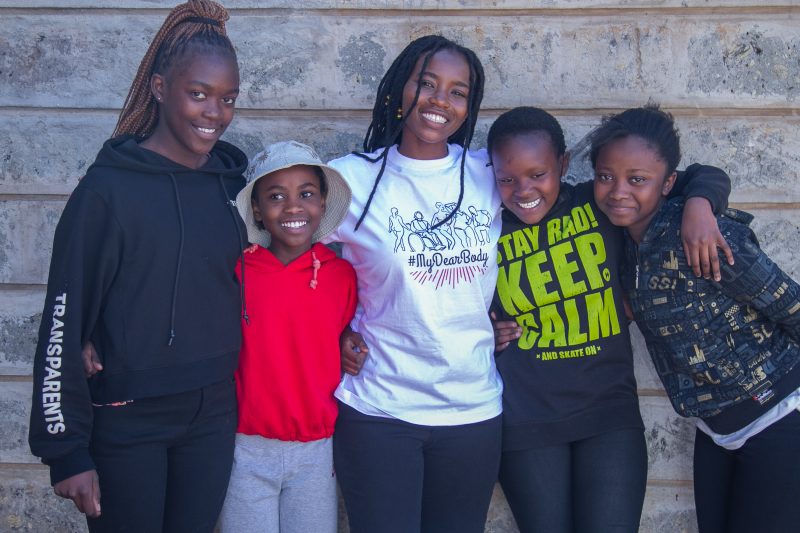
Shyleen Momanyi is Executive Director of the Young Women’s Leadership Institute, a Womankind partner based in Nairobi, Kenya. Shyleen is creating brave spaces for young women and girls to be loud and proud, always drawing on the solidarity of the global feminist movement.
Where did your feminist journey begin?
When I first came into the feminist space, I didn’t think of myself as a feminist. My passion was to ensure girls could get an education and enjoy rights and freedoms, but I really didn’t understand more of feminism than what I learned on campus.
After engaging with other feminists and seeing what they really did, I felt so empowered. In 2019, during the Young Feminist Convening supported by Womankind through the Bill & Melinda Gates Foundation, I met powerful young feminists from Nairobi who motivated me. They walked the journey with me and demonstrated the spirit of sisterhood that ignited my activist spirit. I joined YWLI a few months later and since then, YWLI has opened up so many spaces for me to learn and opportunities for my full strength in activism to be realised.
What work do you do with girls and young women who come to YWLI?
We emphasise the rights of adolescent girls and young women, looking at the diversity of women, knowing we all exist in different forms and identities: including LBQ and trans women, women and girls with disabilities and those living with HIV. We run four programmes which include: sexual and reproductive health and rights, young feminist organising, feminist leadership development and economic justice. We create brave spaces for feminist conversations, where young girls can open about their challenges and needs and celebrate their achievements.
We organise sessions for girls and young mothers who are under 18, to hear about the experiences of motherhood and how they can be supported. We link them with other organisations to ensure they can support their children. Those who want to, can access social support and counselling to go back to school.
We come together on an annual basis to discuss our different strategies within the movement, as young feminist leaders and activists working in Kenya. We have a young feminist leadership development programme, training women from communities under the age of 30.
Why are global feminist movements important?
Women and girls in all their diversities face similar inequalities – violence, discrimination, access to health and employment – whatever our context and wherever we live. If Kenyan feminists speak out about violence, other global feminists can relate to the impact on women and girls and provide solidarity in influencing international policies and laws, which influences the Kenyan government to take action.
The influence from a movement is more impactful than an individual working on their own. We are all moving towards the same goal. Enjoying rights and freedoms and gender equality in law and practice unifies all of us. Everyone can and should be involved within the feminist movement.
During COVID, when levels of violence and femicide were rising, I experienced the resilience of young feminists, but also the feminist movement at large in Kenya in terms of how they stood up for each other in speaking out. We even had support from feminists from South Africa and Nigeria. That was so powerful. You also see that kind of collaboration during the 16 Days of Activism.
What differences have women’s organisations and movements made to the lives of Kenyan women?
They have opened up conversations around sexual orientation and sexuality. Feminist movements don’t sideline or discriminate against groups because of their identity. There are ongoing conversations on sexual orientation and sexual and reproductive health and rights policies. Around gender minorities and gender non-conforming people, we have not really achieved a lot in terms of policy, but conversations are happening at local and national level.
There is a government campaign to ensure girls are encouraged to go back to school after having children. That follows feminist movement advocacy around girl child education.
There is also the gender rule, to ensure women are well represented and encouraging women to take up leadership roles in a political environment that really doesn’t favour them at all. The feminist movement has really supported initiatives for young women and girls to be in spaces of leadership.
Do you believe individuals can make a difference too, contributing to the wider feminist movement and being part of something bigger?
The movement is made up of people. As an individual, your work reflects how you contribute to the movement. If you’re not actively working within the movement, but doing work that contributes to the movement, that is really critical. When an individual is empowered and shows commitment to women’s rights and justice, it contributes to the wider movement. What you believe in influences the perceptions of the people around you.
What is your act of #EverydayFeminism?
I am a plant mum. I use plants to build my resilience. I learn and study how plants grow. They really motivate me, beyond just taking care of them, but also thinking about how other things grow. I celebrate new leaves – they come out and I wonder at their green colour. I always envision young girls we work with celebrating their inception into the movement and striving as young feminists, filling up the gaps. Plants show the power of transition: just like strengthening young girls to take up leadership roles within the movement. We need to mentor, educate and pass down knowledge so they can thrive, so the movement is stronger and continues to be sustained for generations to come.
Joy is an act of feminist resistance. What brings you joy?
Seeing girls really speaking out – loud and proud. At that age, there were things I used to see that made me angry, but I didn’t have the power to speak about them or take action. I was a very angry child because of the injustices I saw. I couldn’t do anything. I get so much joy when we organise events for girls: when you begin a girl is quiet and then they really soar into leadership.
This space can be really tough. I urge my fellow young feminists to keep their resilience. The work they do is amazing and important to future generations of young women and girls. Let’s protect and defend the gains and achievements we have made, keep supporting each other, providing solidarity and mobilising resources for our work and activism.
< View all stories