Resourcing the Revolution
By Womankind Worldwide
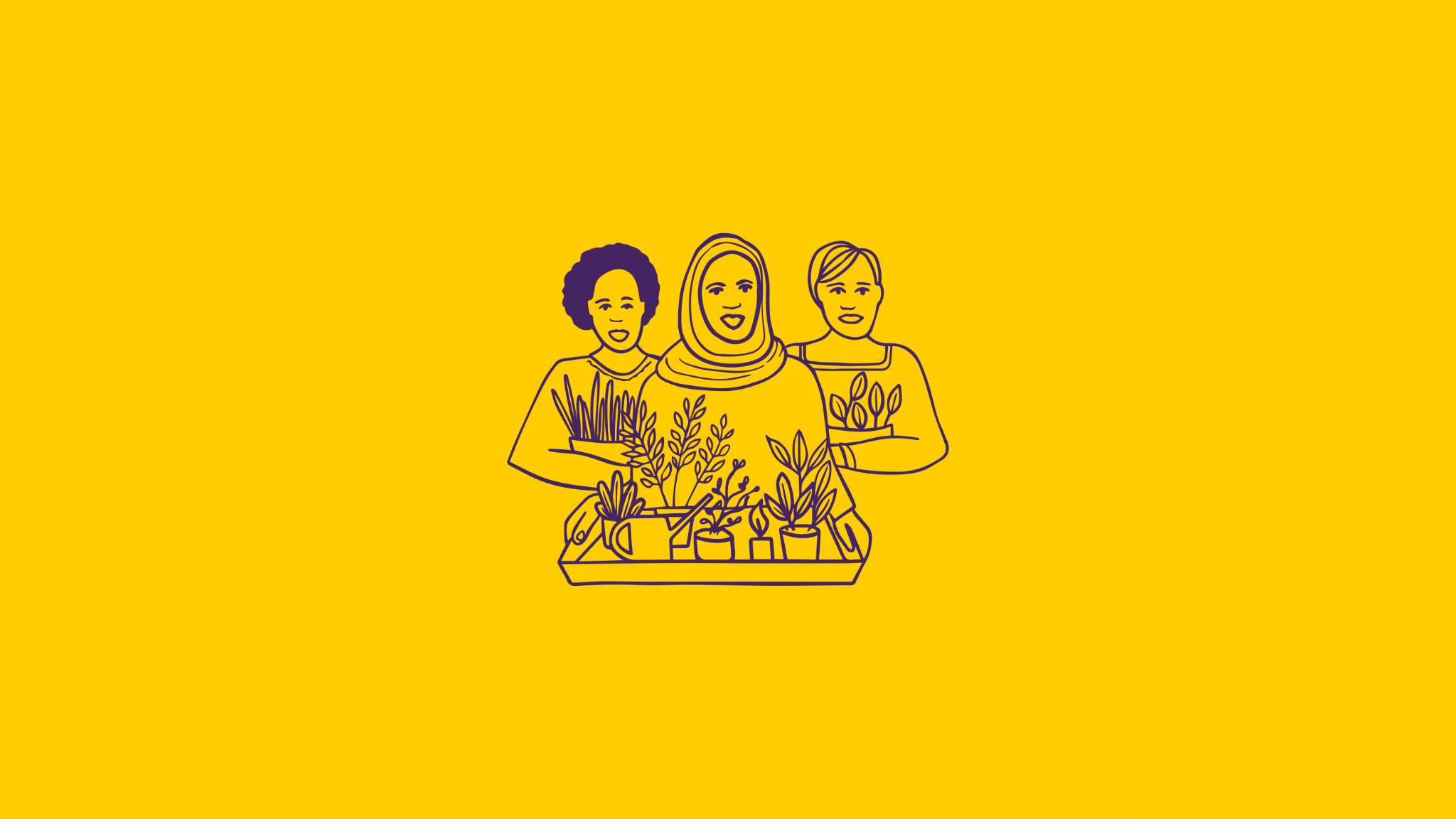
Under our strategy to 2030 – Our Feminist Future – we have five strategic goals. The second is: resource the revolution.
This goal means Womankind contributing financially to a feminist future. This looks like Womankind, our partners and allies working together to advocate for and attract quality funding for women’s rights and feminist action. It strives for more and more of our income to be unrestricted or flexible, channelled directly through flexible funds.
We can see this in action with our flexible funds: the Movement Strengthening Fund (MSF) and Her Voice Fund (HVF). Flexible funding means fewer restrictions and admin, giving the groups that receive the money more say in how they use it. It means less time spent on detailed proposals, budgets and reports, and more time tackling gender inequality.
This year has shown amazing progress with our flexible funding with extensive learning and reflection along the way. Our processes and approach will continue to evolve as we dive deeper into understanding what feminist and inclusive flexible funding looks like.
Here are some highlights from our flexible funds.
Movement Strengthening Fund
Movement strengthening is at the very heart of Womankind’s work. The MSF has been designed to strengthen the relational dynamics of movements so that the resulting collective actions can be more impactful and sustainable.
Cycle 1 of the MSF supported nine partners across all five of our focus countries with a total of £90,000. Here are five stories of change that highlight the intersectionality and inclusivity that underpin the feminist movement and how MSF is contributing to that.
Strategic Initiative for Women in the Horn of Africa (SIHA Network) worked with grassroots women’s and WROs in the West Nile region of Uganda, and conducted feminist transformational leadership training, inter-generational dialogues, and created safe spaces for women to share experiences and build solidarity.
In Zimbabwe, the MSF supported Deaf Women Included (DWI) to reach the most marginalised women with disabilities and centre them in their movement. DWI ran feminist and disability leadership seminars, created a documentary on women with disabilities and their inclusion in feminist movements. Additionally, they created materials on feminist theories and principles in sign language and Braille.
Minority Womyn in Action (MWA) used the MSF to strengthen their membership, leadership, and wellbeing structures. This meant that the movement for LGBTQI+ women and people could reach grassroots constituencies across Kenya.
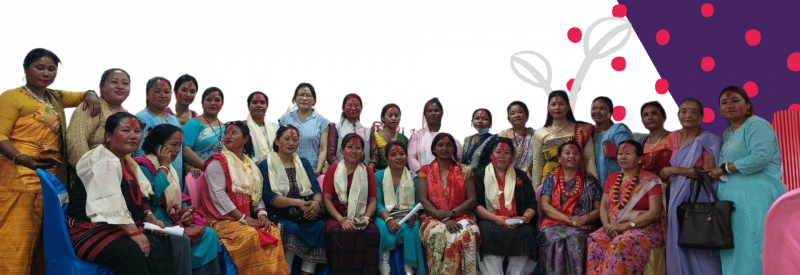
The MSF supported National Indigenous Women’s Federation (NIWF) in Nepal to create and strengthen local committees and councils of indigenous women in 61 districts. Through the committees and councils, local indigenous women are now supported to know and demand their rights and become part of the national movement for indigenous women’s rights in Nepal.
In Ethiopia, Setaweet, originally sought to bring young feminists from universities across Ethiopia to come together for a conference to share their experiences, enrich their feminist knowledge and become inspired to take actions for gender equality. However, the work was postponed numerous times because of insecurity in the Amhara region.
In light of this, Womankind redirected the funds to a different Setaweet initiative. The MSF supported the director of Setaweet to travel to Mekelle with 61 other civil society organisations on an official goodwill visit in March 2023 following the formal end of the war in Northern Ethiopia. The team also undertook a trip to four cities in the Tigray region in May 2023 which included: a three-day trauma-healing workshop, focus group discussions held with displaced women regarding what women-centered justice processes might look like, and an in-depth interview with ten survivors of sexual violence for the Misikir documentary. This demonstrates how the fluidity and flexibility of the fund enabled our partner to pivot their work to meet the needs and priorities of women in relation to the conflict in Tigray.
Cycle 2 of the MSF launched in January 2023, with 10 partners being supported with a total of £126,500.
“Movement strengthening work at local/grassroots level is connecting people and giving them hope in the feminist movements in their countries. New supporting and nurturing relationships are being forged and strengthened. There is evidence the partners are engaging authentically, assertively and courageously with both their communities and national institutions. They are raising awareness, influencing, challenging and sharing information. They are doing all this work while taking time out to focus on self-care at an individual and organisational level. Although all the nine partners work in difficult patriarchal contexts that include dehumanising global forces and other limiting policies at national levels, they are using whatever resources are available, and continue to spit liberating seeds in an effort to ensure the future health, dynamism and wholesome flowering of the women rights sector. They are doing this using feminist approaches, while remaining accountable to their constituencies and the funders.” – Hope Chigudu, Nurturing the Beating Heart of Feminist Movements: Lessons Drawn from Womankind’s Movement Strengthening Fund (MSF)
Her Voice Fund
In addition to the 11 grantees (eight partners and three informal groups) funded under Cycle 1 of Her Voice Fund (HVF), who completed their work supported by these funds by August 2022, Cycle 2 of HVF was also launched in May 2022. For the second cycle of HVF, 14 organisations (10 Womankind partners and four informal groups) received funding totaling £141,391.
Here are just a few examples of the impact that HVF is having for women and girls.
In Ethiopia, Tarkanfi Sustainable Development (TSD) used HVF to address systemic and structural barriers that hinder girls’ education. TSD provided four high school girls’ clubs in Laga Tafo (in the Berk district) with media instruments to develop messaging around gender equality. This fed into their schools’ code of conduct and overall legal framework on sexual gender-based violence (SGBV). As a result, the members of the four clubs actively advocated for their rights with their schools’ administration, Parent Teacher Associations (PTAs) and communities. Girls from the clubs also started to advocate for other girls and wrote poems, dramas, and songs to communicate their messages on SGBV. School girls’ clubs from the four schools also travelled to rural communities to speak to young boys, girls, men and women about intersectional gender-based violence and how they can protect girls in their community.
TSD and the four school champions are now advocating for the implementation of the code of conduct in all schools in the region by working with women’s right organisations. TSD brought together students, teachers and parents to work together collaboratively and creatively to address issues regarding SGBV and advocate in their communities. They truly got the voices of young women heard and have as a result created momentum for change.
Through HVF, Women and Land Zimbabwe’s (WLZ) have achieved real, tangible results in supporting women to know and claim their right to land. WLZ conducted ‘Land for Her’ Campaigns in 10 districts to share information with rural women around their rights to land, resulting in building the capacity and confidence of women in Rural Women’s Assemblies (RWA) to demand control and ownership of land. This meant:
- 333 women approached the District Land Office to apply for land and are now on the waiting list.
- 25 women in Makonde, 21 in Romac Farms in Gweru and 259 in Makoni approached the District Lands Committee to have their permits changed into their names and jointly with their spouses, and 35 widows manage to change the land permits into their names.
- 18 additional hectares of land were given to women across villages to establish community initiatives and spaces.
- The attitudes of traditional leaders in Chipinge and Makoni are changing. They are now willing to set aside pieces of land for women, continuing to allocate pieces of land to single women, and emphasising that inherited family land should be shared equally between children, regardless of their gender.
Alongside this, WLZ continued to mobilise rural women into forming solidarity groups for movement building, resulting in the formation of 387 RWAs with an average of 20 women in each.
These RWAs have become referral points for women’s issues and are being recognised by the traditional leaders. Through the RWAs, some women have begun to take up leadership positions in decision making structures and are demanding accountability in natural resources management.
WLZ also:
- conducted engagement meetings on gender and women’s rights in 10 districts.
- reached a total number of 337 traditional and religious leaders.
- facilitated 20 rural women to participate in national processes.
Movement building through Rural Women’s Assemblies has created a safe space for women to come up with solutions and alternatives, for learning and sharing of skills and knowledge and this has resulted in a review of the policy on land.
In Amudat, Uganda, Maendeleo Ya Wanawake used their HVF grant to strengthen implementation of laws around and accountability for female genital mutilation (FGM), gender-based violence (GBV) and education. Maendeleo drafted two laws on GBV and education which were adopted by the District Council and then approved by the Minister for Local Government.
The education law calls for all children of school attending age go to school. Following this law being used as an advocacy tool, there is evidence of a marked increase in enrolment in primary schools in the district. Maendeleo also conducted community dialogues about the two new laws, reaching a total of 402 community members.
In addition, Maendeleo held a dialogue with 35 representatives of the local government and civil society. This aided clear understanding of the root causes of patriarchy and drivers of harmful practices like female genital mutilation (FGM), child marriages, alcoholism and illiteracy that contribute to GBV in the district. Participants in the dialogues committed to working collaboratively to advocate for ending harmful practices and promote education as an alternative rite of passage for girls, instead of FGM. The project also built strong alliances between community leaders which was a great achievement in advocacy towards ending child marriages and FGM.
Three HVF grants were also awarded out of cycle.
- £10,000 went to the informal group Utu Coalition who worked in collaboration with our partner FIDA Kenya. Together, they leveraged on litigation as a means to hold perpetrators and state accountable for the deaths of hundreds of women who were killed in Gusiiland following allegations of witchcraft. They are also working on research and other advocacy interventions to help ensure these crimes are curbed once and for all.
- £10,000 went to the Sexual Violence Research Initiative (SVRI) with Womankind co-sponsoring the biennial international SVRI Forum.
- £20,000 supported Womankind partner African Women’s Development and Communication Network (FEMNET) to contribute to a pre CSW67Africa convening in Feb 2023. Although CSW is a recognised global body entirely dedicated to the promotion of gender equality, it is evident that it remains a space that many feminists, women’s rights organisations and activists from Africa have limited access to. Through this space, FEMNET convened and brought together women and girls in all their diversities from all five African sub regions.
They leveraged on the principle of inclusion, ensuring that women and girls from FEMNET’s network and nominees from NGO CSW Africa were in the room. This meant women and girls in all their diversities were there, including adolescent girls, women with disabilities, women and girls living in rural areas and informal settlements and gender non-conforming people.
Head to our 2022/23 impact report for more insights into our work towards realising our feminist future.