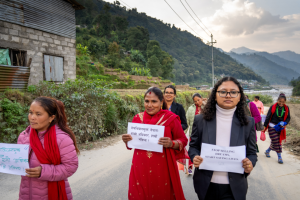
Resourcing feminist movements: spotlight on Nepal
By Womankind Worldwide
At Womankind, we believe that movements are the beating heart of change.
In 2021, we created the Movement Strengthening Fund (MSF) to provide resources to strengthen the relational dynamics of feminist movements without placing all the focus on the aims of movements. This is because it is the connections, trust and understanding forged between diverse women that can make or break the subsequent collective actions that feminist movements are constantly working towards. In this way, collective action is not just what women do together, but how they do it.
In the second cycle of the MSF that launched at the end of 2022, Womankind funded three of our partners in Nepal to power their movements.
Tewa and Sangat
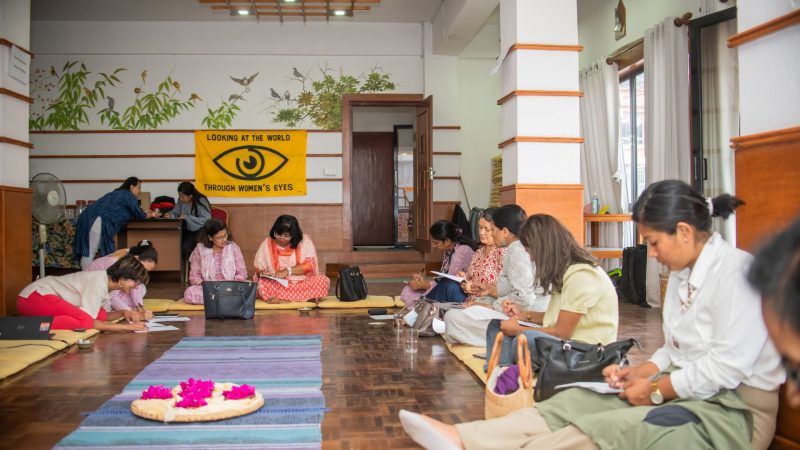
Our partner Tewa are a Nepali women’s fund and worked in collaboration with Sangat (a south Asian feminist network hosted by Tewa) to ensure the experiences and voices of marginalised women were heard. They did this through inviting their community of young people to send in blogs on issues which impact women and girls (in all their diversities) such as sexuality, climate change, unpaid care work and gender-based violence. Tewa and Sangat believe that “blog writing is easy and very cost-effective method to help people understand feminist issues and principles” and this is why it is part of their movement strengthening work. Blog writing is also a way of documenting the present situation across various feminist issues and therefore acts as a strong future reference point on feminist history.
Tewa and Sangat also conducted workshops where they brought together ‘Sangatees’, who have all previously undertaken courses with Sangat. Sangatees are young people, activists, academics, policy makers, lawyers and parliamentarians working on a variety of issues including citizenship rights, bodily autonomy, queer movements, violence against women, land rights, property rights for women.
“There are very few safe spaces for young people to share what they feel. Creating non-judgmental discussion platforms for young people is crucial in building and strengthening movements.”
Bringing together 95 young people from three districts for the workshops, Tewa and Sangat created a platform for discussions on feminism and women’s rights. These shared spaces for collective thinking are a crucial component of any feminist movement. Tewa and Sangat shared that they witnessed transformation in how the young people who took part engaged with feminism. Those who were initially apprehensive about identifying as feminists due to misconceptions, change these attitudes and beliefs as a result of the sessions.
“We consider this a small but important step towards enlightening the youth about feminism and their rights. Almost all young people shared that they had never participated in this type of critical discussion about feminism and human rights. For building and strengthening our movement, it is crucial we conduct sessions around busting myths on feminism.”
For Tewa and Sangat, “[our] network has great role in strengthening the movement and though keeping the network alive is challenging, it is worthwhile.”
Sankalpa
With their MSF grant, Sankalpa – Women’s Alliance for Peace Justice and Democracy held a one day thought workshop with emerging feminist leaders in the Lumbini, Karnali and Madhesh provinces in Nepal. Emerging feminist leaders from 8 districts of each province actively participated in the event.
164 participants took part in sessions covering gender, inclusion, intergenerational and intersectional feminism, gender and media.
Through bringing the emerging feminist leaders together, they were able to collectively explore:
- why intersectionality is key for feminist practice
- the need to centre the experiences of marginalised communities within activism
- the value of intergenerational feminism and leadership
Meena, a 38 year old working at a feminist organisation shared that through Sankalpa’s workshop, she now recognises the overlapping nature of identity and the power in intergenerational collaboration. After the training, she reported to Sankalpa that she had incorporated intersectionality and intergenerational considerations into her decision-making processes and campaign strategies. By valuing the unique contributions of each team member and leveraging their diverse perspectives, she was able to create more inclusive and impactful campaigns.
Saathi

With their MSF grant, Saathi sought to strengthen the women’s shelter movement with an intersectional feminist approach. To do this, they convened the first ever Nepali national conference on women’s shelters from 25-27 June 2023.
The MSF grant enabled Saathi to raise an additional 4 million rupees for the conference. This additional funding meant that the conference could expand and include the active participation of 200 individuals from diverse backgrounds and roles. This included women shelter operators, provincial and local government representatives, women’s rights activists, and survivors of violence. Representing all seven provinces of Nepal, this inclusive gathering symbolised a collective commitment to combatting gender-based violence and fostering a safer society for all.
Saathi took an intersectional and inclusive approach to the conference sessions bringing perspectives on how all women can have equal access and support within shelter facilities. Two other Womankind partners, Mitini and Nepal Disabled Women’s Association (NDWA) were invited to the conference to share their expertise.
Laxmi Ghalan, President of Mitini Nepal shared that LGBTQI+ individuals are often excluded from shelters, because they are not designed for their needs. Of these groups, transgender individuals, in particular, face the most difficulties in accessing shelters.
Laxmi encouraged delegates to address the multiple concerns of sexual and gender minorities in their shelter provision so that no one is excluded from receiving appropriate support based on their identity.
Tika Dahal, President of NDWA talked about the challenges faced by people with disabilities in accessing shelters.
“Most shelters do not have disabled friendly infrastructure. This creates a barrier for them, especially in cases of violence. Additionally, even if they seek help, the shelter staff may not be equipped to provide assistance. Disabled-friendly shelters are designed to ensure the safety and comfort of individuals with disabilities. This includes accessible entrances, ramps, wide doorways, and accommodation of mobility aids like wheelchairs and crutches. These modifications are essential for individuals with physical disabilities to move freely and independently within the shelter. Shelters must be disabled friendly for promoting inclusivity, accessibility, and human rights. Ensuring that shelters accommodate the needs of disabled individuals is a crucial step towards creating a society that values diversity and provides equal opportunities for all.”
Saathi’s movement strengthening work here highlights that when movements are sufficiently resourced to come together, they can collaborate and shape the change they need within their context and create tangible pathways towards change for women, girls and people of all genders.
The work of Tewa, Sangat, Saathi and Sankalpa shows the value of collective and intersectional spaces for movement strengthening. These inspiring spaces allow for shared imagining, healing, feminist political awareness raising, collective planning and action.