Defending indigenous women’s rights in Nepal
By Womankind Worldwide

The 9th of August marks the International Day of the World’s Indigenous Peoples. This year, the theme is: The Role of Indigenous Women in the Preservation and Transmission of Traditional Knowledge. To celebrate, Womankind is shining a spotlight on the work of our partner National Indigenous Women’s Federation (NIWF), a Kathmandu based organisation defending the rights of indigenous women and their communities.
We spoke to the NIWF team about their work and how their own experiences as indigenous women led them to being part of it.
Indigenous women’s experience in Nepal today
“Nepalese Indigenous women are the knowledge holders to nurture mother earth, the environment and natural resources, and play a vital role in their sustainable management.” – NIWF
“Although Indigenous people make up just 6 per cent of the world’s population, they conserve 80 per cent of the remaining biodiversity” – Hira Kumari Tamang, Local Coordinator, NIWF
Despite the crucial role they play in defending the rights of their communities and the environment, indigenous women face layered discrimination based on both their gender and indigenous identity. In Nepal, this manifests in laws, policies and practices that marginalise, exclude, and discriminate against them. Indigenous communities are directly impacted by climate change and NIWF shared that indigenous women are continuously at risk of violence as a result of land issues and displacement.
Shoba Sunuwar, General Secretary at NIWF shared that when she first arrived in Kathmandu as a teenager “Sunuwar people were being treated differently by the state. My language, my culture, my attire were all a source of mockery. This was happening because the state was denying our identity.”
Today, this discrimination continues. “Indigenous women’s linguistic, cultural and religious rights are not considered by the State and the differences between indigenous identities are also not taken into account.” – Nimi Sherpa, Chairperson, NIWF
“Even if indigenous communities know about their rights, if they don’t speak Nepali then they are unable to express themselves about their rights. For example, when it to comes to approaching local governments and saying this is our ancestral place and we have the right to protect it, promote it and conserve it but being unable to due to language barriers.” – Hira Kumari Tamang, Local Coordinator, NIWF
NIWF’s role in supporting women
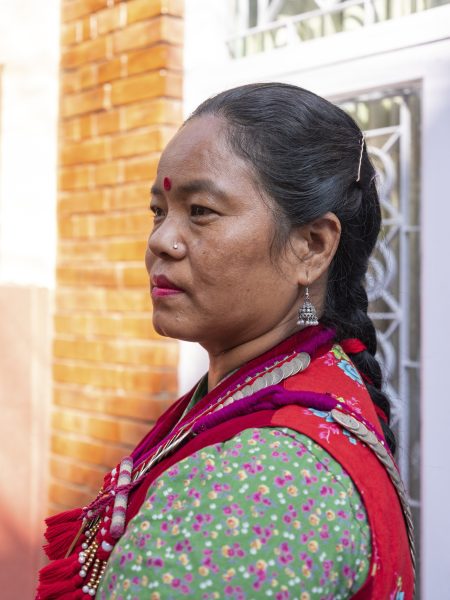
“Around 25 years ago, a group of indigenous women came together and formed NIWF. Had they not done this, it is very unlikely that the state would have acknowledged that there are indigenous women in Nepal at all.” Nimi Sherpa, Chairperson, NIWF
There are many different ways that NIWF supports indigenous women and their communities. They raise awareness, provide trainings, hold dialogues linking community members to local decision makers, represent indigenous women in international forums and provide emergency response during natural disasters. NIWF are also demanding for the release of indigenous women activists who have been detained for standing up for the rights of their communities.
“NIWF identifies indigenous women who have been affected by lands rights issues. We hold meetings, provide education on women’s and land rights, and coordinate an indigenous people’s human rights defenders network.” – Shoba Sunuwar, General Secretary, NIWF
NIWF are working to get more indigenous women into politics and leadership positions. “We are continuously demanding for the amendment of constitution so that indigenous women get a quota for representation. Nepal has three tiers of government and NIWF are working with all three tiers to ensure that indigenous women are represented, and their rights are guaranteed.” – Nimi Sherpa, Chairperson, NIWF
An organisation powered by the communities they serve
The team at NIWF are driven by a connection to their community and identity.
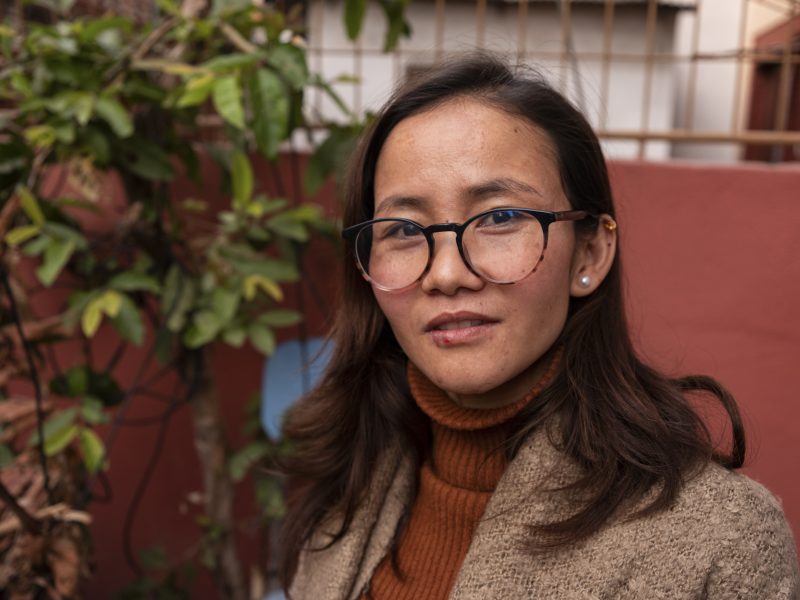
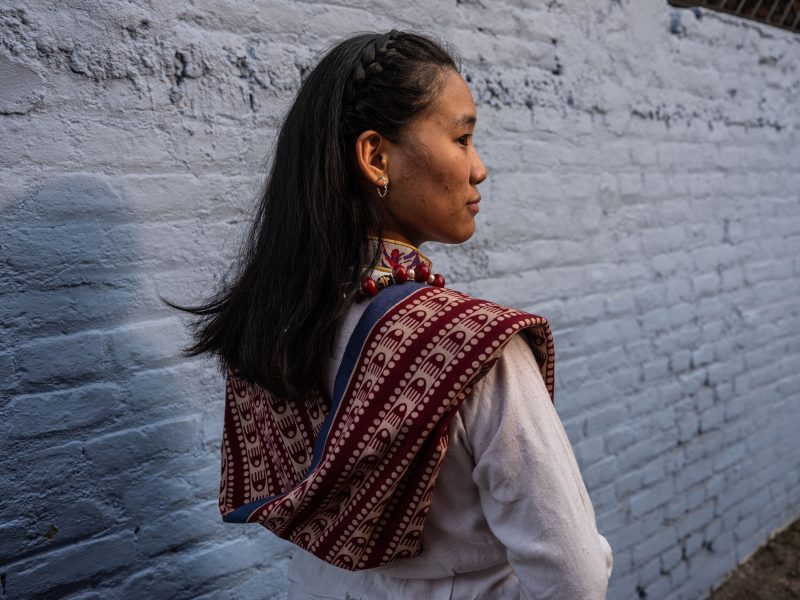
Pema Wangmo Lama, the previous Program Coordinator at NIWF is a young, indigenous activist and feminist. Pema shared how coming from the Mugum Indigenous Nations has helped to form who she is and motivate her work as an activist.
“Exploring my indigenous roots and culture has given me so much strength. The indigenous community has a lot of feelings of sisterhood, brotherhood and solidarity between the youth and elders. This connection builds how I see humanity itself. It gives me love and the feeling of respect not just towards people but also nature. My indigenous culture has built a lot of my values. I encourage indigenous youth to learn their languages, to learn about their homelands, cultures and roots. This holds a lot of meaning.”
“At first, I did not know anything about myself or my identity. Once learnt more about my community, that’s when I understood more about who I was and what my rights were. I started to question why it was only our community that was standing up for our rights. My community supported and encouraged me to do this work and this propelled me to continue to work for the rights of indigenous women.” – Shoba Sunuwar, General Secretary, NIWF
How Womankind is working with NIWF
Womankind has been supporting NIWF in a number of ways. In the past year Womankind provided NIWF with an emergency support grant after the earthquake. Through Her Voice Fund, NIWF are ensuring indigenous women voices are in global advocacy spaces. HVF is contributing to NIWF’s advocacy work across different global platforms including Commission on the Status of Women (CSW), United Nations Permanent Forum on Indigenous Issues, Expert Mechanism on Rights of Indigenous Peoples, The Convention on the Elimination of All Forms of Discrimination against Women (CEDAW) Session and the 16 days of activism against gender-based violence. NIWF are also now one of Womankind’s 24 Strategic Grant Partners and this means that we will be supporting their core work for the next three years.
Join us in celebrating NIWF this International Day of the World’s Indigenous Peoples.