Demanding recognition: Ethiopian women with disabilities in the world of work
By Fikirte Shumet, Project Coordinator, Ethiopian Women with Disability National Association
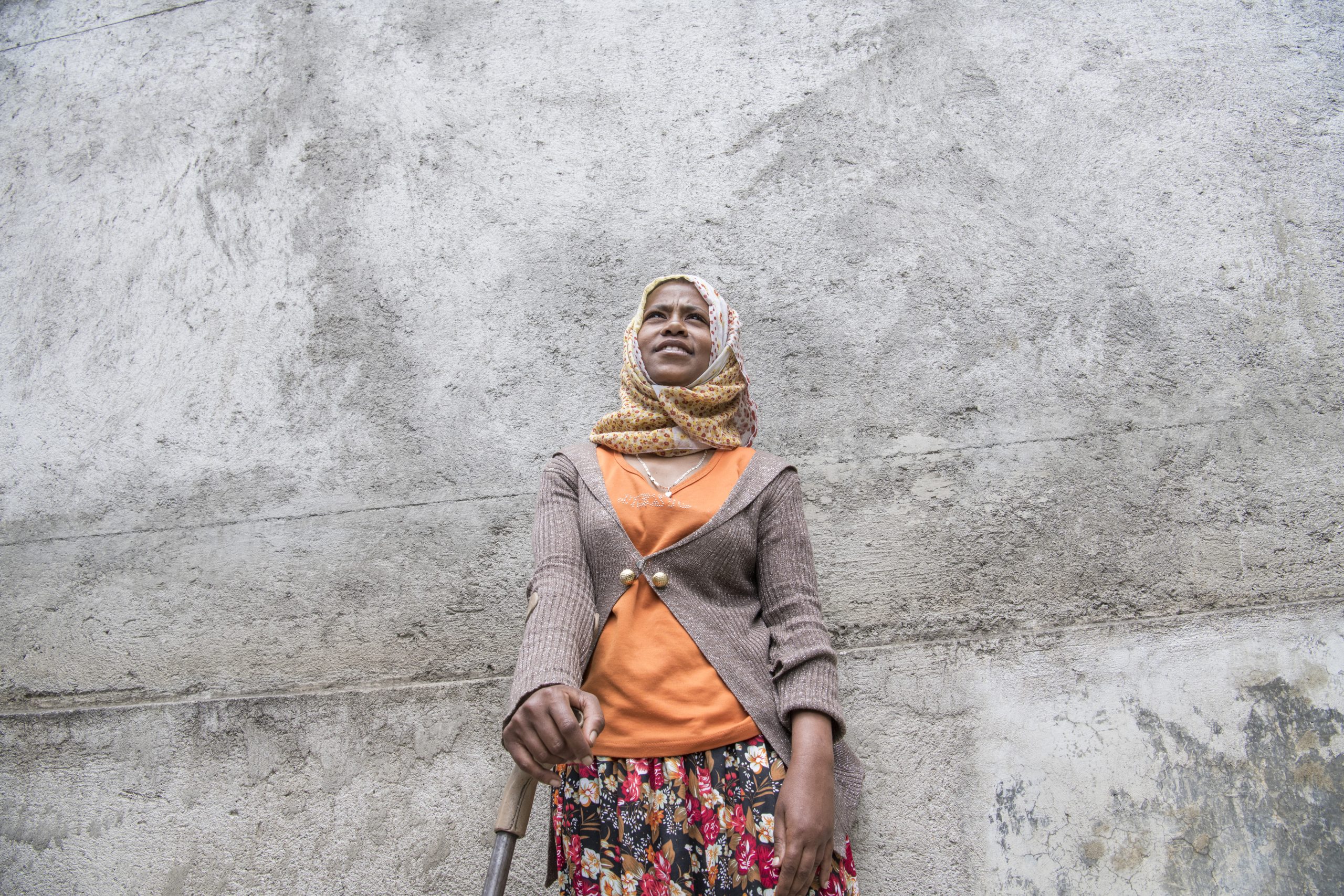
Ethiopian Women with Disability National Association (EWDNA) is a local, non-profit organisation based in Addis Ababa. Established in 2002 by eight women (seven with disabilities) we have grown to become an organisation with nine branches and over 8,700 members.
Blocked from accessing rights
Women with disabilities in Ethiopia face barriers in accessing their rights including higher rates of violence. These barriers extend to the world of work where discrimination stops women with disabilities being able to fully participate in the work force and live independent lives. Very few women with disabilities (WWDs) join the formal sector after passing through difficult inaccessible education system, very poor or no support from family and discouraging situations along their way.
Sigma and discrimination: women with disabilities pushed to the margins
From the very beginning, employers don’t want to hire women with disabilities. Employers think that hiring women with disabilities involve extra cost related to making the environment accessible or hiring her assistant, there is also stigma associated with women with disabilities and employers hold a belief that women with disabilities are not productive members of staff. Even though there is a proclamation called ‘Right to employment of persons with disabilities’ which says people with disabilities have the right to work, it is rarely enforced. Even the government does not abide by the proclamation to ensure women with disabilities are able to work in the formal sector. One teacher said:
“Have you ever seen a teacher without any accessible teaching aids? Whenever I ask [for] braille books or [a] personal assistant they consider me as inefficient and they want me to blame myself for not seeing! I gave up asking my rights.” – Anonymous teacher with visual impairment.
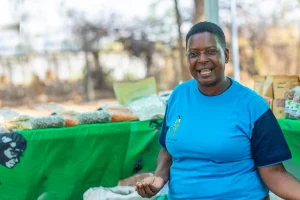
Employer discrimination, as well as inaccessible work environments and little access to education mean most women with disabilities are forced to work in the informal sector – in industries which provided little economic protections or protections against violence. Women with disabilities struggle to access licenses, credit or accessible working spaces that would allow them to set up their own businesses. Many of our members are instead engaged in street vending by the roads or outside of churches, they also work as housemaid’s (if their disability is not severe).
Overlooked and ignored: the impact of COVID-19
For those engaged in small business, COVID-19 was devastating because in Ethiopia there was a partial lock down and churches and street trade are the first to be avoided/closed. Many of our members who rely on selling things around church were not able to go out and work and those that did risked being chased and harassed by police.
What is worse is that women with disabilities are being left out of government provided COVID-19 response supports (which include food and hygiene products) as the majority don’t have identification cards as residence of the city. ID card is given for those who own a house in the city. For those who rent it is up to the landlord to give permission to get an ID. The support by government is focused to parts of the society considered most at need based on data of the local level government but those without ID, including women with disabilities are not recognised by local government and are excluded from receiving support.
“I have nothing at all to feed my kids, if I beg people give me money but when I prefer to work with my limits it is impossible. For a woman with disability [there is] no room both in the formal and informal sectors” – Anonymous single mother with visual impairment.
Demanding inclusion: using 16 Days to advocate for women with disabilities
For 16 Days of Activism we are sharing the lived realities of women with disabilities, and sharing the issues faced in accessing legal licenses, ID and accessible workspaces. We are using these stories to advocate change to local decision makers and bring women with disabilities to meet and discuss with local leaders through radio interviews. We expect that when women have shared their experiences with local leaders that the leaders will commit to removing barriers that prohibit women with disabilities being able to access their full rights in the world of work. We wish to see our members have a legal working space where they can work in a stable way without being chased by police.
For 16 Days of Activism we demand that governments include and meaningfully engage women with disabilities. We also want to see a COVID-19 response that centres women with disabilities. Women with disabilities are being excluded from every domain in life, we demand the exclusion ends.