

Ebola: what next for women and girls?
By Sally Airey
But the hard work doesn’t stop there. A new case of the virus was reported in Sierra Leone just one day after the WHO announcement and the epidemic has significantly increased the challenges faced by women and girls. With the threat of another outbreak still present and a long road to recovery ahead, the work of our partners in Liberia and Sierra Leone is more important than ever.
Millions of women and girls are vulnerable
Since the first outbreak in December 2013, Womankind Worldwide has worked with our partners in Sierra Leone and Liberia to prevent the spread of Ebola and mitigate the impact it has had, and continues to have, on millions of women and girls. In the mainly rural areas where our partners work, the absence of medical services has placed a huge burden on women as caregivers, and national prevention strategies have often ignored the specific vulnerabilities of women and girls.
“Everybody was confused when the Ebola virus broke out. The Ebola taskforce was not really organised, so Ebola patients and affected families were not getting help. There were at least two dead bodies lying in the street for days and no one would come to remove the bodies…. I wanted to help.”
This is how Nana Zarway describes the chaos that ensued following the Ebola outbreak. Nana, a young Liberian female journalist who benefitted from a story grant from Liberia Women Media Action Committee (LIWOMAC) with funding from Womankind , was determined to report on the conditions of people in her neighbourhood and surroundingWorldwide communities.
Supporting women’s organisations on the frontline of Ebola
With your support, we have helped women’s rights organisations to bridge the gap between local communities and governments, run rural awareness-raising campaigns with real facts about the outbreak and provide much-needed sanitation facilities.
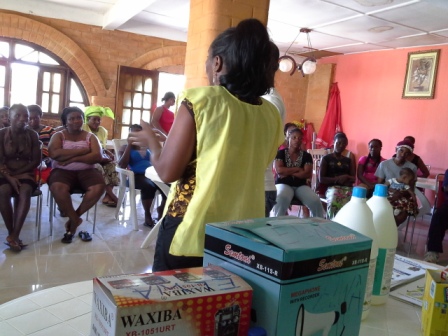
Graceland, in Sierra Leone, implemented a door-to-door campaign to educate people on the spread of the virus and provide hand-washing materials. LIWOMAC worked with health professionals to facilitate early prevention and awareness training with women and came together with other organisations to establish a Civil Society Ebola Response Task Force which promoted information sharing and collaboration. Radio campaigns were also successful, used to disseminate information in rural areas by both LIWOMAC and Women’s Partnership for Justice and Peace (WPJP), our partner in Sierra Leone.
Our partners are needed more than ever
Our partners stress the need for more support for women and girls in rural areas. Even though when the immediate risk from Ebola has been eliminated, there have been many set-backs in the fight for women’s rights. Women’s role as caregivers is more demanding than ever, girls have dropped out of school and gender-based violence has reportedly increased. Womankind Worldwide will continue to support our partners, who are helping women access counselling, gain food security and improve livelihoods as well as supporting girls to get them back into and stay in education.
The full impact of Ebola is still not known and there is still a long road to recovery ahead. Through our partners, we will continue to monitor and adapt as the people in the countries affected, especially the women and girls, take great steps to recover from this major humanitarian crisis.
To support our partners in Liberia and Sierra Leone please give today.


