Mitini Nepal, a home for the Nepali LGBTQI+ community
By Womankind and Mitini Nepal
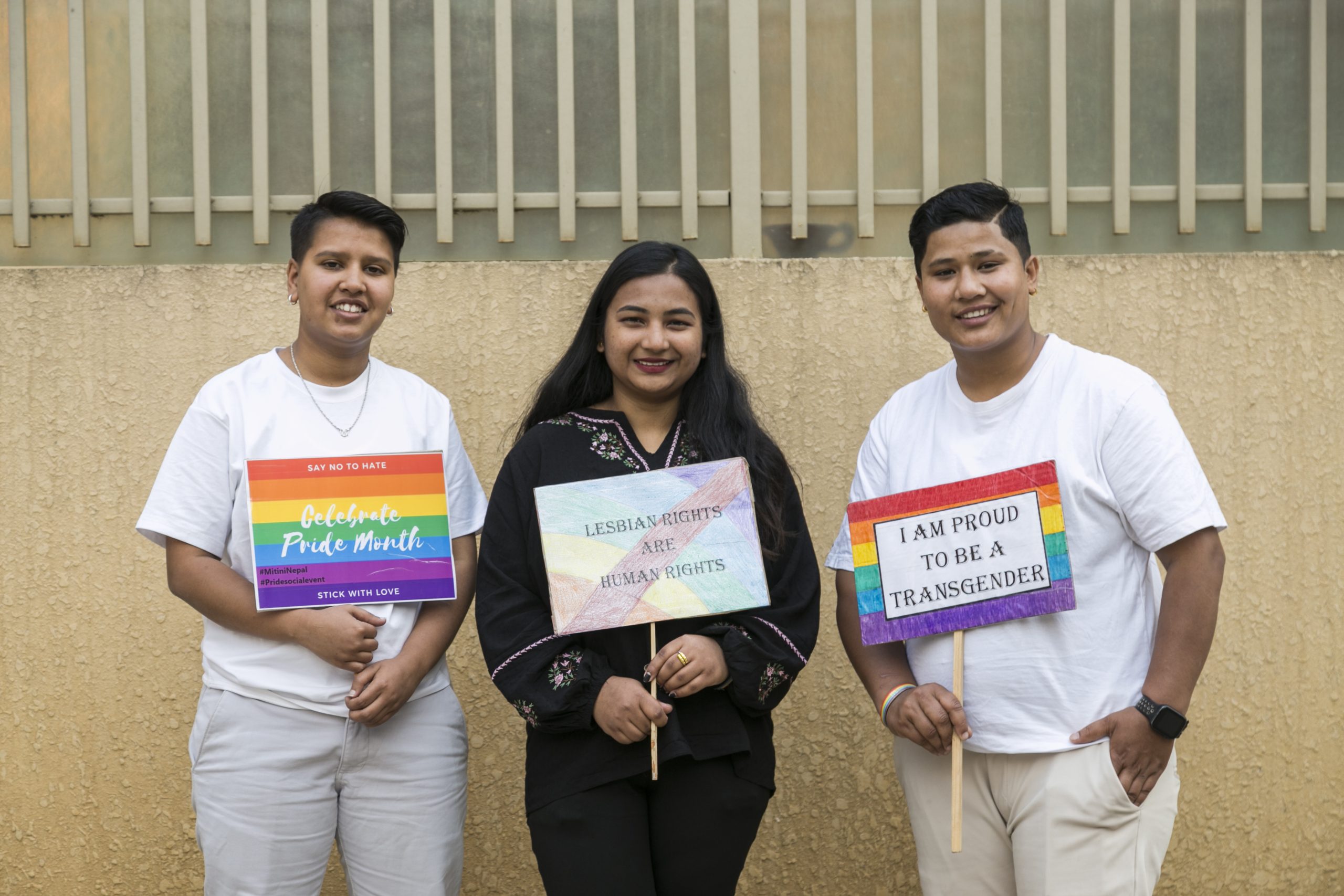
Since 2005, Mitini Nepal has been advocating for the rights and inclusion of the lesbian, gay, bisexual, transgender, queer and intersex (LGBTQI+) community.
This Pride Month we are celebrating the work of Mitini Nepal – a long term partner of Womankind and pillar of support for the LGBTQI+ community across Nepal. Jeshika Gautam, Outreach Officer and Samjhaana Bishwakarma, Bagmati Province Coordinator at Mitini Nepal shared their reflections and experiences with us.
The LGBTQI+ experience in Nepal today
In Nepal, though life for the LGBTQI+ community has improved over time, there are still challenges when it comes to living freely and thriving.
“The Constitution of Nepal 2015 guarantees and protects the rights of the sexual and gender minority communities under several articles: Article 12 (right to citizenship with identity of descent and gender), Article 16 (right to live with dignity), Article 18 (right to equality), Article 42 (right to social justice), and Article 43 (right to social security) for all Nepali citizens. However, in reality, numerous discriminatory laws contradict these constitutional commitments to inclusion, participation, and equality. As a result, LGBTQI+ communities in Nepal face significant legal and social challenges, including discrimination, violence, and inequality. We see this within social security, employment, health, education, marriage and equal participation and representation.” – Jeshika
“Within a couple, in the event of one person dying, that person’s family can claim ownership of everything instead of the partner. LGBTQI+ couples also cannot adopt children. Additionally, only heterosexual marriage has been accepted and given validation but it’s not the same for LGBTQI+ marriage.” – Jeshika
Education and employment are also issues for the Nepali LGBTQI+ community. “There are limited employment opportunities, and even when we secure jobs, we often encounter harassment. Additionally, there is disparity in income, with non-LGBTQI+ individuals earning higher salaries than us for the same positions.” – Jeshika
“When it comes to health rights, LGBTQI+ individuals face unequal treatment and are frequently subjected to domination and harassment. Also, regarding political rights, there is extensive discussion on women’s rights, however, lesbian, bisexual, and queer women often face marginalisation, with lawmakers frequently overlooking their specific rights due to their identities.” – Jeshika
“The knowledge about the LGBTQI+ community varies between geographical locations. For example, within the capital city, Kathmandu and outside of the province, then also between cities and rural areas. This variance significantly impacts people’s knowledge about the LGBTQI+ community and their rights.” Samjhaana
“Because of all of these things, there have been members of our community who have attempted suicide. Surviving in Nepal remains very challenging due to ongoing discrimination.” – Jeshika
Mitini Nepal’s work
Mitini Nepal was formally established in 2005, after operating as a support group for three years. Started by Laxmi Ghalan and Meera Bajracharya, the first openly lesbian couple in Nepal, Mitini has been advocating for the rights of the LGBTQI+ community for over 20 years, becoming instrumental in achieving significant milestones. Mitini’s work has directly contributed to two major changes for the LGBTQI+ community: the decriminalisation of identifying as homosexual in 2007 and the legalisation of living together as an LGBTQI+. In 2012, Mitini Nepal took a case involving a lesbian couple to the Supreme Court. The court ruled in favour of the couple, allowing them to live together, marking a significant victory for the community.
“Nepal is a country driven by religion and marked by strong patriarchal values, making it difficult to gain support for the LGBTQI+ community. However, Mitini Nepal is tackling this challenge head-on. At Mitini, our advocacy is clear and direct about the community’s needs. We stand up for our rights and demonstrate courage.” – Jeshika
A cycle of support
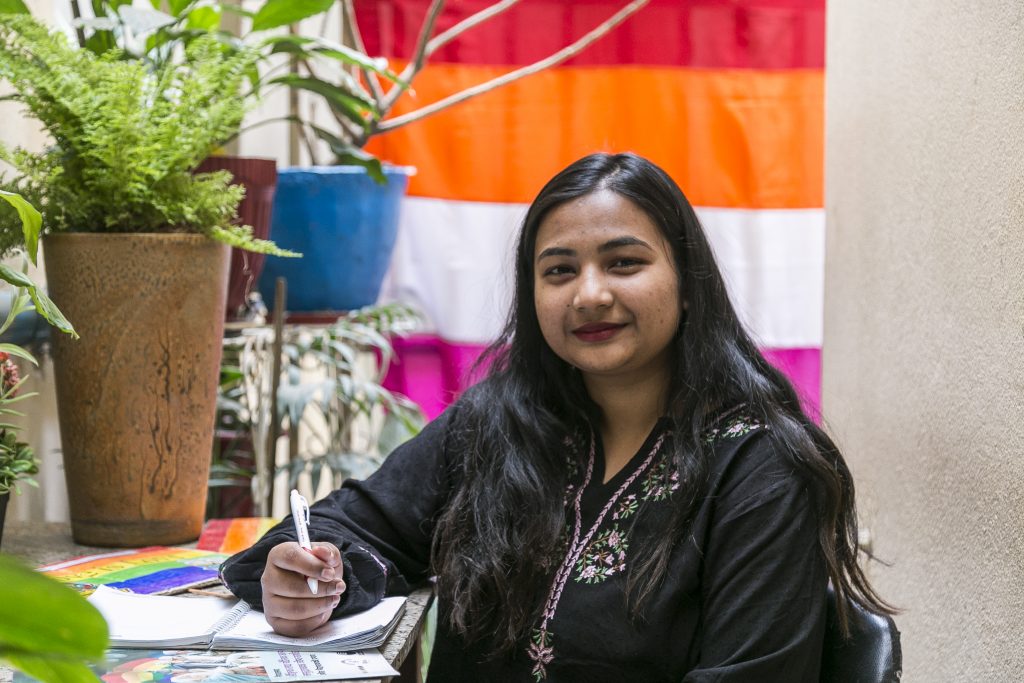
For Samjhaana, Mitini’s Bagmati Province Coordinator, Mitini has evolved from a place of support when she needed it to the place where she now provides support to others in the LGBTQI+ community.
“I am a survivor. Before I ran away and came here, I had no support and didn’t even understand my own sexuality. After searching for help, I found Mitini Nepal and came to understand my sexual orientation. Mitini has created a very homely environment where we can come and talk.” – Samjhaana
The power of claiming your identity
“In the 2021 census, only 2,928 LGBTQI individuals were counted, categorised under ‘others’ rather than separately identifying the LGBTQI+ community. This approach prevents accurate data collection specific to LGBTQI+ individuals. To have precise data and validation is crucial for us to come out openly. Only then will the true number of our community be known and acknowledged. Otherwise, we will always be pushed back.” – Samjhaana
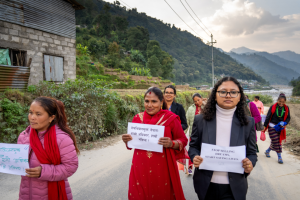
“We organised a rally for Lesbian Visibility Day in Pokhara because we believe it’s important for the government to recognise our community and this day. They should accept, respect, and celebrate diversity.” – Jeshika
It’s clear that Mitini is a vital cornerstone of the LBTQI+ community in Nepal. Womankind continues to support their work and at present Mitini are one of our Strategic Grant partners.