

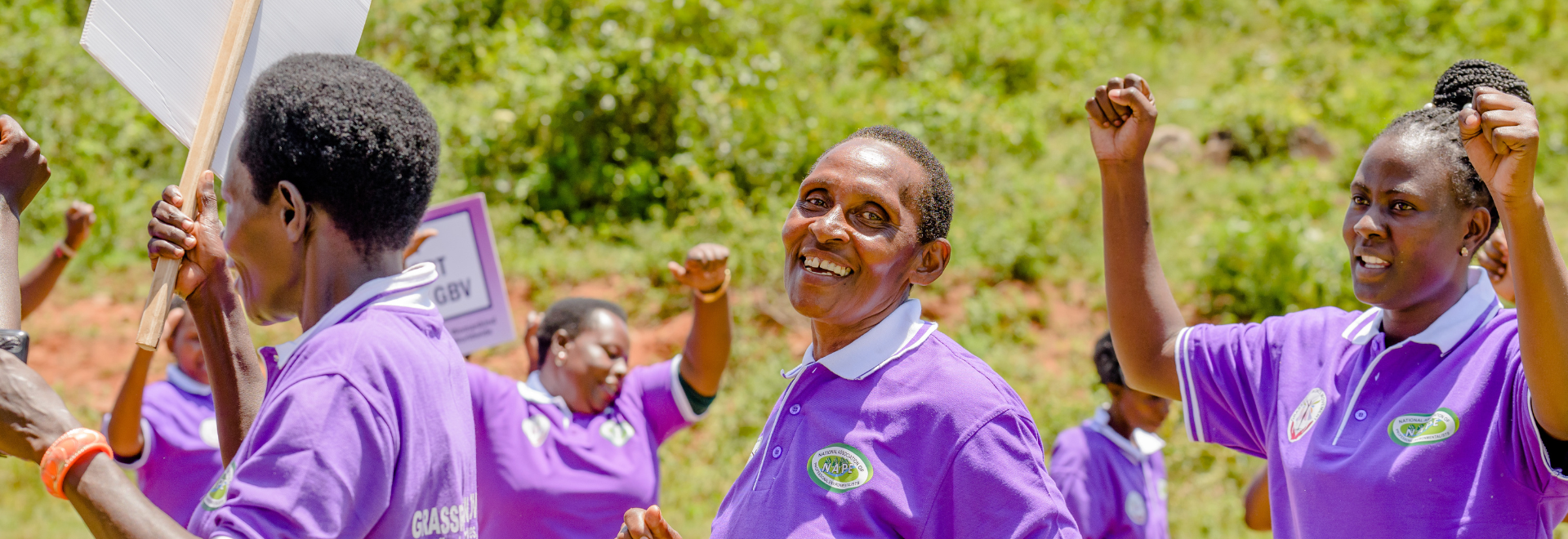

In total, we have granted £434,430 through 34 grants to 23 partners in Nepal, Ethiopia, Kenya, Uganda and Zimbabwe. One-year grants ranged from £5,000 to £20,000. 76% of grants worked across intersections of discrimination, often explicitly reaching young women, LBTQI people and women with disabilities simultaneously.
In 2024/25 we launched Cycle 4, which granted £121,244 in 8 grants. During the year we also received reports from Cycle 3 MSF grantees.
Deaf Women Included (DWI) in Zimbabwe is an expert in advocating for the rights of women and girls with disabilities. DWI used their grant to address the exclusion of women and girls with disabilities from the broader Zimbabwean feminist movement. DWI held an interactive feminist dialogue with women considered non-disabled, government representatives and activists to build on their existing knowledge of disability inclusion. Together, the diverse organisations mapped ways of building an inclusive movement resulting in a guidance paper ‘Perspectives on inclusive feminist organising for women in Zimbabwe’ which supports mainstream women’s rights organisations to integrate disability in their work. The dialogue created stronger feminist collective power in new partnerships and broke down barriers separating those with disabilities and those without.

Freedom and Roam Uganda (FARUG) is a leading feminist organisation advancing the rights and wellbeing of Lesbian, Bisexual and Queer (LBQ) women in Uganda. With support from the grant, FARUG collaborated with the Global Lesbian Coalition to co-convene the Lesbian Pre-Conference at the 2024 ILGA World Conference in South Africa – one of the largest global gatherings of LGBTI+ movements. The pre-conference brought together over 90 LBQ activists from five global regions, creating a rare opportunity for cross-regional knowledge exchange, collective strategising and strengthened international solidarity around the urgent issues facing LBQ communities. In addition, FARUG led the convening of an autonomous space specifically for African LBQ activists. This space fostered connection, resilience building and increased visibility for African voices within the broader human rights movement. These efforts deepened and expanded regional LBQ networks while forging critical links under the banner of the emerging Global Lesbian Coalition. The coalition now offers a vital global organising framework to amplify LBQ voices across geographies and cultures and to support sustained collaboration, resource sharing and collective advocacy.

Polycom Girls in Kenya promotes self-worth among girls and women of all diversities. Polycom used their extensive network to create intergenerational dialogues between 250 younger and older activists. The dialogues rejoiced in older feminists, hearing their contributions to the Kenyan feminist movement on issues including SGBV, politics and SRHR. Younger feminists showed appreciation to them by washing their feet and wrapping them with shawls as a Kenyan sign of respect.
‘Receive blessings from us as elders for what you have done for us today. Be the remnants who make the women’s movement real’. Dr Christine Sadia. Passing the Baton
The dialogues set the tone for intentional, powerful relationships between younger and older feminists so that wisdom is harnessed to sustain the Kenyan feminist movement. Polycom is now implementing the follow-up MSF initiative called FEMInspire, which connects younger and older feminists through structured mentorship spaces.

Mitini Nepal used their MSF grant to establish a provincial level LBQ Women’s Alliance. This alliance enabled Mitini to create a unified platform for LBQ women across all 7 provinces of Nepal to work collaboratively to share their needs, advocate for their rights and address issues often overlooked by broader LGBTI and feminist movements. The alliance has empowered LBQ women to connect across provinces, foster a collective voice and address issues such as violence and discrimination, access to services, lack of legal recognition and limited political participation. Another key achievement of the grant was the collaborative development of a position paper that addressed the specific realities, challenges and needs of LBQ women. The position paper is now being used to support advocacy with government officials to ensure the rights of LBQ women are realised and demonstrates the critical role that documents play in strengthening feminist movements.

Young Women’s Leadership Institute (YWLI) in Kenya used their MSF grant to give a specific focus to self and collective care in organising spaces. YWLI directly supported activists involved in the march against femicide in January 2024. YWLI provided a refreshing and detoxifying space for young feminists to unwind, reflect and recharge. The session renewed the sense of community and enhanced awareness of the importance of self-care and creative expression as tools for mental and emotional wellbeing. YWLI also organised a healing session with and for Human Rights Defenders during the Annual Sexual, Reproductive, Health Rights (SRHR) and Climate Change summit in Kisumu. The session included meditation, mental health discussion and building coping mechanisms. Through these events, YWLI has reinforced the critical need to prioritise holistic wellness as integral to feminist activism.


