
“I felt a different kind of willpower. I felt like I could do anything, anywhere.”
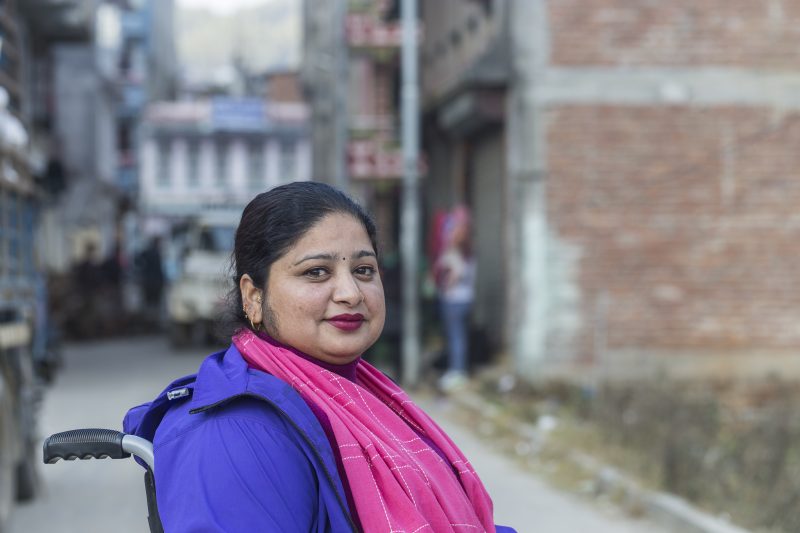
Lalita Mainali was born and lives Banepa in the Kavre district of Nepal. Following an accident that left her with a spinal cord injury, Lalita became a wheelchair user. She wants other women with disabilities to know they have the power to be independent and that there is support available to get them there.
“After the operation, slowly it seemed like I wouldn’t get better. Initially, doctors had told me that I would recover gradually but, two months after the operation, I was referred to hospital for therapy in Kathmandu and stayed there for 6-7 months.
My family then took me to an organisation in Gokarna, and there, everybody was like me. And I said, “I will stay here, I will not go back to my village”. I rented a room there and I studied my grade 9 and 10. Later, whilst studying for my exams, I fell sick, had to be admitted to the hospital and could not continue my studies. Nowadays, I am staying here in Banepa, where I look after both my brother’s and sister’s children, preparing food and sending them to school. During my free time I make things like dolls and cushions.
Accepting a new way of living
When you are able versus disabled, the difference is like earth and sky. I found it so hard to accept myself after I had my spinal injury. In the first one or two months I used to think, “why they are treating me so much, why are they spending so much money on me, why are they going through so much trouble”. If I can walk again, everything is fine. But if I cannot, the moment I can move just a bit around whether in wheelchair or in whatever way, I will get something, take it and I will die. I didn’t want to live at all and that’s what I continuously thought for 2-3 years. I thought I would never be able to go back to society, never be able to meet my friends or classmates again. Maybe it’s all over for me. It felt like something heavy was pinning me down.
But, I had so much support from my parents and family. When they rented a room for me and moved me there, I felt that I was still a part of the family, and that I could do anything.
Holistic care and community
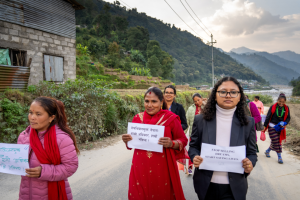
Since joining Nepal Disabled Women’s Association (NDWA), I cannot even describe how good it has been. Just like how a baby crying in its cradle becomes so happy when they see their mother, I felt the same way. Because even though I had the love and support of my family, I was confined within the rooms of my house. I did not know anything about the environment beyond my home. I did not know anything regarding my rights and benefits in the area of disability.
I used to think, maybe this is all I am ever good at, taking care of kids, and I will forever be confined to doing just these household chores, unable to do any work outside of the home. I used to constantly feel that way. But once I stepped outside, I experienced entering a completely different world. I then felt like having spinal injury was my fortune rather than misfortune. If I had been in the village, I would have been married off when I was 14-15. When I realised that, I started feeling that I have actually been given a new world and a new life. After that, I felt a different kind of willpower and I felt like I could do anything, anywhere.
NDWA call me even for small matters and they give me so much support in every way, whether its financial, social, or counselling – everything! They care for us so much.
Support leads to self-belief
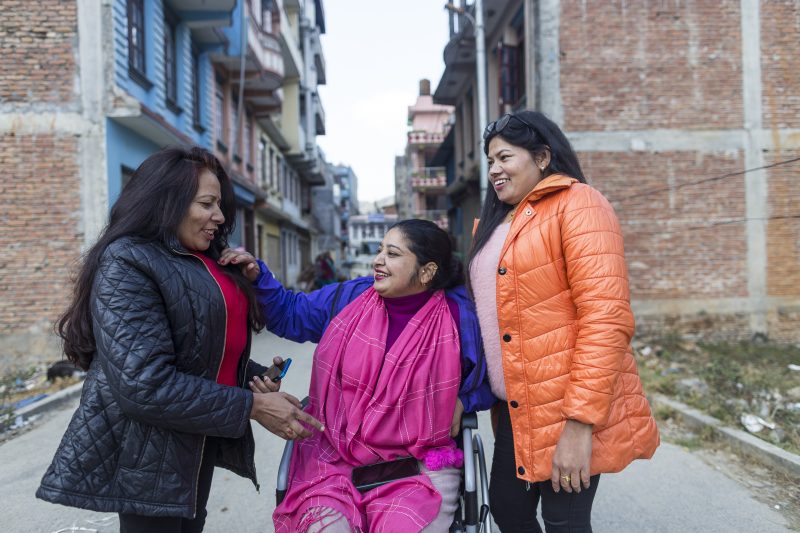
I now know I should not confine myself to the house but be going out as well and be in contact with everybody. The organisations that understand us are even more of a support for us than our family, helping us to adjust to an environment outside of the house. I felt that way with NDWA and my spirit was very different after meeting them.
This society says bad things about me and people question what I can do now. They pity me and say that I will be taken care of only until my parents are no longer alive and they question what will happen to me in future when they are no longer here. Wherever I go, I feel I am capable of supporting myself and I now have that courage. I want to thank NDWA for this.
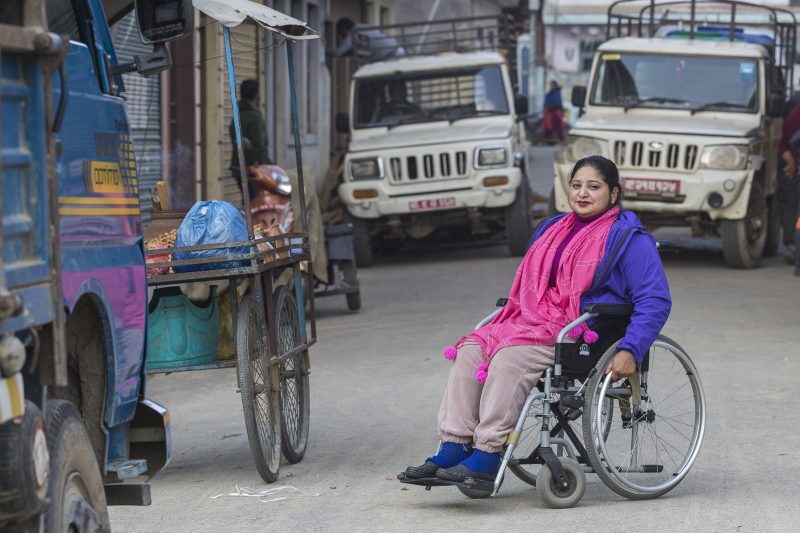
Lalita has been supported by Nepal Disabled Women’s Association through the Access to Justice Project in partnership with Womankind Worldwide.
< View all stories