
“If we just took time to take care of each other, the inequalities wouldn’t exist”
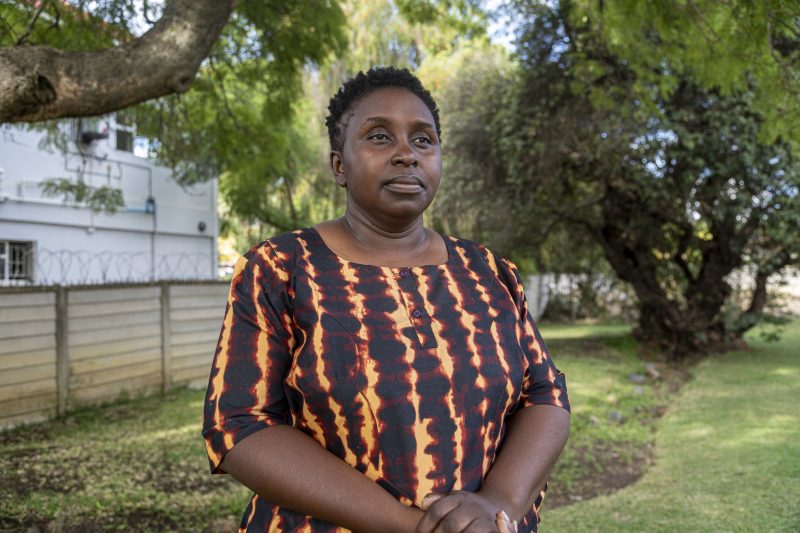
Wadzanayi Vere is a women’s human rights defender and currently, the Zimbabwe Country Coordinator for JASS (Just Associates). For Wadzanayi, spaces of care and safety are crucial for both her own activism but also, her work supporting other activists.
Wadzanayi is a long-term collaborator of Women’s Action Group (WAG). Through Her Voice Fund, WAG are creating safe, supportive and non-violent environment for women politicians and women human rights defenders in post-election Zimbabwe and Wadzanayi is part of these spaces.
The work of a women’s human rights defender
We can’t run away from the reality of our economics. Speaking about Zimbabwe in particular, poverty is a reality and it’s something that we live with. Simple, basic things of life are not easy, and there are issues of access to resources. Service provision is also at zero. For example, I haven’t had running water for the past week and I may be in a position of privilege compared to the others.
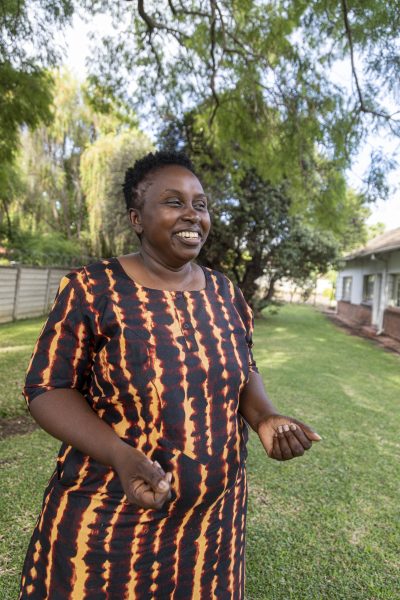 My work has focussed on the intersection of issues around women’s bodies because we believe that women’s bodies are a site of struggle. Whether it’s an LGBTI body or a sex worker body, this issue is something that’s very critical for us. This then brings us to the issue of violence and structural violence. In my work, we approach the issues that women face from a structural violence lens and try to interrogate the underlying cause of this inequality and manifestation of violence that we see.
Safety, security and solidarity
On a day-to-day basis women’s human rights defenders need to be aware. Aware of where we want to go physically and of who’s in the room in online networks. It’s one thing to be safe, to be secure, but it’s also another to have a mental sense of security and wellness as individuals and collectively in the work that we do.
Being an activist in the Zimbabwean context, the society and community is very hostile. I don’t think it’s Zimbabwe only but violence is something that’s very real. As much as we want our activists to be out there, demanding change and pushing back, we also are very worried about their safety and protection, therefore inbuilt in all this work is ensuring that activists remain safe.
Solidarity is something that’s critical, and we’re trying to build it across movements and across issues. Recently, we’ve had a serious backlash against the LGBTIQ community in Zimbabwe and from the highest authorities in the land. How then do we build solidarity with the queer community? This is the work that that we’ve been doing and we continue to do.
Connection and community
Working with WAG provides me personally with a safe space to go and decompress. You can go there and offload some of the pressures that come with the work, and have space just to sit and be. There’s also practical, direct and immediate support that I’ve personally received, like picking up the phone and asking for information, resources, what their position is on something and what’s happening in a certain arena, especially issues to do with sexual and health rights.
When you know that you have that support, it makes the work lighter and even when you’re not with them physically, it’s just knowing they’re the people I can reach out to and who are ready and willing to hear me out.
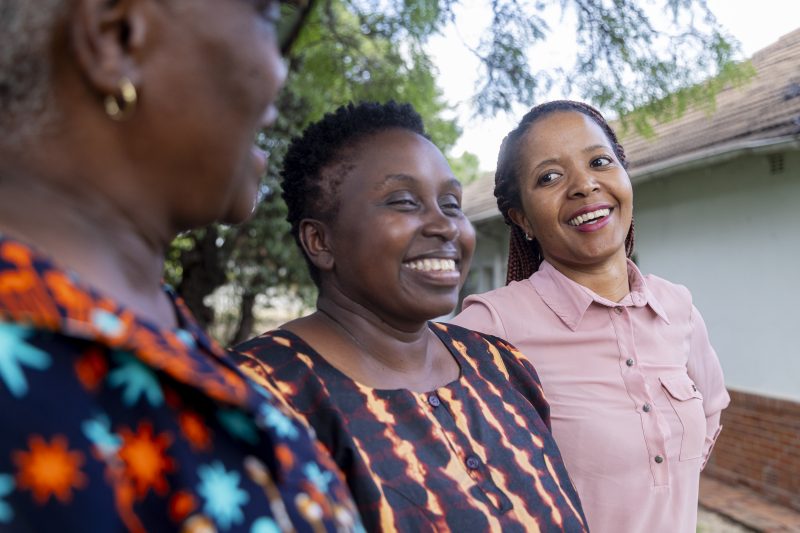
Care at the centre of everything
Collective care and self-care are critical. This is because the struggles that we face as women’s human rights defenders, individually and collectively are daily struggles and these are directed onto your body. There is a daily need to fight to get water and electricity. You’re either going to be carrying firewood on your head or you’re going to walk the distance to go and fetch the water.
Care becomes an essential component of our work as feminists and activists. If I’m cared for, I can care for myself, I can care for the next person, I can care for you. If we were caring for the environment, we wouldn’t be so extractivist. Because there’s no care, our laws are violent, our service delivery is violent. It’s a whole package of violence. But, if we just took time to take care of each other, the inequalities wouldn’t exist. We know that there’s enough resources to carry all of us.
I’m hoping and I’m believing for a world and for a Zimbabwe where women value themselves and value each other. For a society and a community that allows the potential that’s in every woman in our country to be released. If every woman had their potential released and could reach the best of their ability, where would we be?
< View all stories