

Unlocking women’s power is a one-way street
By Clemmy Manzo
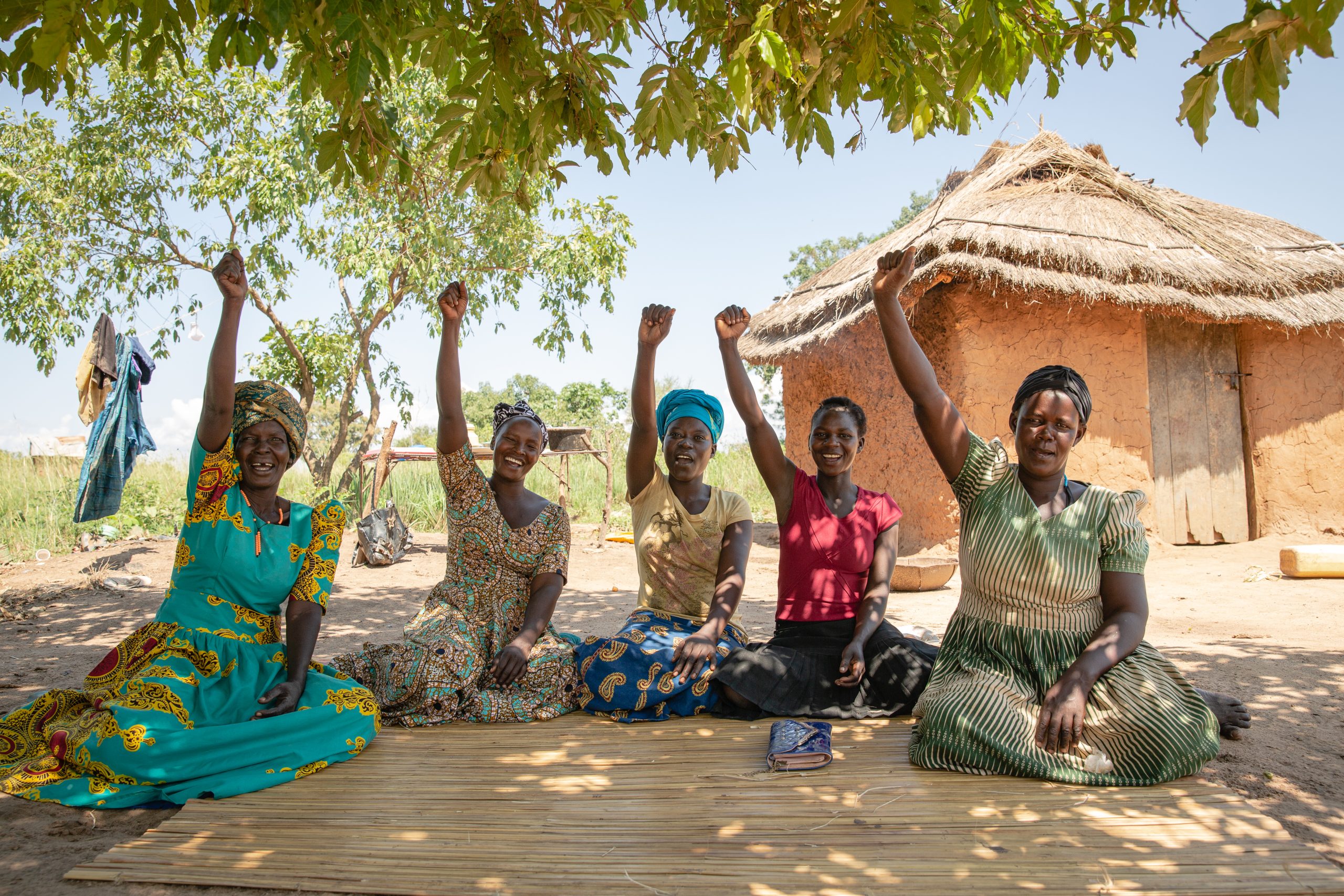
Once a woman discovers her power, something shifts within and there’s no going back.
We have witnessed this shift time and time again at Womankind. It’s certainly a main takeaway from the POWER project implemented by our partners National Association of Women’s Action in Development (NAWAD) and National Association of Professional Environmentalists (NAPE). Aimed at strengthening Ugandan women’s understanding of their land rights (and supporting their access to justice to claim these rights), the project also enables greater financial independence through alternative eco-friendly livelihoods such as beekeeping, growing vegetables and craft-making. In this blog, we look at the ways in which the POWER project gives women more…well, power.
But first, a little context:
Land – its access, control and ownership – lies at the heart of power relationships within Uganda. The struggle for land is deeply intertwined with the struggle for women’s rights. In Uganda, it’s primarily women who are dependent on land: three-quarters of Ugandan women earn their living as (predominantly subsistence) farmers compared with two-thirds of men; they are also traditionally responsible for feeding their families. And yet in practice, they usually have no say or rights over the land they live and farm on. Add into the mix the increasing problem of land grabs – large-scale land acquisitions by transnational corporations, most often facilitated by the government – and where does that leave women whose livelihoods are based on farming? Mass internal displacement, and poverty as a result.
Knowledge is power
In order to claim your rights, you have to know them first.
As part of the POWER project, women received training on their land and economic rights, as well as on how to engage with local and national government and global extractive industry corporations. They are now acting on this acquired knowledge, taking up cases of both land rights violations and violence against women and girls (the two are closely linked), and advocating for the rights of women and girls in general.
There’s strength in solidarity
Together we can change the world.
In Uganda, collective action has fuelled women’s voices: seeing and understanding that they are not alone has given women strength to stand up to power structures, together. By attending events in different project districts that didn’t directly impact them, women demonstrated the importance of female solidarity; how the act of standing together feeds into building a shared agenda, underscoring their own eco-feminism. This is the power of sisterhood.
“When you join a group, it gives you a chance to air out your problem, the group has given me confidence, I can now address the public without any fear.” – Owek Jenifer (POWER stakeholder), Amuru district
Representation matters
At Womankind, intersectional feminism runs at the heart of everything we do; it is the foundation of all our work; it’s what we believe in. Aligned with this vision, our partners NAWAD and NAPE deliberately included a high number of women survivors of violence and those with diverse disabilities among the participants of the POWER project.
By taking an intersectional approach, the project helped women see they shared experiences and grievances around access to land, no matter other differences or markers of identity. For example, able bodied women began to understand the additional barriers that their sisters with disabilities face in accessing their rights; now, when they speak up against rights violations, they can make noise about those wider barriers as well.
This kind of representation and intersectional approach benefits other women with disabilities within the wider community, too:
“Before we were despised, and no land was allocated to us but now we see some change in people’s attitude towards those with disabilities.” – Lamwaka Grace (POWER stakeholder), Amuru district
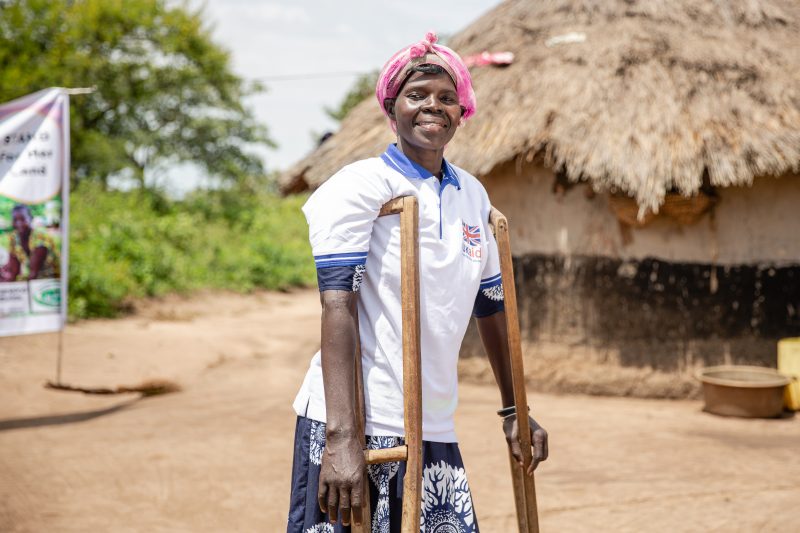
Photo credit: Esther Mbabazi
Start local, stay practical
Change starts at home. Women acting on issues related to their own families is powerful, enabling and necessary – and has a ripple effect across the community.
We learned that in order for the programme to have a wider reach, we needed to build more networking opportunities and spaces. This meant that local women’s groups could come into contact with higher level duty bearers, such as councillors.
At Womankind, we know from experience that programmes need to be practical and accessible to work. With the POWER project, NAWAD and NAPE focused on women’s priorities, in local languages, and actively reached out to women with disabilities: POWER pioneered mobile legal aid clinics in 12 villages across the four project districts so that women didn’t have to travel far to access information about their rights.
An enabling environment for women to thrive
As feminist organisations, Womankind and our partners unapologetically focus on women’s rights. Yet while our focus is and will always be women and marginalised genders, our work is most successful when everyone is on board. For the POWER project, NAWAD and NAPE built in meetings that focused on sharing information with men – both at a family level as well as at an institutional level – to allow them to be better enablers. After all, when women access their power, the whole community benefits.
“NAWAD taught me that women have land rights. Now I have power, I have rights.” – Akello Lilly Kilama (POWER stakeholder), Nwoya District.
This project was funded by Womankind supporters and the UK Government through UK Aid Match.


