World Press Freedom Day: A feminist approach to journalism and freedom of expression.
By Womankind Worldwide
The role of the press has become more significant today than ever before. Womankind believes it is important to have a feminist approach to media to allow representation of women and girls and ensure their voices are heard and their stories are told.
The role of women in media- journalists, artists and content creators has evolved over the years, and we have seen how crucial it is to have women cover stories about women and girls that are usually unheard. As media platforms continue expanding, so has the spread of misinformation and fake news on online and offline platforms. By examining media content with a feminist perspective, we can expose and challenge the ways in which the mainstream media perpetuates gender inequality and reinforces patriarchal norms.
This year’s World Press Freedom Day theme is on the importance of journalism and freedom of expression in the context of the current global environmental crisis. It’s also an apt reminder of Article 19 of The Universal Declaration of Human Rights which states that everyone has the right to freedom of opinion and expression. This right includes freedom to hold opinions without interference and to seek, receive and impart information and ideas through any media regardless of frontiers.
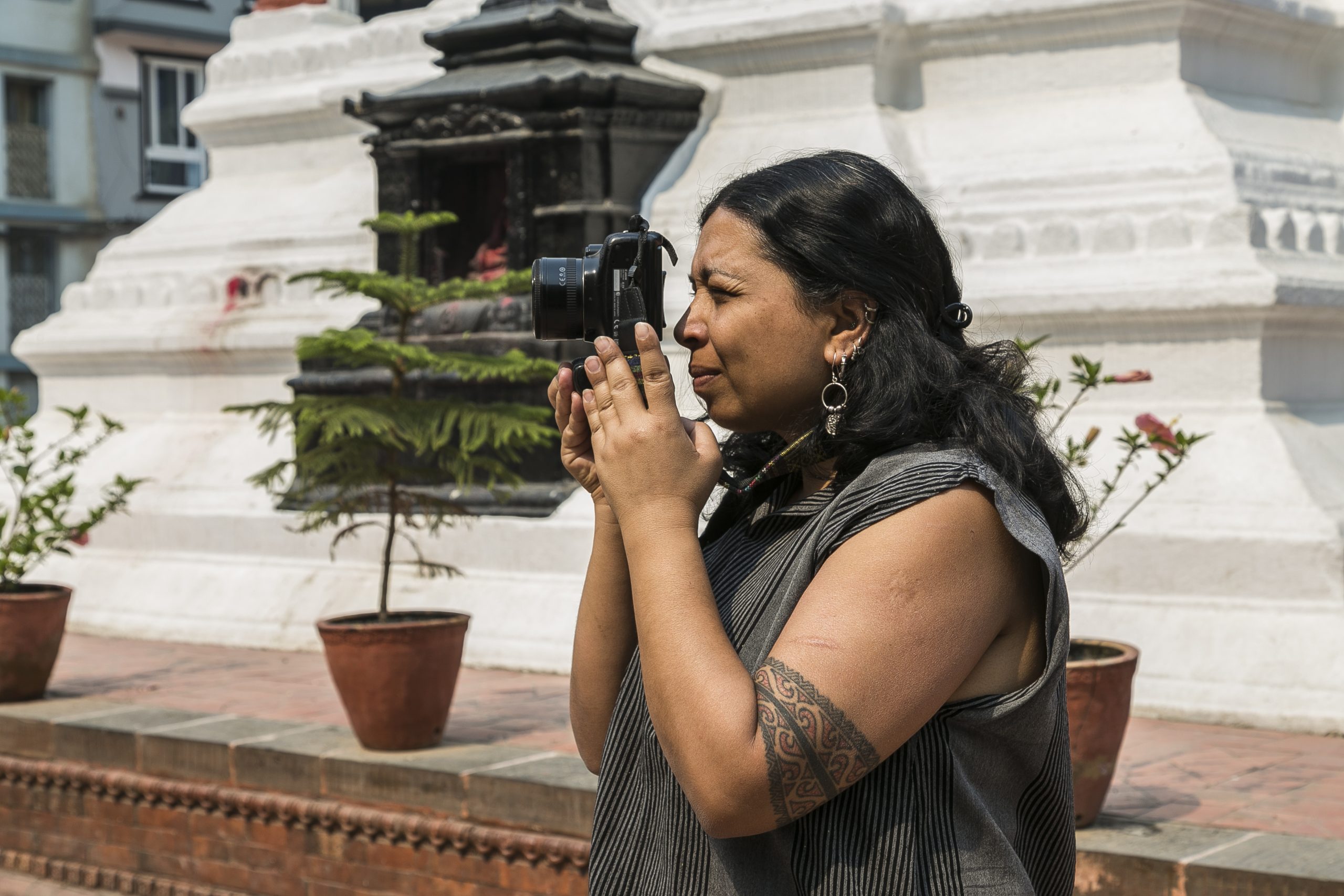
Pooja Pant, founder of Voices of Women Media (VOW Media) is dedicated to advancing women’s rights in Nepal. Her organisation, which focuses on building movements for conflict-affected women and men, seeks to elevate the voices and struggles of women in mainstream society. VOW Media is additionally committed to providing women from marginalised communities with access to, and training opportunities on, media tools and art forms including video, radio and photography, to enable them to speak about their own lives, to support them to share their stories, and strengthen their voices and collective power.
Womankind spoke to Pooja on her views of the importance of this day from a feminist’s point of view.
- What is your feminist stance on freedom of expression?
I believe that everyone has the right to freedom of expression. We have the right to participate freely in the public sphere, to hold opinions and to be heard. Our voice matters and we have the right to demand a better world for all without the fear of those in power.
- What motivates you to speak up on the rights of the voices of women in media?
Having a voice is a human right and everyone has the right to be heard. Living in a feminist society that values equality and openness, requires women to exercise their right to speak. I think it’s imperative to establish a society where everyone has access to justice and can exercise their human rights.
- How has the art of storytelling for social change within your organization (Voices of Women Media) impacted girls and women in Nepal?
VOW Media’s work revolves around storytelling for social change. All our programmes and campaigns are designed around women’s stories. Storytelling has been an essential tool when we are on our journey to take people through change. It unifies people towards a common purpose, transmitting values, motivating and inspiring women to work for change.
- What are some of the challenges you have faced when working on providing access to media and technology to girls and women?
As we work with girls and women who really live in underserved areas of Kathmandu and Nepal, we have a lot of logistical challenges trying to provide access to media technology. We are faced with women and girls who have absolutely no prior IT knowledge or skills and so their starting point is to learn how to turn on a computer. It is also exceedingly challenging for the many women and girls who live in our neighbourhoods to earn a living because of their poor socio–economic backgrounds. Considering this, any technological devices such as computers, phones, cameras and many more, are out of their reach. This is why VOWM exists, to help bridge the gap between access to media tools and marginalised women and girls.
- Today is World Press Freedom Day. What are your hopes and aspirations for the future of women in Nepal and their voices in media?
Women’s voices must be heard, and women’s stories must be told for our country to begin to change its patriarchal mindset. I hope journalists learn how to write and tell stories using feminism as their lens. We must train more women as writers, photographers, radio jockeys and videographers to have a wide range of stories that reflect women’s contributions to society and show women as the heroes they are.
- What is the role of storytelling and media within the feminist movement in Nepal and more broadly globally?
Humans have been telling stories for millennia and are doing so daily. A crucial, if undervalued, component of political coordination and communication is storytelling. According to Arundhati Roy, Sydney Peace Prize Lecture “There’s really no such thing as the ‘voiceless’. There are only the deliberately silenced, or the preferably unheard.” Skilled storytellers are essential for effective activism.
- VOW Media is one of Womankind’s new Strategic Grant partners. Why is flexible funding important to the work that you do?
Activism is not a straight line. It is often completely qualitative and often cannot be quantified. Flexible funding allows small, local organizations like ours to respond to the need of the moment rather than the agenda being donor led. We offer access and opportunities to media technology and different forms of art, so that girls & women* can voice their own lives – in order to raise hidden and silenced issues in our communities. It also gives us great responsibility knowing that WomanKind Worldwide trusts us to do the work we need to do.