Deaf Women Included call on women’s rights organisations in the feminist movement to be disability inclusive
By Agness Chindimba, Nyasha Sengayi, Beatrice Mugadhani
The context for women with disabilities
Too often, women with disabilities are left out of the feminist movement. Their voices are not prioritised and various intersectional factors continue to define aspects of their day-to-day lives. For example, the intersection of disability, race, geographical location and poverty deepens inequality for women and girls with disabilities. These identities are the foundational root causes of their marginalisation in mainstream feminist movement activities. They are usually considered as the “other” group of women, hence their voices are not taken into account, their feminist actions are not valued and documented, and in some cases, communities perceive them as ‘abnormal’. Overall, this negatively affects their participation in development processes.
Strengthening inclusion in the feminist movement in Zimbabwe
At Deaf Women Included (DWI), we seek to advance the rights of people with disabilities in Zimbabwe. Currently, we are implementing a project which acknowledges disability inclusion as a vital component of attaining the UN’s 2030 Agenda of Leaving No One Behind*. The project complements the government’s efforts toward the attainment of the objectives of the National Development Strategy 1 (NDS 1)**.
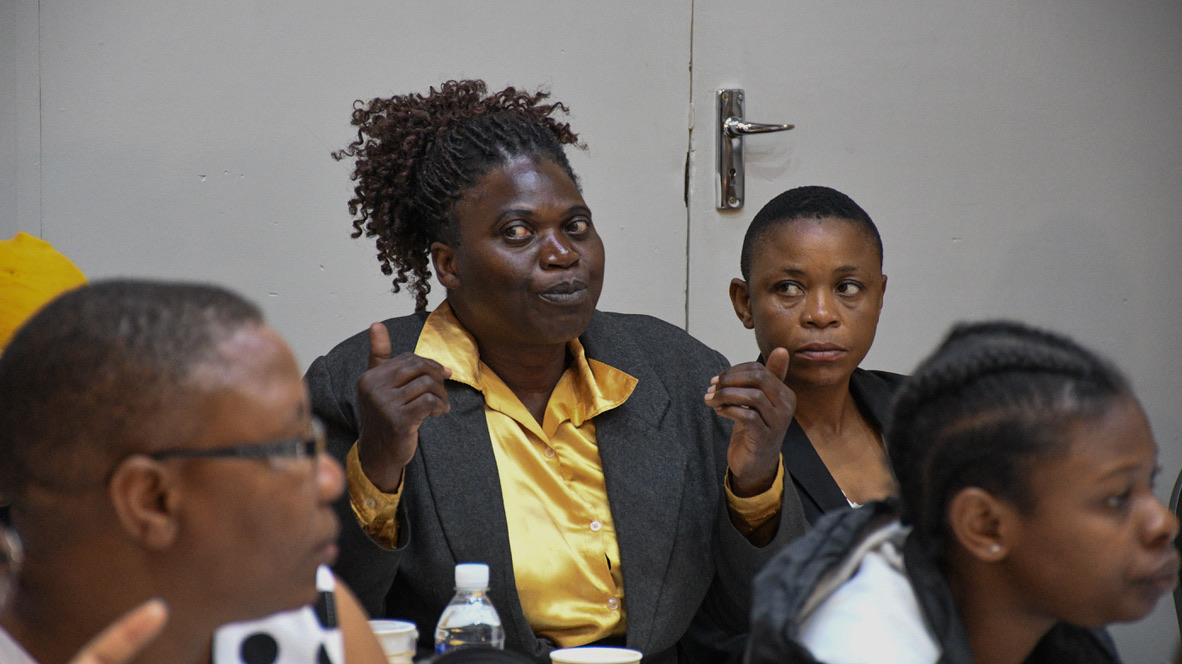
Supported by Womankind’s Movement Strengthening Fund, DWI held an Interactive Feminist Dialogue on the 14th of March 2023. The session brought together women with disabilities and those without disabilities to map ways of building an inclusive feminist movement that embraces diversity and disability. The dialogue sought to discuss the challenges faced by women who are considered non-disabled and those with disabilities in trying to identify synergies for collaboration within the feminist movement and to enhance the knowledge of women who are within the feminist movement about disability inclusive movement building strategies. The process was integral in capacitating women’s rights organisations on how to incorporate disability inclusion into their programming along with how to map ways of strengthening, collaborating, and supporting each other in the feminist movement as equal partners.
Challenges for inclusion
During the feminist dialogue, we identified challenges that hinder the inclusion of women with disabilities in the feminist movement.
Lack of knowledge of disability-sensitive budgeting
Most participants were not aware of this concept, and neither were their proposal writing teams or finance managers. Inclusion of those with disabilities is frequently an afterthought, and without a budget line for inclusion, women with disabilities are excluded.
Attitudinal barriers
The attitudes of other women without disabilities toward disability-inclusive programming are negative. It was discovered that other women without disabilities have negative attitudes toward those with disabilities, so they frequently and purposefully exclude them.
Poor planning that does not incorporate disability-inclusive project design
Due to a lack of knowledge, most women’s rights organisations are lagging in disability-inclusive project design. Therefore, disability issues are left out at the planning stage and it is nearly impossible to then include women with disabilities in programming due to a lack of capacity to make reasonable accommodations for ease of participation.
Communication barriers and lack of awareness of disability concepts
There is little to no awareness of disability concepts and how to effectively assist and work together with women with disabilities in the feminist movement. Generally, if people are not fully aware of something, they leave it out. In addition, other women in the feminist movement are not able to effectively communicate with those who are deaf and they cannot use sign language. In the case of visually impaired women, a lot of IEC material is never translated into braille.
A way forward
Here are the recommendations developed during the feminist dialogue.
Implement an organisational disability policy
Organisations that do not have disability policies were encouraged to have one. DWI is to come up with a model disability policy for WROs to adopt efforts to make their programming disability inclusive in line with their vision and mission.
Training of finance officers on disability-sensitive budgeting
It was agreed that finance officers also need this training so that they can budget for any required assistive accommodation when implementing their projects. DWI should consider having the training solely for finance officers of WROs.
A consortium for women with disabilities
Recommendations were made to create a collective platform for women with disabilities which exclusively works on advancing issues that affect them. In addition, there was a recommendation made for the women’s coalition of Zimbabwe to create a thematic committee on women’s rights and disability issues.
A clear gender-responsive definition of disability is required in the draft disability bill
There is a need for the disability bill to give a specific definition for disability, as this contributes to making informed decisions at the policy level.
Seek opportunities to collaborate
Organisations involved in the conversation and others as well were encouraged to collaborate and fight with one voice to build an inclusive feminist movement that leaves no woman behind.
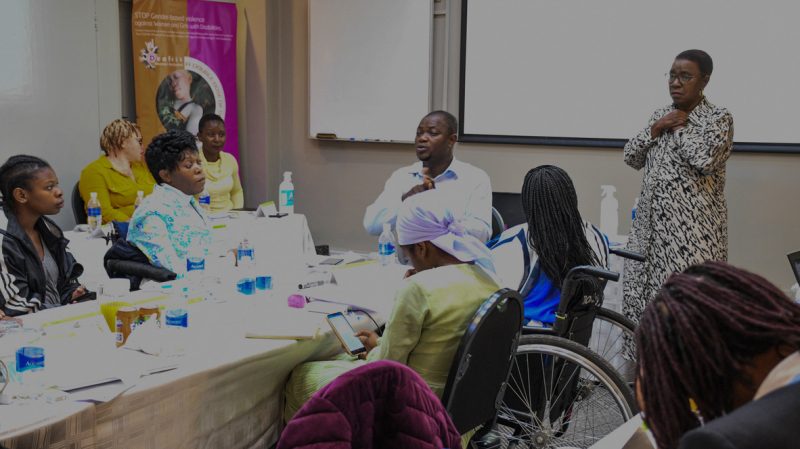
Learning from each other is crucial, and both women with disabilities and those without disabilities must collaborate and find ways to partner. When women’s rights organisations take a proactive stand in developing clearer visions and disability-inclusive policies, this facilitates the creation of platforms that encourage both women with disabilities and those without disabilities to participate collectively for the benefit of the feminist movement.
Our Movement Strengthening Fund project will continue until June 2023. During that time we will be implementing a two-day Feminist Leadership Training on feminist advocacy and publishing a learning paper on our research, all contributing to a strengthened feminist movement in Zimbabwe.
*Leave no one behind is the central, transformative promise of the UN’s 2030 Agenda for Sustainable Development and its Sustainable Development Goals (SDGs). It represents the unequivocal commitment of all UN Member States to eradicate poverty in all its forms, end discrimination and exclusion, and reduce the inequalities and vulnerabilities that leave people behind and undermine the potential of individuals and of humanity as a whole. Source: United Nations Sustainable Development Group.
**Zimbabwe’s National Development Strategy (NDS1) – 2021 to 2025, the Government is focusing on the Sustainable Development Goals (SDGs) theme of “leaving no-one and no place behind.”