How gender-based violence deters women from political leadership
By Clemmy Manzo
We spoke to six partners in Kenya, Uganda and Ethiopia that form part of the AWESOME programme, funded by the Netherland’s Ministry of Foreign Affairs, which works to end violence against women, while also supporting women – including women with disabilities – to enter the currently male-dominated political domain. Together, we examine the link between Violence Against Women (VAWG) and the lack of women in leadership positions, and discuss what changes need to happen to improve gender equality.
It’s clear that women want and need to participate in decisions that affect their lives, yet there’s a distinct lack of women in political leadership positions. Globally, women make up only 5.9 percent of heads of state; just 23.6 percent of national parliamentarians and 18.3 percent of ministers are women. A disparity that is unsurprising when taking into account the challenges women face under the patriarchal systems in which society currently operates. But while there are several reasons for the stark imbalance (all stemming from gender inequality), one major component is the violence perpetrated against women who enter the political sphere.
But how – and why – does VAWG manifest in the political sphere?
Firstly, it’s important to understand that violence against women in politics (VAWP) comes in various forms – from cyberbullying and physical or psychological intimidation to sexual violence. And that all manifestations of violence essentially have the same aim: to deter women from participating in the political sphere. Indeed, it’s often a form of ‘punishment’ for women who (dare to) challenge the status quo.
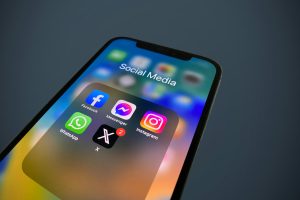
Worryingly, violence against women happens in digital spaces too: online intimidation, death and rape threats have proved to be successful tactics in keeping women out of politics – not just women candidates, but voters, too.
Who are the perpetrators?
In times of election, cases of VAWP increase significantly. A recent Inter-Parliamentary Union (IPU) study showed that male parliamentary colleagues were the primary perpetrators of all forms of violence affecting women parliamentarians. Crucially, incidents of violence were more prevalent among women parliamentarians who were unmarried, under 40, have a disability, or members of minority groups.
What’s worse, most cases go unreported and/or unpunished. But there are severe consequences to impunity: “When the state fails to hold criminals accountable, impunity exacerbates the victims’ subordination and powerlessness and conveys to society that male violence against women is both expected and unavoidable,” says UN Secretary-General Ban Ki-moon.
VAWP is worse for women with disabilities
According to the UN, there is no official data on the representation of women with disabilities in political decision-making.
Women with disabilities are at heightened risk of all types of violence, from cyberbullying to sexual abuse, but even more so when vying for political leadership. And home is not always a safe space: Women Challenged to Challenge (WCC) explains that many women with disabilities are subjected to domestic violence from spouses who feel intimidated by women with disabilities taking up a leadership position.
Other unique challenges for women with disabilities are the lack of inclusive processes like Braille material, sign language interpreters and disability-friendly infrastructure. All things that AWESOME partners are working to improve.
What is being done to end violence against women in the political sphere – and what more can be done?
“Creating a conducive environment for political participation is the mandate of the government and each citizen.” (SWDA)
AWESOME partners are determined to change the narrative when it comes to women’s participation and leadership (FIDA Kenya’s “Vote A Dada” campaign, for example, was focused on changing perceptions of women candidates among Kenyans before the 2022 elections). Through training and leadership programmes, AWESOME partners are supporting all women to enter the political sphere, and with positive results. Together they demand an end to discriminatory laws and push for mass awareness raising when it comes to VAWG, too. While some are offering data-driven solutions (through monitoring centres recording incidents of VAWG around election time, for example) others focus on campaigning for better accessibility, inclusion and mainstreaming of disability issues. A major AWESOME win has been an increased confidence among women with disabilities wanting to enter the political sphere.
Hopes and wins
Stamping out VAWG and supporting women to enter the political sphere has a benefit for society at large because women’s participation in politics is socially transformative. The contribution of women in political processes is not only of prime importance in ensuring a balanced representation of the needs and concerns of democratic societies, but it also increases the credibility of political infrastructure.
“Research shows that women in politics raise issues that others overlook, pass bills that others oppose, invest in projects others dismiss and seek to end abuses that others ignore.” (FOWODE – Deterred not Barred)
There are of course other obstacles that women face when it comes to entering political leadership – for example, many don’t have the financial resources to pay for the high costs of campaigning, nor do they have enough time due to the disproportionate burden of unpaid care responsibilities placed on women’s shoulders. In many cases, family and societal pressures remain stacked against women. Too often, the media is part of the problem, rehashing harmful gender stereotypes (including trivialising or sexually objectifying women) and giving women candidates less air time than their male counterparts.
But, as AWESOME partners reveal, times are changing. And if one thing is certain, there’s more will than ever before for women to enter politics. As FIDA Kenya’s Executive Director Ann Ireri says, “The time is NOW. Women have waited for too long in Kenya. The women are ready. The women are available. The women are coming for the seats.”