A world of work free of violence, harassment and discrimination
By Womankind Worldwide
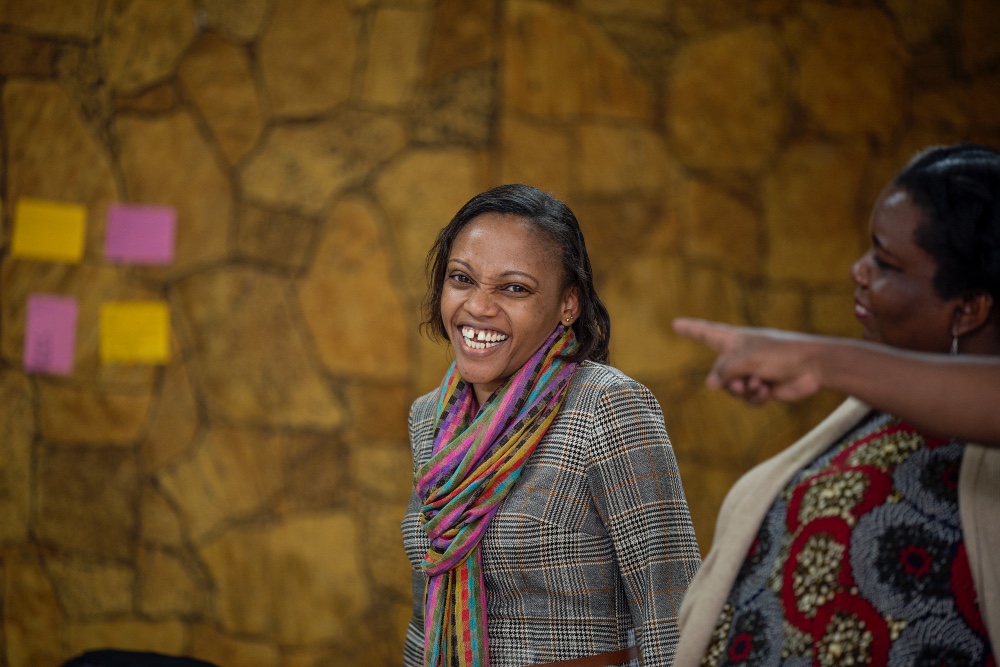
Elizabeth Gichohi, Programme Officer at FIDA-Kenya, Janet Onyango, Deputy Executive Director at FIDA-Kenya and Virginia Kibunja, Programme Officer at FIDA-Kenya have played an instrumental role in implementing the AWESOME Programme’s #SafeAtWork, #SafeInSociety campaign in Kenya. Working alongside industry stakeholders, they’re breaking new ground strengthening policies and laws in readiness for the ratification and implementation of ILO 190. ILO 190 is the first international treaty that recognises a world free of work free of violence and harassment.
According to statistics from a Global Survey in 2022 by the International Labour Organisation (ILO), 17.9 per cent of employed men and women were reported to have experienced psychological violence and harassment in the world of work. When it comes to disclosure of workplace violence and harassment, only half of survivors had disclosed their experience with women more likely to share their experience than men.
The findings from this research offer a glimpse of the complexities of the world of work and how patriarchal societies have normalised violence, harassment and discrimination in the workplace. With the ILO 190 evolving as a gamechanger and one of the world’s most progressive instruments in enabling safe workplaces- FIDA Kenya has been on the forefront of championing its ratification and implementation in Kenya. They’re seeding the ground to normalise safeguarding in the workplace working alongside progressive champions.
‘’We launched the #SafeAtWork, #SafeinSociety campaign last year and kicked off our first meeting to sensitise the Elected Women Members of the Machakos County Assembly on the Convention ILO 190. It was important for us to continue this engagement from previous ones to strengthen the element of women’s participation in leadership while also pivoting on why dignity at work is critical.’’
Institutional frameworks are needed before we ratify and implement ILO 190
FIDA-Kenya’s history in advocating for decent work has been a progressive journey not only through movement building by caucusing women political leaders but organising other stakeholders such as labour unions to lobby for favourable and inclusive policies in the world of work.
Pushing the ratification and implementation of ILO 190 is one recent example where they’ve been keen on building its awareness across a myriad of stakeholders and institutions in Kenya. These have been through sensitising Community-Based Organisations (CBOs), lawyers offering pro-bono services in the legal fraternity, labour unions and women’s rights organisations.
FIDA-Kenya has additionally championed the approach of male engagement to build allyship. ‘’Patriarchy has entrenched the systemic issues we need to uproot. Engaging male champions in this campaign has been crucial in transforming gender norms and busting some of the known myths and stereotypes that have propagated violence and harassment at the workplace. Men are now standing up and playing an active role in denouncing gender-based violence,’’ says Janet Anyango.
‘’In platforms such as the previous Sixty Eighth Session of the Commission of the Status of Women (CSW68), we held a side-event that was focused on popularising the ILO 190 and having bespoke conversations with like-minded organisations on safeguarding at the workplace,’’ adds Elizabeth Gichohi on their global advocacy efforts to publicise the campaign.
Working alongside Women Challenged to Challenge (WCC), FIDA-Kenya recently signed a joint memorandum submitted to the Office of the Women’s Rights Advisor to the President sharing their views on ILO 189 and ILO 190.
Their engagement has also advanced to online activism through social media platforms such as X where they’ve built momentum educating diverse stakeholders on ILO 190 and the urgency to have it ratified and implemented in Kenya. ‘’While hosting a Space on X, we realised many people still have scanty understanding on the concept of safe workplaces with many employed in organisations where violence and harassment have been normalised. Worse still, ILO 190 is still quite technical and needs to be cascaded down for that everyday employee – from what it means to report violations to what zero tolerance to violence and harassment is – before they show support for its ratification and implementation,’’ says Elizabeth Gichohi.
Businesses must look at the bigger picture in ending violence and harassment
The immediate visible efforts of their advocacy efforts have been shifts in attitudes, increased knowledge, awareness and commitment to creating a future world of work that is just and has dignity. ‘’From our trainings, we’ve observed that more women are now reporting incidences of violence at the workplace. Some of the employers have now taken steps to create sexual harassment policies with proper reporting mechanisms and investigation procedures,’’ says Virginia Kibunjia. ‘’Our engagement with the women representatives in Machakos’ County Assembly has seen them reach out directly to ILO requesting for more trainings on safeguarding at the workplace,’’ adds Janet Onyango.
Furthermore, out of their awareness raising sessions- grass-roots CBOs have also taken bold steps to challenge companies in the manufacturing sector to embed principles of occupational health and safety in their policies.
While FIDA-Kenya’s experience with implementing the #SafeAtWork, #SafeInSociety has not attracted any backlash, their journey has unveiled long-standing stereotypes such as victim-blaming are still quite prevalent when reporting incidences of violence and harassment. ‘’We need structural change even as we think of the ratification and implementation of ILO 190. It’s quite disheartening to see sexual favors in exchange for promotion is still a norm in many organisations. Such organisational cultures have become breeding grounds for sexual predators at the workplace,’’ decries Janet Onyango.
‘’We are also pushing for responsible business when it comes to structural change. Companies must not only be focused on profit-making, forgetting to invest in the safety of their employees so that they can show up authentically at work. Any safeguarding or sexual harassment policy needs resources and personnel such as: toll free lines for reporting and designated safeguarding officers to implement the policy. Employees who feel safe will be more productive at work.’’
Some of FIDA-Kenya’s biggest learnings in the campaign include the importance of leveraging on more partnerships for movement building. ‘’GBV is not just a women’s issue, it affects everyone in society and we need all efforts in eliminating it including enforcing policy and legal frameworks and tools that will bring lasting change in establishing safe workplaces,’’ says Virginia Kibunjia.
‘’We look forward to the ratification and implementation of ILO 190 in Kenya, but we know that will just be the beginning of a future world of work that accords dignity to women,’’ says Janet Onyango as she introspects on the outcome of the #SafeAtWork, #SafeInSociety Campaign.