Feminism: the path to achieving rights for all women and girls
By Dinah Musindarwezo, Director of Policy & Communications
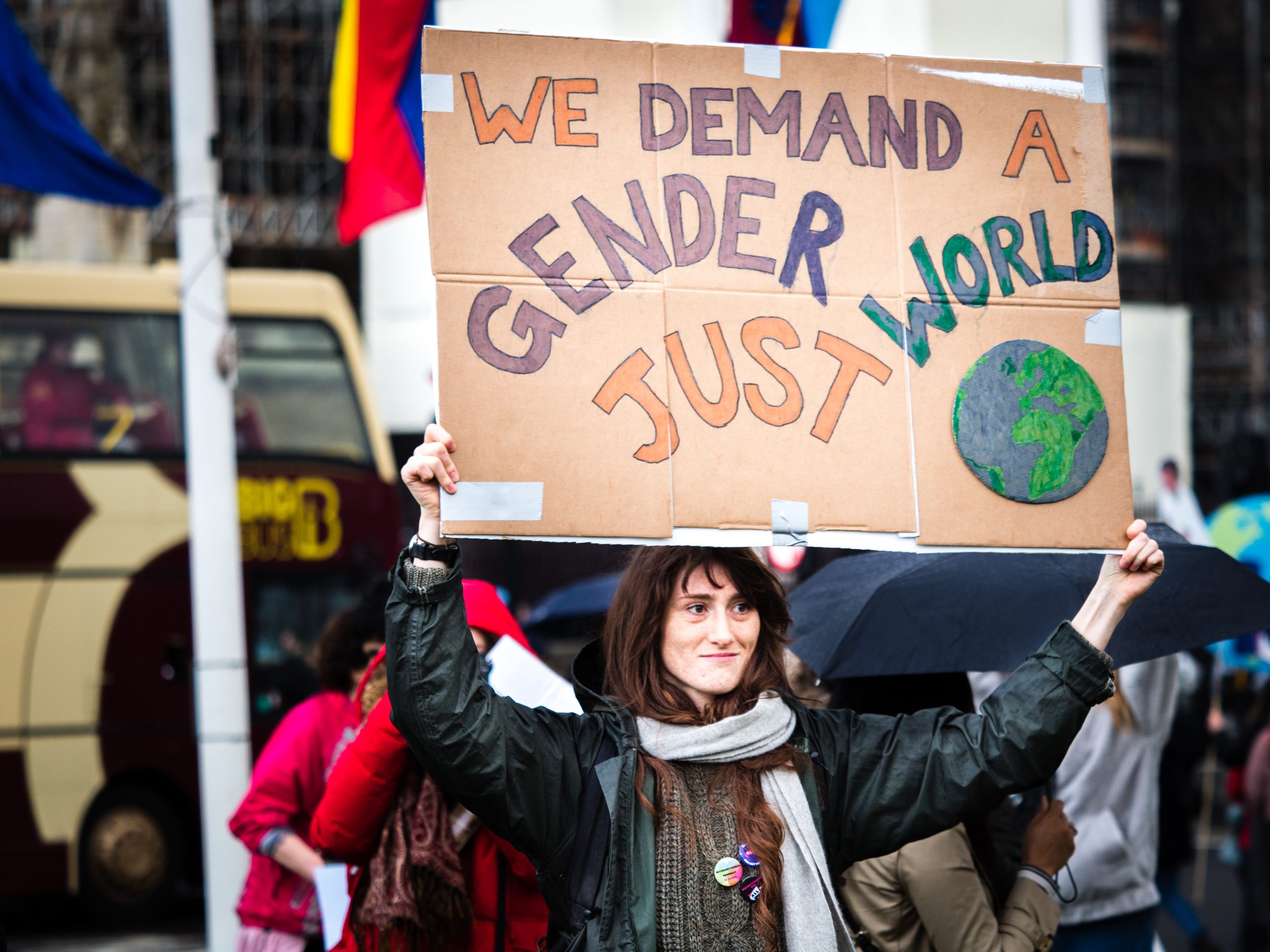
At Womankind Worldwide our feminist position is non-negotiable. We understand that a feminist approach is key to achieving a more just and equal world for women and girls. Through a feminist approach women and girls can reclaim their power and realise their rights.
We are unapologetic about the need to think and act as feminists, and to view the world through a feminist lens.
Our definition of feminism
There are a lot of misconceptions around feminism, so we want to talk about what it means for us, as an organisation seeking global social justice. As well as explore what it might mean for individuals seeking greater sense of personal self-realisation and fulfilment.
Our definition of feminism is an inclusive one:
Feminism is the path to achieve gender equality and women’s rights. It is open to people from all genders and from all walks of life.
Feminism is about collectively and actively transforming systems of oppression so that women, men and gender non-conforming people hold equal power, resources and rights.
We recognise that all women experience oppression in different ways. We act in solidarity with women, in all their diversities, so that every voice is heard, and everyone has a choice in their future.
What can we take from this? Feminism is a path. It’s a lens through which to view the world. It is also constantly evolving, so we are all on a journey and learning things along the way. There are no ‘perfect’ feminists, we can come as we are with an openness to learn and grow and, because of that, we are kind to each other.
Why do we need feminism?
Feminism is fundamentally about equality. It’s not about women wanting to be greater than men. It’s about equal rights, equal dignity and equal access and control of resources. It’s about having equal choices for our future.
It is also about power. Women all over the world have their power undermined by systems, beliefs and attitudes that favour men – women earn less, own less land and have less political voice. Women make up just one in four people holding political office globally.
Women disproportionately experience disadvantage, too. The Covid-19 pandemic has thrown this into sharp relief, since women make up over 70% of the global health workforce, placing them at greater risk, while also experiencing a surge in domestic violence during lockdowns.
While Covid-19 has worsened conditions for women, the shadow pandemic of violence against women and girls has existed long before the global health crisis. The harsh truth is that women and girls face significant levels of violence all around the world every day with 1 in 3 women experiencing violence in their lifetimes. Abusive relationships, forced marriage, female genital mutilation, sexual assault: it’s an ugly list and, for many, a brutal reality.
Inclusive and intersectional
But gender is just one part of a complex picture. At Womankind we recognise that not all women have an equal experience of discrimination. Overlapping spheres of disadvantage caused by discrimination on the basis of race, poverty, disability, sexuality, religion etc. mean that many women experience ‘sexism plus’. Gender is just one sphere within which they experience power’s negative effects. For example, women with disabilities are 2 to 4 times more likely to experience domestic violence than women without disabilities. This is the reason that our feminism is inherently intersectional. In order to ensure that all women and girls are able to claim their rights we must address the multiple ways women experience discrimination.

Reclaiming power
The task of reclaiming women’s power sits at the heart of any kind of practical feminism. It is about acknowledging the systems that lead to the subjugation of women and girls and working collectively to ensure those systems no longer exist. It’s about shifting power so that all women and girls are free to claim their rights.
Research and experience tells us that change happens most effectively when women work together, taking collective action through women’s movements. Movements enable women to share experiences, organise and mobilise and have a collective voice that is effective in achieving social change, whether that is by dismantling sexist and discriminatory laws, challenging negative social norms and practices or ensuring improved access to services. We work with our partners to strengthen women’s movements so that they can advocate for change nationally, regionally and internationally.
Spotlighting women’s power and leadership
Helping to crystallise and focus the idea of the importance of women’s power our theme for International Women’s Day 2021 is ‘Women’s Power and Leadership’.
Unfortunately, too often women are left out of decision-making spaces and their voices are silenced. But we know that when women work together they can advocate for women’s rights and strengthen their communities creating a fairer world and a more sustainable future for everyone. This year we want to focus attention on the power of women, particularly when they come together for collective action. One way we’re doing this is by spotlighting partners who work on women’s participation and leadership. Watch what power and leadership means around the world.
Individual actions, collective impact
So where do you fit in? What can you do? This year, we’re asking you to become a conscious feminist and join us on the journey. Be open to learn and to listen to women. Be ready to adjust your perspective and see the world more clearly through a feminist lens.
A great place to start is to play Feminist Bingo!
Feminist Bingo adds a modern, feminist twist to classic bingo. It’s a fun and interactive social game that encourages us all to reflect on and strengthen our feminist practice, while completing squares and lines and winning wellbeing rewards along the way.
The game runs for 25 days from Monday 1 March to celebrate Women’s History Month and International Women’s Day on Monday 8 March.
Each day you’ll receive a new number and a new task that will challenge you to reflect and experience a deeper feminism. Each action may seem small but together they ladder up to a big change. And that’s good for all of us. Together we will shift the power. Together we will change the world.