In solidarity: building more inclusive feminist movements in Ethiopia
By SIHA Network
The Strategic Initiative for Women in the Horn of Africa (SIHA) Network is a regional Womankind partner. Working across Ethiopia, Eritrea, Kenya, Sudan, South Sudan, Somalia, Somaliland and Uganda. With their Movement Strengthening Fund grant, they focussed on strengthening their feminist movement in Ethiopia and here, they share their experience.
Women’s rights activism and movements have long been a driving force for progress in Ethiopia, advocating for advancements in education, healthcare, political representation, and socio-economic participation. However, despite these achievements, the landscape of activism and feminism in the country has faced numerous challenges. Ethiopia’s transition to democracy initially provided new opportunities for civil society, including women’s organisations, but subsequent government regulations and a shrinking civic space have hindered their autonomy.
Furthermore, polarisation within the women’s and feminist movements along ethnic, religious, class, age, and geographic lines has hampered the ability to present a unified front for gender equality. The civil war and growing distrust among communities have exacerbated these tensions. Additionally, the lack of representation and power for young women within traditional women’s organisations, the dominance of elite sectors, and the misconceptions and backlash faced by activists further highlight the urgency to build solidarity and trust. In light of these challenges, with support from Womankind’s Movement Strengthening Fund (MSF), SIHA Network implemented ‘In Solidarity: building more inclusive feminist movements in Ethiopia’.
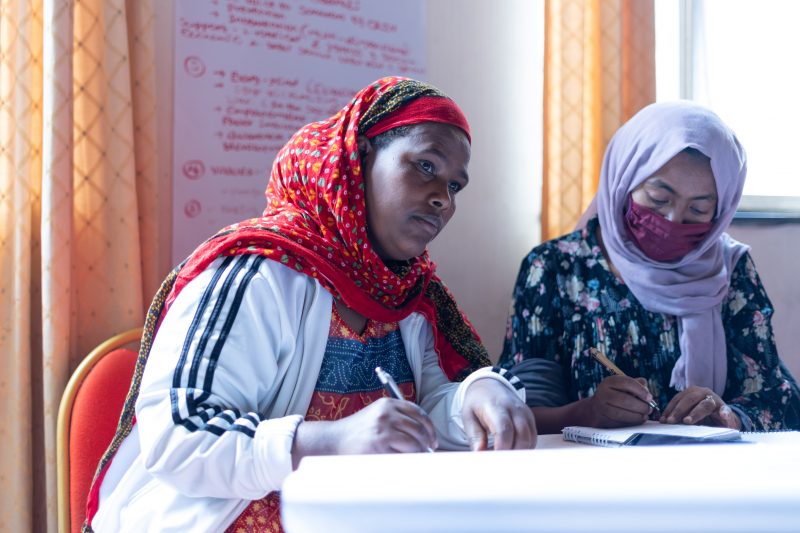
From April 24-26, 2023, SIHA Network successfully organised a three-day trust-building and solidarity forum in Addis Ababa, Ethiopia. The forum brought together representatives from various women’s rights organisations (WROs) and feminist activists from diverse backgrounds. The primary aim of the forum was to provide a safe space for participants to reflect on the strengths and weaknesses of feminist movements in Ethiopia, address key issues dividing women’s rights and feminist activists, and identify strategies to increase trust, mutual understanding, and collaboration.
The forum created a valuable platform for participants to engage in self-reflection, share experiences, and collectively envision a more inclusive and impactful feminist movement in Ethiopia.
Day one of the forum focussed on personal and collective reflections, feminist leadership, and a power walk exercise. On day two, SIHA Network held a circle of trust, facilitated discussions on inclusive movement building, participants shared the challenges faced by feminist movements in Ethiopia and what are the strategies that work. Day three looked at women’s participation in state-building and peacebuilding, legitimacy, and relationship building.

Overall, the Trust Building workshop in Ethiopia was a resounding success. It provided a safe and inclusive space for women activists from diverse backgrounds to come together, engage in dialogue, and share their experiences and knowledge. The participants expressed their determination to be agents of change and contribute to rewriting history for a more equitable future. The participants also engaged in deep discussions, fostering a common understanding and language around feminist principles and goals. They identified key priorities, such as improving gender-based violence laws, enhancing women’s participation in peace processes, and ensuring economic empowerment for women. The workshop cultivated self-leadership created genuine connections, and sowed seeds of trust within the group.
One significant outcome of the workshop was the awareness raised regarding the development of Ethiopia’s first United Nations Security Council Resolutions (UNSCR) 1325 National Action Plan (NAP). Participants were informed about the importance of their involvement in the process and were encouraged to learn from the experience of neighbouring countries like Uganda. This knowledge empowered the participants to actively participate in shaping policies and strategies that promote women’s rights and meaningful inclusion in peacebuilding and state-building processes.
Moving forward, it is crucial to address language accessibility, align donor agendas with feminist priorities, and provide follow-up meetings to sustain the momentum and operationalise the shared goals and principles. By taking these recommendations into account, the feminist movement in Ethiopia can continue to grow, advocate for meaningful change, and foster a more inclusive and equitable society for all. The impact of the shared knowledge, connections built, and commitments made during the sessions are expected to extend beyond the workshop itself. The participants are poised to take the lessons learned and apply them in their respective fields of work, contributing to the advancement of feminist leadership, gender equality, and peacebuilding in Ethiopia.