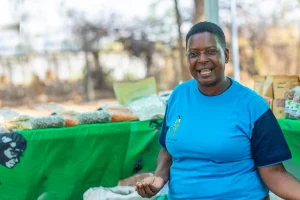

“I feel we are family with Women and Land in Zimbabwe”
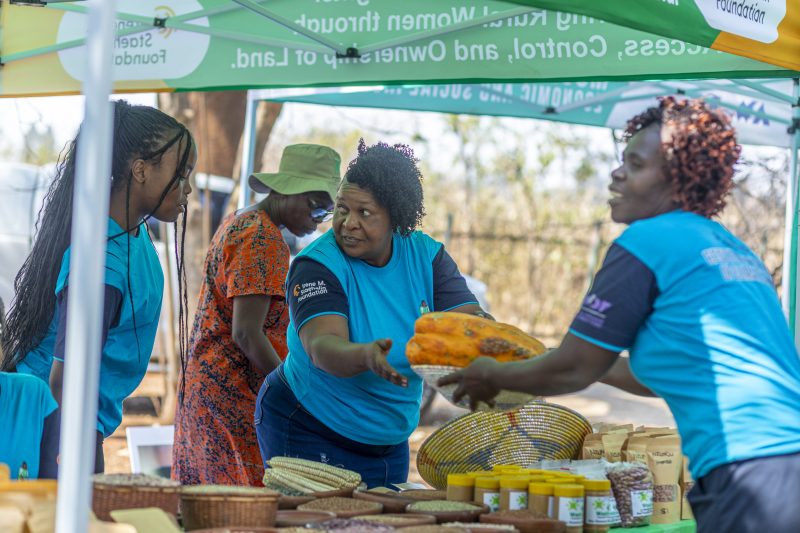
Mildred Mutengo is 49 years old and married with six children. From Gweru, Midlands Province in Zimbabwe, she is part of Women and Land Zimbabwe’s movement, the Rural Women’s Assembly.
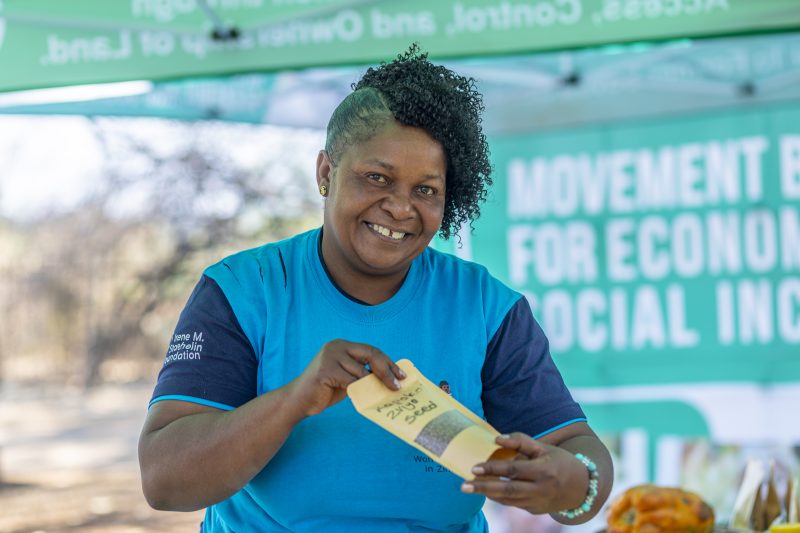
“I’m a full-time rural and dairy farmer. I am also the facilitator for the Rural Women’s Assembly movement in Gweru, Midlands Province. I grow velvet bean, cow peas, sunflower seeds and soya beans.”
Mildred lives and works on her farm. But her rights to the land are restricted as her husband’s name is on the land ownership documents.
Knowledge is power
“I first heard about Women and Land Zimbabwe (WLZ) in 2016. We were at church and there was a lady who was wearing their t-shirt, we asked where she was from and she told us about an organisation that was helping and empowering women. She invited us to come to a meeting, visit trainings and then we met the Women and Land in Zimbabwe team. They taught us a lot of things about climate change, empowering women and how women can work. They told us about planting our small grain and growing traditional seeds because these seeds are climate resilient.
The education from Women and Land has changed us a lot. Because sometimes our husbands attend the meetings and they are hearing that women should also take part in making decisions. And our husbands are getting it, slowly.
I feel motivated. I feel we are family with Women and Land.”
Being part of the movement
“I feel proud to be a member of RWA. As a family, we have seen the impact of being part of the movement. My husband even appreciated the information, the teachings that we got in terms of women’s access to land. Now, we can make decisions together on what to grow, on what to do with our harvest.
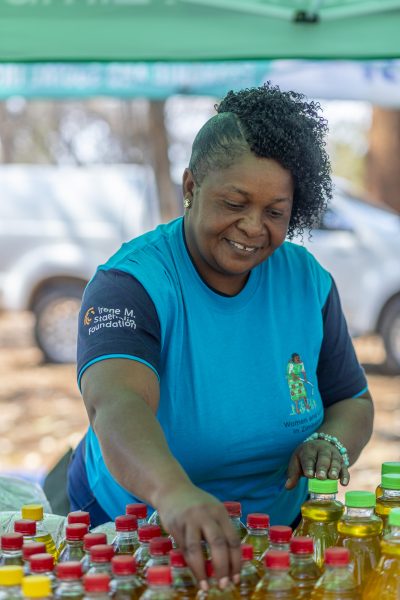
I am a mentor with Women and Land. My mentee is a young person and with her being part of the movement, she’s also motivating and engaging other young women in her community to join the movement. I’m really proud of myself for being part of RWA because it has changed a lot of women’s lives.
Being part of the movement, you get to interact with other women, exchange knowledge and share experiences – you feel empowered. As members, we cascade our learnings to the other members of our local groups.
I’ve seen a lot of women are participating in the decision-making process, taking leadership positions because their confidence has been built. We know our rights, we know and appreciate the importance of taking part even at village level, for our committees, where decisions are made. We are participating and even voting to be part of the decision-making structures. I have witnessed a change in our community when it comes to gender-based violence, with cases reducing. Because when we do the training with the younger women and the elderly women, there is an infusion of ideas and we are raising awareness.”
The most pressing issues for rural women
“For me, the biggest issue facing women in Zimbabwe is access to land and lack of collateral security for women. Women have access to land but most women are yet to have ownership of land. Because of that they have got limited decision-making power because the land is registered in the man’s name and in case of divorce or death, the woman will not even have a voice.
We should push for joint registration. There are provisions where the government state there must be joint registration but because of patriarchy, when a man gets land, he goes by himself to register it and some of the women they do not have that information on how to be part of the registration. This can affect a woman’s ability to access loans as they do not have anything to show to the bank.
Another big challenge is climate change – we are facing climate change induced droughts and disasters. Sometimes we lose our crops if there are erratic rainfalls and this affects our livelihoods and access to enough household food. This impacts our incomes which will also ultimately affect our ability to pay for the kids’ school fees. In some areas they’ve got irrigation schemes where they can do some irrigation through solar powered bolts, but we don’t have that and have to depend only on rain fed agriculture.
The impact of climate change is not linear. For example, the 2024 to 2025 farming season was better because we received a lot of rainfall and we even had a bumper harvest. But in the 2023 to 2024 season, it was bad as they received very little rainfall. It’s becoming uncertain and unpredictable.
The unpredictability really worries me, because I’m the one who is responsible for bringing food to the table. For kids to eat, it is the woman’s responsibility. For school fees, kids also look to the mother. The impacts of climate change really worry me because women are the most affected. They bear the brunt more than anyone else. Because they are the ones who are responsible for housekeeping, upkeeping, children. their husbands, even the community at large. They all look upon women.
Hopes for the future
For me, I hope to become a big dairy farmer. I also hope that women’s efforts and their contributions are recognised – they are the providers and the cultivators. Most of the work is just taken for granted
I also hope that through the mentee-mentor approach that our movement will grow and become very impactful so that whenever there’s an issue, if we come together with collective voice, we will be heard and there will be change.
< View all stories