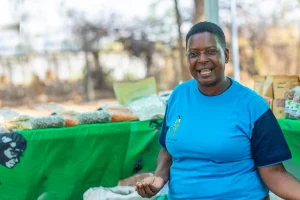

“We are the guardians of land, life, seed and love”
Chengetai Zonge is a rural woman farmer. At 58 years old, she is a widow, a mother of three and has three grandchildren. Chengetai is a member of the Rural Women’s Assembly (RWA), a movement established by Women and Land in Zimbabwe.
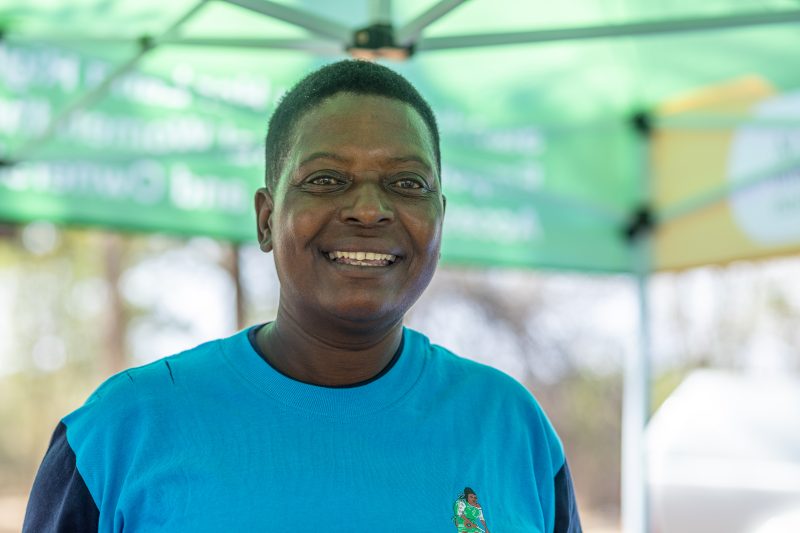
“I’m a rural farmer and I live in the communal lands in Manicaland Province in Makoni District in Zimbabwe. I depend on farming and I have income generation projects like processing sunflower oil. We were given the oil processing machine by Women and Land in Zimbabwe. Now, we are selling the oil and cake for the stock feeds.
I practice agroecology and I’m a seed saver and a seed multiplier for our traditional seeds because I value my indigenous seeds. It has been called “the small grain”, but we have changed it as rural women in Zimbabwe. We no longer call it small grain because since we are the rural women farmers, we feed the nation. Everyone who gets sick is introduced to go back to the indigenous seeds. So, we call it indigenous or traditional seed. No more small grain. And I’m proud to grow that seed.”
Passing knowledge through generations
“I joined the Rural Women Assembly in 2010 when Women and Land came to our area. Women and Land have trained us a lot, in confidence building, in marketing and decision making. They trained us on advocacy so that we can lobby for ourselves.
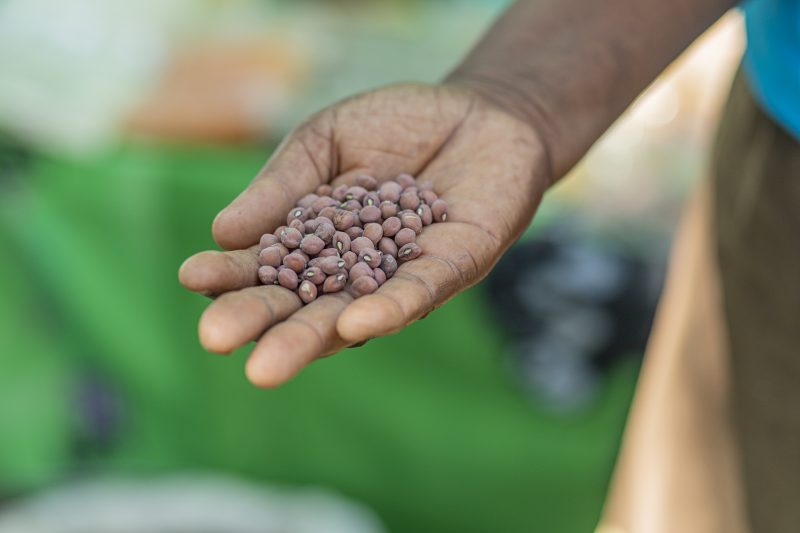
Women and Land build confidence in us. After having that confidence, I now realise that I’ve got the right to my seeds. When I see land, when I see seeds, when I see natural resources, I feel happy. I now have the confidence that I must secure my seeds. I must secure my land. As rural women, we are the guardians of land, life, seed and love. So, when I see seed, especially my traditional seed, I see seed is my right. My seed is my dignity. My seed is my heritage. My seed is my life. And my seed is my identity.
Because of Women and Land, I’m now practising agroecology. I use natural resources. I use sand, leaves, and grass. I love nature, so if you separate me from that, I don’t feel happy. With RWA, I am currently attending agroecology schools with rural women at national and regional level.”
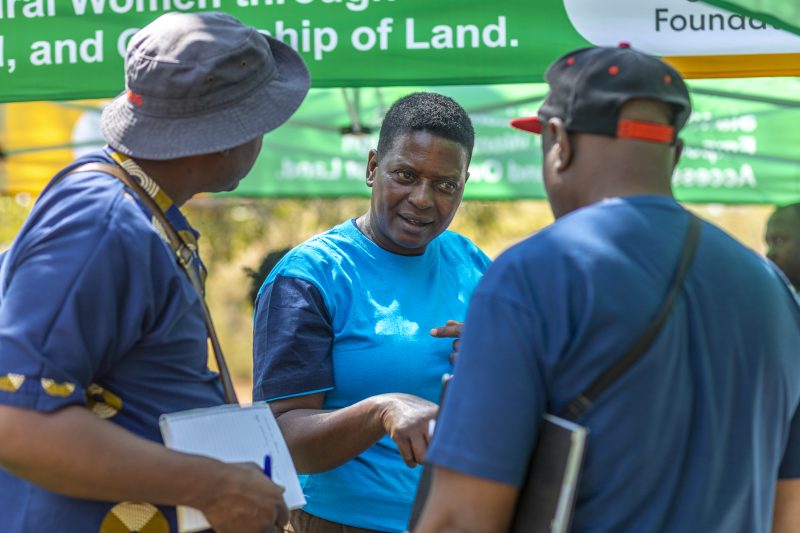
“When I joined RWA, there was a lot of change, in my confidence. I participated in decision making on a primary level, I contested as an MP, I contested as a councillor. WLZ trained us in mentorship. I was mentored and now, I’m a mentor and I’ve got my mentee. When we are in my community, I will sit and my mentee will chair the meeting and address the meeting. She’s learning to lead us on trainings and meetings, and other young people are following her to be part of RWA.
Climate change affecting rural communities
“The biggest challenge is we are rain-fed and when there’s no rain, there’s droughts. Women and Land is trying by all means to help, giving women the irrigation gardens, but the country is so big. We are being affected by climate change. It’s either there are floods or there’s a heatwave. There’s a lot of wind and there’s a lot of destruction.
That’s why we’ve engaged in traditional seeds. Our traditional seeds resist climate change, rather than these hybrid seeds from the multinational companies. Because that one is just, they bring it just for money, for business, not for the survival of human consumption.
To politicians and decision makers I say, when they’re sitting in those meetings like COP, they must include us. Because as rural women, we are the most affected ones. And as a woman, you know, I feed my husband, I feed my family, and community.
Women and Land give us space as rural women. They give us a lot of exposure and they don’t speak for us. They take rural women from the ground so that we can speak for ourselves. On regional, national, and district level, at the community.
My hope is that every corner of Zimbabwe is reached. Every rural woman must be included. No woman must be left behind, including the girls, the unborn girls, up to the oldest woman. That’s my hope and that’s my wish. To have more projects for irrigation gardens, oil processing machines and greenhouses. No woman must be left.”
< View all stories