“We will continue the same struggle and fight for our rights”
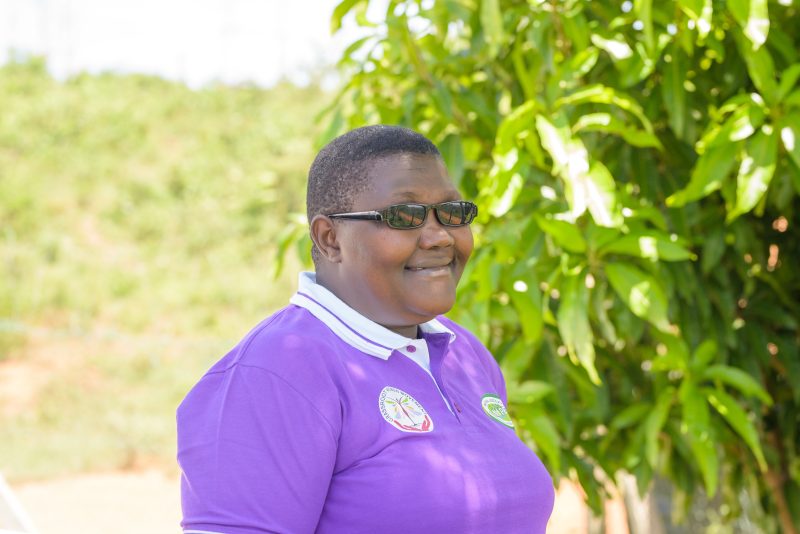
Joy Rufunda is an activist living in the Hoima District of Uganda. Known as ‘Big Mama’ to those who know her, Joy is part of the Hoima Blind Women Association where she brings her lived experience of having a visual impairment. Through this work, she is part of a grassroots women’s movement brought together by the National Association of Professional Environmentalists (NAPE).
Ecofeminist movement strengthening
“Ecofeminism is about knowing my rights, protecting the land and the environment around me, providing enough food for my family and connecting with all the people around me in the community.
I first heard about NAPE on their community green radio program on Liberty FM. They invited me to be a guest where I spoke about my work with Hoima Blind Women and after that, I was invited to join the grassroots women movement. Hoima Blind Women’s Association promotes and protects the rights of visually impaired women and girls, and so far we have extended it to other women with disabilities because we often face the same challenges.
In our grassroots women’s movement, we support women through psychosocial support, financial literacy, protecting their land and having enough food in their homes. Being involved with NAPE has been empowering. I have also brought more women onboard to trainings with NAPE telling them how to improve on their lives in their homes, how to support their families, how to address their challenges coming together, creating unity and being happy and reducing the stigma against women with visual impairment.”
Challenges faced by women in Hoima
“Both women with disabilities and without disabilities are facing a lot of challenges starting in the home. Our own relatives and spouses have that negative attitude towards women. They don’t want us to work. They don’t want us to join groups. They don’t want to us to get any money to support ourselves. They deny us all the rights, even denying us the ownership of land. Every woman nowadays is just struggling because the others don’t know their rights.
Women in the villages are facing land grabbing, they get raped, they get harassed, others have even developed disabilities just because of the land grabbing in the areas we are staying in.”
Resistance, rights and togetherness
“As women, we have rights, as per the Constitution and we have all the right to own land and property. If we are not trained and we don’t train our fellow women to know their rights, they will keep on dominating us. They will keep on suppressing us. For that reason we need to come out and help other women so that they can know their rights. We will continue the same struggle and fight for our rights.
When we come together, we share a lot of information and we even reduce stress. Through this we learn, we connect and we help each other develop skills. When we come together, we are almost the birds of the same feathers. We speak one language. We share the same experience, the same challenges and we look forward how to solve them.
Being part of the grassroots women’s movement makes me feel so happy because it helps me express myself. Wherever I am, in the office, in the community, in my family, I cannot wait to express myself. This movement has also helped to strengthen my feelings, my desires and how to stand a step ahead, fight for and protect my rights.”
The future for women in Hoima
“We need to bring more women on board because there are so many women who don’t know how to use land or how to make kitchen gardens. They don’t know how to invest or save their small amount of money. They don’t know even how to express themselves, especially when they have challenges. But bringing more women together means we can share environmental ideas, financial literacy and support each other’s projects.”

Womankind has been partners with NAPE since 2017, and recently funded NAPE’s grassroots movement work through the Movement Strengthening Fund.
< View all stories