The fight against FGM: how young girls in Kenya are challenging cultural norms
By Louise Hemfrey

Every year 3 million girls across the globe are at risk of Female Genital Mutilation (FGM); a procedure that carries no health benefits, just lifelong risks for those who survive it. Worldwide 200 million women and girls are already living with FGM. The practice has been reported in at least 30 countries, predominantly in Africa, as well as the Middle East and Asia.
In some countries the prevalence is particularly high. In Kenya, one of our focus countries, prevalence is officially reported at 21%. Yet, our partner, the Federation of Women Lawyers in Kenya (FIDA Kenya) believes there is significant underreporting of cases in national surveys due to fear of prosecution. FIDA Kenya specialise in women’s legal aid and, with the support of Womankind, have been providing information and services to girls who are at risk of FGM in Kajiado County for the past three years. Kajiado is the traditional pasture land of the Maasai people in Kenya, but it is also the Maasai who have some of the highest rates of FGM.
Life for women and girls in the Maasai community can be extremely tough. Less than 20% of girls are estimated to be attending school, meaning livelihood alternatives for women are very limited. This is exacerbated by them living in rural areas with the least access to services. According to the UN Population Fund, 62% of Kenyan women who married before age 18 have no education, while nearly 30% of women living in rural areas were less than 18 years old at their first pregnancy. Coupled with the socio-cultural belief that “women are valued on the basis of how many children they can produce for their husbands”, whereby FGM is the gateway to womanhood and motherhood, the fight to challenge tradition is an uphill battle.
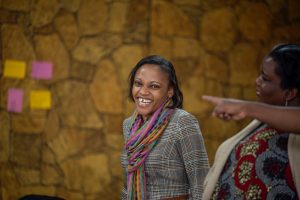
But Brenda Moraa, a student at the Maasai Technical College, is determined to change this. After FIDA Kenya ran a series of awareness workshops in her home town, Brenda became a campaigner against FGM and Child, Early and Forced Marriage (CEFM) and went on to advocate for an end to the practice amongst her fellow students at the local college.
In a recent article published in a local newspaper, Brenda shared some of the harsh realities for many girls and their families, including the lack of value, beyond marriage, that is placed in girls, particularly when it comes to rights awareness and education:
“there are some parts of Kajiado County where education for girls in Maasai community is not valued”, she wrote, “They are subjected to their traditional practices [and] the girls end up being illiterate.
“[After undergoing FGM] the girl is then sold by her father to an older man. Marriage negotiation is only between the men. The girl and the mother have no choice but to accept. After the marriage negotiation, the suitor pay’s herds of cattle for the marriage.”
Undoubtedly, there is significant financial incentive for impoverished families to marry girls off young, particularly when they have not been allowed to obtain any income-generating skills that could improve their livelihood independently.
This is where local, grassroots women’s organisations play a crucial role to engage in targeting the root causes of FGM and early marriage within the communities they themselves are a part of. In the Maasai community, as in many others around the world, awareness of girls’ right to live free from violence, specifically gender-based violence, as incurred by harmful traditional practices, is only just beginning to breach the common discourse.
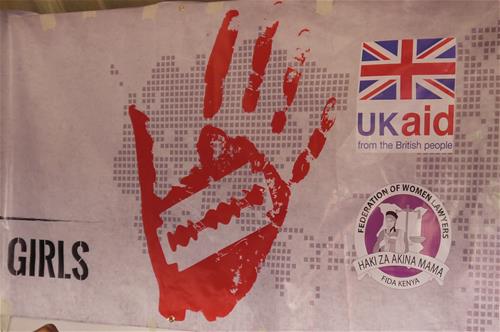 FIDA Kenya have worked tirelessly with communities like Brenda’s to get the subject of girls’ rights on the public agenda, engaging with community chiefs, local politicians, police officers and the district hospital as well the women and girls whose futures are at stake. Since 2015, FIDA Kenya have assisted 11,500 women and girls seeking redress, with more than half of cases centring around forms of violence and harmful traditional practices. They have also built capacity among local leaders to identify and respond to violence. These efforts will enable greater security and freedom for girls growing up in these communities.
But changing an entire community’s beliefs around harmful traditional practices does not happen overnight. The world needs more girls like Brenda if FGM is going to be completely eradicated and these girls will not have the opportunity to make a stand if they are not supported by the families and communities in which they live.
Find out more about how girls around the world are challenging the status quo and how you can support their efforts in our International Day of the Girl overview here.