UK government still has a key role to play in Afghan women’s peace and security
By Womankind Worldwide
by Maryam Rahmani, Womankind’s Advisor/Advocate on Afghanistan and Director of the Afghan Women’s Resource Centre (AWRC)
Since the Taliban regained power in Afghanistan in August 2021, my country has been gripped by a critical political and economic emergency: extreme poverty, the ravages of COVID-19 and climate change, all overlaying the very deep and devastating effects of decades of war.
It is no surprise that Afghan women are among those suffering most amid this turmoil.
Before the regime returned, Afghanistan was the first country in the region to have a National Action Plan, even though rollout was patchy at national and local levels. The women’s rights movement called for the UK government to engage with women’s rights organisations (WROs), civil society and activists still in Afghanistan and within the diaspora to plan next steps for women’s peace and security (WPS) in Afghanistan and sustain work they had advanced together for years.
With the Taliban back, the UK Government still has a key role in advocating for WPS and monitoring the situation on the ground.
I read the Gender Action for Peace and Security (GAPS) Shadow Report on ‘Assessing the UK Government Action on Women, Peace and Security in 2021’ with great interest, at both a personal and organisational level, and spoke at the event to launch the report at the end of September.
The report assesses the 2021 annual report to parliament by the UK Government and focuses on how the government has used, and could have used, the penultimate year of implementation of the National Action Plan (NAP) to lay a strong foundation for 2022.
It reflects on 2021 as a difficult year for women and girls, analysing the impact of UK aid cuts on programming for Afghan women and girls, and stressing the importance of domesticating the WPS agenda.
Key recommendations for the UK government from the Shadow Report
- Increase flexible, core and long-term funding and support to local and women’s organisations in Afghanistan, and to humanitarian, peacebuilding and longer-term development programmes to respond to the needs and rights of Afghan women and girls.
GAPS welcomes the UK’s commitment to providing £286 million of UK aid to Afghanistan, but there must be a clear plan to ensure aid reaches women and girls directly through WROs, without additional conditions.
The UK government should emphasise the role of Afghan women’s organisations and aid workers is non-negotiable in needs assessments and the provision of humanitarian aid, as well as peacebuilding and work to enhance women’s rights and gender equality.
Funding must be flexible and long-term to respond to rapidly changing needs. Compliance and reporting requirements must take into account the extremely challenging operational context for WROs.
A rapid response funding scheme could also be established to ensure funding arrives quickly and is not blocked by political decisions.
- Design, undertake and participate in meaningful consultations with Afghan women in and outside of Afghanistan, and ensure participation in decision-making and any dialogue on the future of the country for both women remaining in Afghanistan and those who have had to leave.
While the UK government attended talks with the Taliban in Oslo in January 2022, only a handful of Afghan women activists and WROs could go. Many missed out due to financial and physical constraints.
The current governance structures in Afghanistan have no women. Before August 2021, 28% of the parliament and 29% of the civil service were women.
The UK government should insist on the inclusion of women in all delegation meetings, on all party sides, and in any future government of Afghanistan.
We urge the UK government to listen to the experiences and recommendations of Afghan women, supporting them in practical ways to participate in discussions and decisions that impact them. These women remain the leading experts on the context.
- Ensure safe routes for individuals and their dependents wanting to flee to reach safety and respond to the gender-specific needs of Afghan women, girls and other minorities.
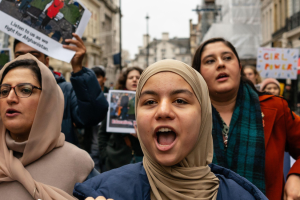
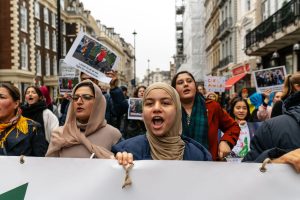
Despite the serious and imminent threat to their lives and safety, Afghan women continue to speak out against the injustices perpetrated by their de facto government. Those who are no longer safe to remain in Afghanistan must be supported to evacuate, if necessary, through safe and accessible routes to the UK, with assured eligibility for UK resettlement schemes including the right to work.
Many Afghan women activists, peacebuilders and journalists who have worked to support human rights and stability in Afghanistan are unable to flee or have chosen to stay. The UK government should do all it can to support them through aid and diplomacy.
In conclusion, Afghan women’s rights must be explicitly recognised, respected and protected by its government and this should be a priority for engagement and expansion of aid by the UK government.
My final thoughts
Women have long been denied the right to participate in peace talks, negotiations or decision-making spaces about Afghanistan. We have always struggled to get women on those lists.
But with the Taliban’s return, women’s rights to participate will be even lower on the agenda.
There are so many closed doors conferences about Afghanistan right now. The political will for the inclusion of women has evaporated and the international community also doesn’t seem to care whether there are women present or not.
In addition, women’s organisations in Afghanistan are facing huge threats: staff are being followed, offices are being closed and occupied, no permissions are being granted for them directly to start their projects and it is very difficult to travel.
When it comes to the millions in humanitarian aid going to Afghanistan, this is being sent and received without any reporting mechanisms – at least, none we can see.
But overall, the Taliban are currently under the influence of the international community in relation to this aid at least. Conditions must be set on this aid delivery by the countries supporting Afghanistan in order to protect and involve women’s rights organisations.
Women’s rights and WROs are suffering a lot in Afghanistan at present. The UK government following the recommendations of the Shadow Report will go some way to addressing this increasingly alarming situation.
Womankind has a strong track record of partnership with women’s rights organisations in Afghanistan and remains committed to supporting them and to women human rights defenders in exile. Through our new Afghanistan country strategy and action plan, we are fundraising for and co-creating projects and programmes with our Afghan partners to challenge and counter the rollback on women’s rights and strengthen women’s movements and networks.