Advancing just workspaces for women with disabilities
By Womankind Worldwide
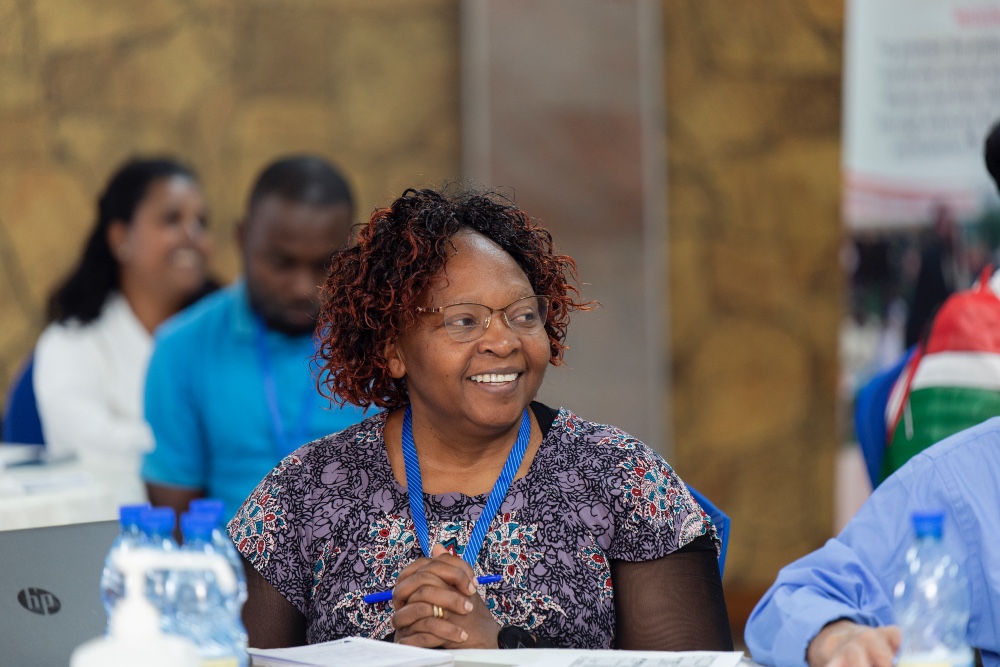
Alice Munala, a Programme Officer at Women Challenged to Challenge (WCC) is actively engaged in implementing a regional decent work campaign in Kenya- #SafeAtWork, #SafeInSociety. The campaign focuses on pushing the ratification and implementation of the ILO 190 in Kenya, Uganda and Ethiopia. ILO 190 is the first international treaty that recognises a world free of work free of violence and harassment. Through the AWESOME programme, Alice has been keen to localise the campaign alongside critical stakeholders to make decent work a reality for women with disabilities.
Over the recent decades around the world, much progress has been made to advance women’s rights and gender equality. However, various gaps remain a barrier in realising women’s rights with new manifestations of discrimination emerging across different geo-political contexts. For example, decent work for women is still not a reality particularly for women with disabilities where they continue to face harassment, violence and discrimination at the workplace.
Championing advocacy in campaigning
In Kenya, WCC through the #SafeAtWork, #SafeInSociety campaign has been championing the ratification and implementation of ILO 190 in order to advance a future of decent work based on dignity and trust. As a convener of women with disabilities protecting and promoting their rights, WCC has leveraged on this campaign bringing together various industry stakeholders to advance conversations on decent work.
Moving the needle, WCC has championed advocacy and awareness creation to sensitise stakeholders on ILO 190 and the urgency needed – ever so now – to create dignified workspaces for women with disabilities in Kenya. Engaging government institutions such as the Ministry of Labour, Organisations of Persons with Disabilities, law enforcement agencies such as the Kenya Police and Kenya’s umbrella trade union, the Central Organisation of Trade Unions (COTU)- WCC is actively mobilising a social movement dedicated to #SafeAtWork, #SafeinSociety.
‘’This was the first time we engaged labour unions in Kenya as an organisation through the #SafeAtWork, #SafeInSociety campaign. Sitting in a room together with unions such as the Federation of Kenya Employers, Kenya National Union of Teachers and COTU was an immense opportunity to seed the ground for movement building. We wanted to have a concerted effort from all directions to bring to light issues such as inaccessible buildings for women with disabilities but also continued violations that have relegated them to silence,’’
Media advocacy as a tactic has also been quite effective in WCC’s approach. Mobilising traditional media such as TV, radio and print to provide coverage for the launch of their local campaign yielded in more interest from journalists to spotlight more balanced stories of women with disabilities. In this forum, journalists also engaged with various stakeholders such as the parliamentary committee of labor, civil society organisations, persons with disabilities and unions from the labour movement. They also got the full picture of how the experiences of women with disabilities at the workplace are intersectional in nature.
Lacking political goodwill
However, the execution of the #SafeAtWork, #SafeInSociety campaign has not been an easy fete. Collaborating with stakeholders also revealed the tip of the iceberg in understanding how workplaces are struggling with inclusion, and the lacking political goodwill needed to ratify and implement ILO 190. ‘’The process is still quite slow in Kenya. While we had quite progressive meetings with institutions such as the Office of the Labour Commissioner and MPs from the Parliamentary Commission on Labour- most gave a commitment to fast track the ratification of ILO 190 but to date the efforts are not visible ,’’ she decries.
Kenya’s pro-active discourse in the ratification of ILO 190 has been relatively slow, lagging behind countries such as Namibia, Carbo Verde and Ghana where legal frameworks have been established to implement and enforce ILO 190.
‘’Accessibility and inclusion have always been a thorny issue. We also anticipate some resistance from employers should we get to the ratification of ILO 190 because this will also need resources that not many are willing to put in- from trainings on safety to whistle blowing tools and mechanisms. ’’
WCC’s experience in advancing this campaign shows some of the repercussions of going against the tide of assigned societal gender roles and patriarchy that continue to normalise violence and harassment in the workplace.
A multi-stakeholder and multi-sector approach wins
Speaking to WCC’s unique approach in this campaign through a multi-sectoral collaboration, Alice shares that amongst some of WCC’s key learnings have been on the power of convening different sectors and balancing different mindsets. ‘’We were keen on having an inclusive and comprehensive strategy that blends diverse perspectives and unique lived experiences while also bringing together unique stakeholders who’d ordinarily not be in the same room such as the Gender Commission and the Kenya Police,’’ she says.
They also derived a lesson on the importance of engaging local leaders at the grassroots level so that the community can embrace the campaign and take ownership of the initiatives proposed. ‘’Our only disadvantage was not upscaling the campaign to rural and grassroot areas far and beyond Nairobi due to stringent resources. This could have gone a long way in reach and adding the voice of local leaders from grassroots’ women with disabilities organisations- but we plan on interesting other donors to carry on with the work,’’ she adds.
Looking at the future and results they expect to harness from the campaign, Alice is excited at the prospect of legal frameworks that will fast-track implementation of ILO 190 upon ratification. ‘’I look at how well organised forums such as the High Level Political Forum on Sustainable Development are. If we could only adapt a similar approach for regular reporting on the progress of ILO 190 ratification in Kenya tasking relevant bodies and regulators to push accountability,’’ she says.