

World Radio Day: tune in to women’s rights
12 February 2016
By Sally Airey
By Sally Airey
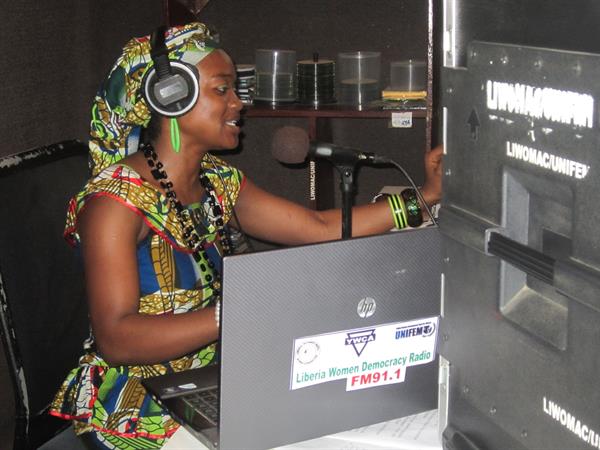
World Radio Day celebrates radio’s power to create access to information, freedom of expression and gender equality. And that is exactly how many women’s rights organisations use it. In the UK nearly all of listen to the radio for music, news and comedy, but in many countries radio has a more serious side.
Radio in times of emergency and disaster
Radio is often the fastest way to get information out to large numbers of people and it has proved vital in the fight against Ebola.
As well as going door-to-door and holding community meetings, our partners LIWOMAC and Women’s Peace and Justice Project (WPJP) used radio broadcasts to spread information about the epidemic. LIWOMAC were all set up as they regularly broadcast shows about women’s rights and, as both the organisations work with communities, they were trusted sources of information in the crisis.
LIWOMAC’s station, Liberia Women’s Democracy Radio (LWDR FM 91.1), regularly reaches over 500,000 women, so it was hugely important during the epidemic, especially as many of the women live in remote areas. They broadcast information about caring for those infected, who to contact when someone fell ill and tried to dispel rumours, such as the theory that hospitals were actually causing people to die.
“LWDR is the first radio for women in Liberia, and only the second on the continent of Africa. Radio is undoubtedly the most powerful and most popular medium in Africa. To address the specific post-Ebola needs of vulnerable women, we are improving the reach of the radio station via innovative mobile phone technology to bring health and agricultural programmes to women, helping them to recover from the devastation brought by Ebola to their lives, their families and communities.” – Tovian Estella Nelson, President of LIWOMAC.
Radio for women’s rights
LIWOMAC’s regular programmes also continue to empower groups of women all over the country. Crucially, LIWOMAC also trains journalists to cover women’s right issues, such as women’s health and farming. This means more radio programmes that cater for women’s needs.
The effects are truly inspiring. Women come up with plans to engage their political leaders, discuss their rights and how to claim them, decide how to get into positions of power and discuss how to live in peace with each other. Amazing achievements from the simple power of radio!
Radio Pachamama in Bolivia
Over in Bolivia, radio is important for women as well. In 1991, Radio Pachamama began, with a mission to break the silence surrounding the discrimination of women. In 1997, our partner Gregoria Apaza started producing programmes with them. Gregoria Apaza uses the medium of the microphone to present voices from the streets and homes, providing multi-cultural content.
Radio programmes on Pachamama reach women across Bolivia and feature phone-ins, discussions on women’s rights and public health information. And Gregoria Apaza gets everyone involved in making programmes and getting their voices heard. Teenagers make their own shows, giving them an incredible opportunity to learn new skills and spread awareness of women’s rights to thousands of people.
The impact of radio
Radio is an incredibly quick way to get information out to large numbers of people, whether this is in emergency situations like during the Ebola epidemic or as part of a campaign to educate people about women’s rights.
LWDR recently asked their listeners to give feedback on their Ebola awareness campaign. Many listeners said it was the best campaign they heard during that time. They also said they listened to many of the messages and that they followed the preventive measures that were talked about. During the height of the epidemic, the messages were broadcast to about 2,100,000 people. We can’t say exactly how many lives were saved, but it was sure to have had a huge impact.
There can, of course, be unanticipated consequences of successful radio campaigns. After our partner, NAWOU in Uganda, used radio to raise awareness of violence against women, demand for services increased as women survivors knew where to turn. Zimbabwe Women Lawyer’s Association has also seen the number of calls skyrocket since their helpline has been advertised on the radio. It is excellent news that women know how to get help, we just need to make sure our partners have the support and funds they need to meet the demand. And, of course, the funds they need to continue to use radio to fight for women’s rights.
If you would like to support our partners to continue using innovative ways to promote gender equality, please donate today.


