A movement resisting: rights, livelihoods and economic justice in Uganda
By Piyumi Samaraweera, Programmes Manager: Innovation & Partnerships
Access to, control of and ownership of land is central to the power struggle that women in Uganda, and globally, face. That tussle for land is closely linked to the struggle for women’s rights. Womankind partners National Association for Environmental Professionals (NAPE) and National Association for Women’s Action in Development (NAWAD) have been galvanising a movement of women resisting land grabs and working to claim their rights.
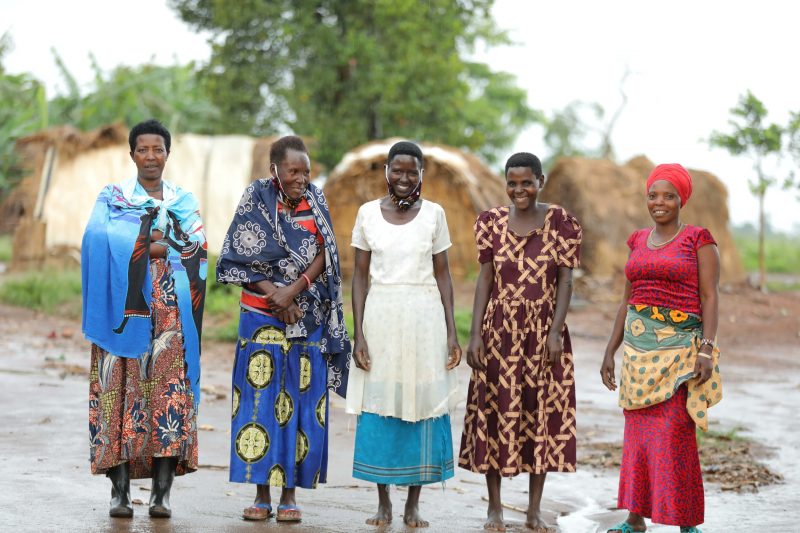
Women’s under representation in leadership positions (be it in the household or within national parliament) means that they have less power and control over resources and economic decision making. Against this backdrop we find that in Uganda the most recent wave of dispute over land is caused by land grabs by investors, including many multinational companies. This is often done with the knowledge of the government, purchasing or leasing land for mining or the production of cash crops.
Participation and Opportunities for Women’s Economic Rights (POWER) is a two-year project led by Womankind partners NAPE and NAWAD in Uganda. It focuses on supporting displaced women or those at risk of being displaced as a result of land grabs. The project, funded by Womankind supporters and UK Aid through a matched appeal, aims at engaging 7,000 women to demand for, promote and protect their land rights.
Building knowledge, unlocking power
Understanding our rights gives each of us the legitimacy to act to access those same rights. Once you unlock power in someone – be it within a woman, man or child – you can’t undo it.
The POWER project aims to unlock this potential so women can mobilise to claim their rights. NAPE and NAWAD have raised knowledge through various activities including: training women on their land rights; awareness raising campaigns throughout the community, and strengthening the ability of women’s rights advocates to participate in local decision making processes that impact them.
“Before I came across NAPE, I had a lot of stigma being a visually impaired woman, I had low self-esteem and could not express myself in public. NAPE started inviting me [to] women meetings when we had safe space to share challenges and harness together the solutions. NAPE has supported me … it has made me confident; I no longer feel stigmatised despite my disability. NAPE has trained me on what I am entitled to as a woman and I have been mobilising other women with disabilities and training them on the same.”
– Rufunda Joy, 45 trained as a local advocate with NAPE.
Navigating the road to justice
When women face land grabs, lack of resources and knowledge of the complex legal system prohibit them from seeking justice. As well as raising awareness, NAPE and NAWAD are supporting women who are seeking justice through providing legal support through mobile legal aid clinics.
As of 15th July 2021, over 140 women have filed legal cases. While some have been resolved quickly through mediators, many other cases are complex. Women need cost effective support to navigate the complexities of the legal structures and the inaccessibility of legal support. In response to this need NAPE and NAWAD trained 20 community-based paralegals to support the women who filed legal cases access justice.
For a number of them, their complaint is against large corporates and their grievance process may well be long and difficult. However, a successful result by four women who filed a joint petition against the Uganda National Roads Authority (UNRA) shows that collective action works; and that sometimes, a little tenacity can go a long way.
Tumwebaze Bulandina is a 49 year old woman whose land was impacted by road developed by UNRA as a part of the oil refinery infrastructure in the region. She and five other women filed a collective complaint on delayed compensation through the legal aid clinic. She had already filed an individual complaint a few years prior and had been back and forth to UNRA trying to get a decision.
“When I met [the POWER project facilitated] lawyer, I was relieved. I knew I would get my compensation after a long game of hide and seek. The lawyer was accommodative. She listened to us, took us through what the law says on land rights and promised to follow up the case. It didn’t take long before my fellow women and I were compensated. UNRA team came looking for us, they apologised for poor communication and not paying us in time and processed our compensation. I used the compensation money to build a permanent house and buy an acre of land in the village… Since I met my lawyer I mobilised other women and they were helped; I also trained other women who were affected by the UNRA project.”
Similar to other areas of NAPE and NAWAD’s work the legal aid clinic has created a momentum, building a movement of women who are sharing their knowledge with others and defying injustice.
While there are success stories, we know that seeking legal action also comes with challenges that are closer to home. Four women from Nwoya attended a legal aid clinic in August 2020 but withdrew the legal case they filed because they faced intimidation from their own families and communities. This spotlights the extent of the challenges that women face when it comes to exercising their legal rights to land.
Rebuilding lives and livelihoods
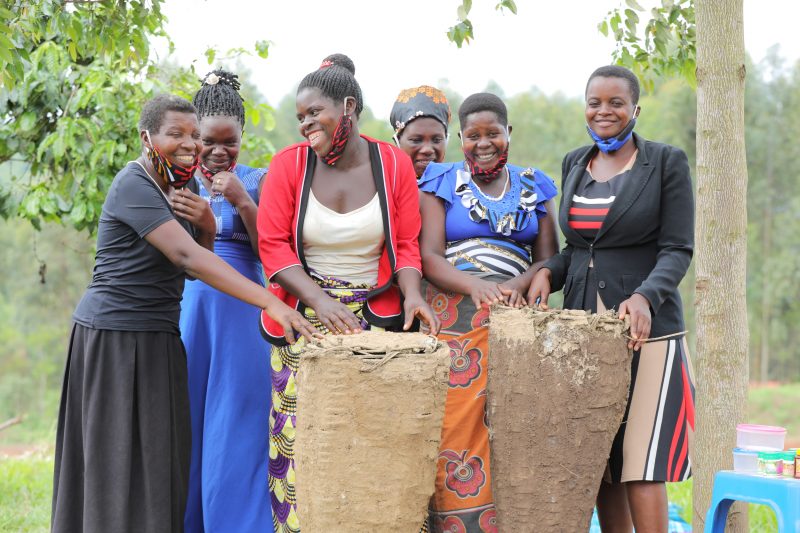
When women lose their land not only do they lose their home but they also lose their livelihood as they are stripped of the land they use to grow crops. As part of their work, NAPE and NAWAD have trained women in skills needed to pursue alternative sources of income. These alternative livelihoods include; kitchen gardening, bee keeping, crafts making and millet flour value addition.
A group of women supported through the alternative livelihoods training have joined hands with other women to start a bee keeping business, using their newly acquired skills produce and sell honey at local markets.
“We are now registered with the district and they know we are fighting for economic empowerment for women … you helped us raise our voices; at this moment, a woman can stand in an office, and she can speak and is listened to.”
– Twikirize Anna, Chair of the Kigaga Twimuke Women’s Group
When a woman is trained she takes the skills she has learnt and shares them with others in the community magnifying the impact. So far 90% of the 408 women trained committed to share their knowledge and skills with others, and to date, the project has supported 285 women with tangible resources ranging from traditional beehives, to seedling and manure, to beads and other craft materials, to start and establish small group businesses.
As well as supporting women affected by land grabs the training also helped the women withstand the effects of the COVID-19 lockdown that constrained their sources of income. The women believed that it helped them to improve food security, fight malnutrition and minimise cases of domestic violence that increased during the lockdown.
The power of a movement
The POWER project has mobilised women and strengthened the eco-feminist movement in Uganda. Women have been supported with the resources to collectively claim their rights, resist unjust land grabs and rebuild their livelihoods.
The pandemic has deepened existing inequalities and revealed the realities of economic insecurity for millions of women around the world. We know that in order for women and girls to realise their economic rights systemic change is needed. Women must meaningfully participate in decision-making at all levels and have the power to change the world. NAPE and NAWAD continue to mobilise women to harness their power and claim their rights.