Reflecting on Activism through Zanyiwe Madikizela’s Words
By Dumiso Gatsha
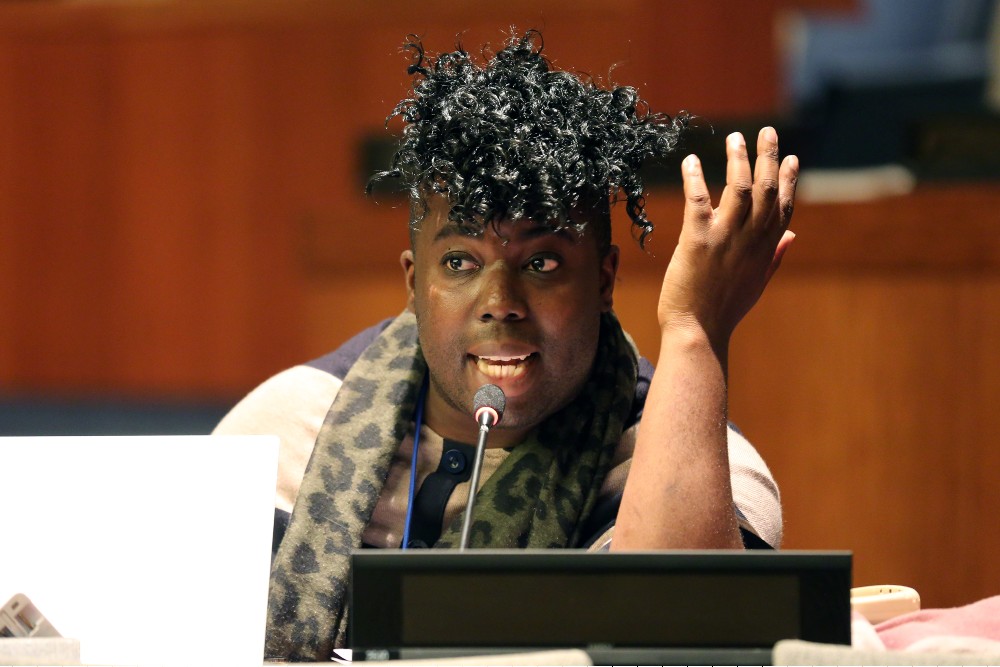
This is a two-part blog series by Dumiso Gatsha commemorating Winifred Zanyiwe Madikizela Mandela’s contribution to African feminism and highlighting the African activism experience. Dumi (they/them/their) is a proudly Pan African, unequivocally non-binary queer feminist working on eliminating the barriers between grassroots experiences and global policymaking. Dumi is Founder of Success Capital Organisation a youth, queer, feminist-led, managed and serving organisation working in the nexus of human rights and sustainable development. Dumi is trustee of Womankind Worldwide (UK) among others.
Part 1
It has been 5 years since the passing of the Great Stalwart, anti-apartheid, African feminist and mother, Nomzamo Winifred Zanyiwe Madikizela Mandela. As her spirit endures among feminists the world over, her legacy is continuously celebrated and reflected on. This two-part series does so, drawing on the lessons that are often undocumented or erased by those who hold the privilege to produce and disseminate knowledge. Her story is shared among many, as she shared so much of herself, her motherhood and her defiance against an apartheid nation state. We stand upon her shoulders as a people, as Africans and as activists seeking true freedom. I speak of freedom because it was never truly attained. If any news articles, tweets or cycles are to go by; we are far from meaningful, equal economic, social, queer, disability, migrant and racial freedom. Peace is not the absence of war; when drinking water, energy, nutrition, quality healthcare, opportunity and expression are consistently challenged by law enforcement, regressive legislature and capitalism.
This only reminds me that safe spaces aren’t always safe for many activists. Ableism, classism, racism, elitism and sexism are persistently permeating in conferences, institutions and ways of working. These are consistent reminders of how inequities perpetuate despite efforts, public statements, institutional policies and programmes to counter them. We have to navigate and endure triggers of trauma, harmful practices and care without any time or space to process them. Healing and joy are not attainable in an increasingly demanding system for productivity, sustaining livelihood and living with dignity. This is the reality for many activists in the global majority world, where socioeconomic complexities illuminate the gaps in income and access to service delivery. Hierarchies entrenched in social, cultural, religious, ethnic and economic disposition continue to ensure someone is excluded, intentionally or not. I am reminded of this as I watched Zanyiwe Madikizela’s mini-documentary for the umpteenth time; “In Her Own Words”. There were four things she mentions that I will expand on within today’s context. Part 1 focuses on the first two:
”I don’t think you plan, I think life would be terrible if you planned what you do and what will become of your life.”
The Arab Spring was triggered by Mohamed Bouazizi, who set himself on fire government office. The #FeesMustFall movement was triggered by University of the Witwatersrand students protesting increases in fees in one of the most unequal countries of the world, South Africa. Almost 40 years before the 1976 youth protests that changed the trajectory of the anti-apartheid movement in South Africa. These examples not only show how deeply costly taking action against injustice is, but that we continue to find hope from history to build a new future. More importantly, that activism does not have a specific look, profession or limit who can it take up. These, along with feminist emergency and care responses for the #EndSARS movement in Nigeria, feminist protest against militarism in Sudan and feminist mobilising against violence in Namibia, Malawi and Zambia during the COVID-19 pandemic remind me of how many of the most impactful forms of civic action were never ‘owned’ by an institution. Neither were these powerful examples of defiance designed or subject to an M&E log frame.
”I never dreamt I would meet a Mandela, I never dreamt that I would end up in and out of prisons… I wouldn’t ever ever claim that one day I sat and said ‘oh, I’m going to be a freedom fighter’. No, I was born out of the conditions of the country that determined who I ultimately became.”
The above are all examples of activism that brought significant change. Although years later, accountability, poverty and structural inequities remain – they show how movements can shift things at a grand scale without the conditions imposed by modern development and philanthropy. A majority of Africans are born into complex socioeconomic conditions. For many that might have had only one tyrant for a president, or the same governing ruling party for most [if not all] of their lives; it can be far much worse. Limited opportunities, perpetual state underdevelopment, conflict, displacement, inadequate health and deplorable education systems. These are the common narratives that many of us are born to, varying by proximity to privilege, community and state social provisions. All of us adopt resilience because we do not have a choice. Reflecting a capacity that navigates struggle, atrocities and inequity without a break, sabbatical or leave.
The gendered impacts of having to endure and life through Africanness in all its complexity could be much worse. There are elements of care, harmful gender norms and patriarchal systems that have to be navigated to survive. One cannot afford to affirm burnout. We have to endure as there is no exit. Except that which we often want to turn to is a conundrum that comes with suicide. Jamil F. Khan puts it best from a queer lens, authoring ‘Khamr: The Makings of a Waterslams’: “Suicide is a complex entanglement of subversive, radical self-care and submission to society. We take back a power that we have been barred from exercising: the power over our bodies. We commit to a final act of love and the choice to love ourselves above the prescriptions of a world that teaches us an obligation to stay and be perpetually abused.” However, “taking our own queer lives pleases the system that is committed to annihilating us every day. We are destined for death and erasure, and so taking our own queer lives is a service to the system too.” It is this latter lens that often feels like living is a form of martyrdom.
As one navigates unrelenting stigma and discrimination with no beginning or end – in walking in a mall, dancing in public or expressing ones love digitally. It is inescapable. However, I believe the joy that comes with the nurturing, love and Ubuntu amidst all the atrocities continues to showcase our humanity. My complex identities can never be taken away from me. So is the rich history of activism that continues to inspire and drive me towards a better world. The kind of world where our niblings, younger generations and peers will not have to endure. I might not find this liberation in my lifetime, whether taken by my own act of radical self-love or otherwise. But I do know that the sun always rises to meet my face. That the soil I stand on carries the many stories and lives that have ploughed, harvested and owned the land in which I live. Our Africanness lives deeply in the history of Pan African identity, storytelling and creativity. We have seen evidence of this in how enslaved people saved others, how our treasures and civilisation were extracted and co-opted as with many other elements of our collectivism and culture. Africans the world over, continuously build economies, infrastructure and pioneer social justice in spite of it all.