Resourcing feminist movements: spotlight on Uganda
By Womankind Worldwide
In 2021, we created the Movement Strengthening Fund (MSF) to provide resources to strengthen the relational dynamics of feminist movements without placing all the focus on the aims of movements. This is because it is the connections, trust and understanding forged between diverse women that can make or break the subsequent collective actions that feminist movements are constantly working towards. In this way, collective action is not just what women do together, but how they do it.
In the second cycle of the MSF launched at the end of 2022, Womankind funded three of our partners in Uganda to power their movements.
CEDOVIP – a movement to end violence against women
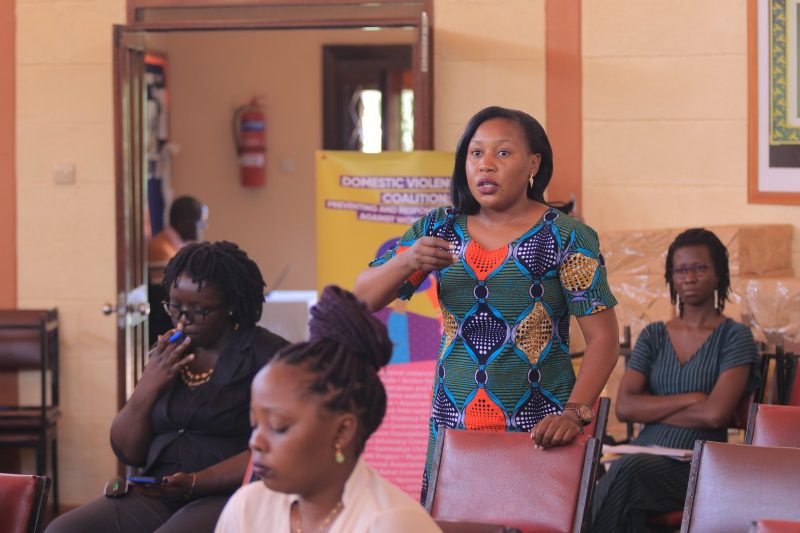
The Domestic Violence Act Coalition (DVAC) in Uganda is coordinated by Womankind’s partner, Centre for Domestic Violence Prevention (CEDOVIP). The Coalition brings together various organisations and institutions that are part of the wider women’s and feminist movement in Uganda. The DVAC advocates for the implementation of the Domestic Violence Act and other laws related to ending violence against women.
In July 2023, CEDOVIP used their MSF grant to convene a two-day retreat of 40 members of the DVAC. The aim of the retreat was to enable coalition members to come to a shared understanding of the goals and priorities for women’s rights, needs, and safety. This was to strengthen movement building for gender equality work while prioritising self and collective care.
Through the retreat, CEDOVIP were able to:
- Deepen coalition members’ understanding of the underlying unequal power structures, social inequalities, and systemic factors that contribute to hindering advocacy efforts for prevention of violence against women and girls.
- Reinforce the need to keep investing in movement building of the DVAC so that it can deepen its influence and advocacy power, shape public opinion and increase support for policy and legal reforms for effective prevention of and response to violence against women and girls.
- Prioritise collective and self-care within the DVAC.
CEDOVIP believe that focusing on self and collective care will further boost the coalition’s wellbeing, create solidarity and resilience of its members and foster a sense of community. All of this contributes to building stronger relationships, trust, and mutual understanding, which can enhance DVAC members’ ability to work together effectively and in a sustainable way towards their common goals. What CEDOVIP identify here is a key component of any strong movement and highlights why the MSF exists, to fund these types of movement strengthening process.
NAWOU – igniting collective action
With their MSF grant, National Association of Women’s Organisations in Uganda (NAWOU) brought together 150 women in the Kikuube District of Uganda, including 90 refugee women living out of Kyangwali Refugee camp. By doing this, NAWOU sought to create inclusive, collective and participatory feminist spaces for women; bringing together both Ugandan and refugee women from various diversities, in safe and collective spaces for the first time.
In these spaces, women gained knowledge and skills in feminist practice and principles, leadership, gender equality and power relations. Women shared their experiences and discussed unlearning and relearning norms, attitudes, beliefs and practices that violate women’s freedoms and rights. The sessions ignited women to take collective action and influenced their sense of power to take action.
Through these spaces, refugee women took initiative to form support groups together with local women and the groups are now being supported by the local authority. Women have taken up leadership roles within these groups and are mobilised to attract more members to join the collectives. This is working to build a critical mass of women with one strong voice.
The project has also brought women and refugee women closer to their community leaders for the first time. Previously, women did not know their leaders and, those who did, could not receive adequate support from such leaders due to discrimination and bias. NAWOU’s work through the MSF has given women a platform to voice their issues against biased leaders and in turn, to demand they listen to both local and refugee women.
The self-care session enhanced women’s sense of value, confidence and self-esteem. Women were supported to discover the power they have over their lives and how they can use this to transform their status quo and improve self-image. Since the session, women are more deliberate in caring for themselves and are spreading the message of self-care to other women within their communities. Through this practice, women are being more intentional in creating time to socialise and network.
“My participation in the NAWOU project has greatly contributed to personal changes. I never believed in myself, little did I know that I would ever get a job in my life and earn money part of which I use for saving in our group. Most of the refugee women lacked self-awareness on matters affecting our lives, we did not know our rights and how to claim for them. We used to underestimate our value. Based on the challenges I have experienced as a young mother, I do not keep the knowledge I receive to myself, I share with young girls to be productive and careful with their lives.” – Amiya, a young refugee who took part in NAWOU’s sessions.
MEMPROW – safe and intersectional spaces
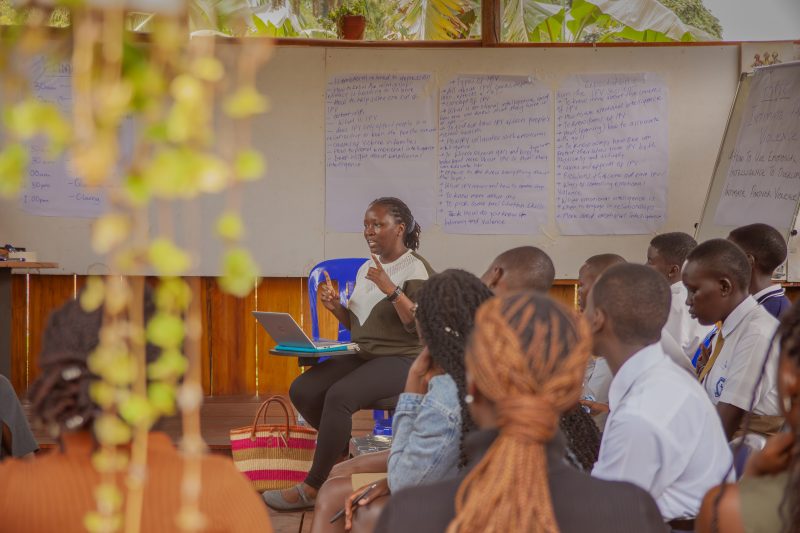
Mentoring and Empowerment Programme for Young Women (MEMPROW) hosts a girls network of over 20,000 young women.
Following the COVID-19 lockdowns MEMPROW sought to revive the network’s leadership. The network is a critical organising structure, and through its activities , contributes directly to young feminist movement building in Uganda. Womankind supported MEMPROW with the MSF to do this.
With their grant, MEMPROW successfully elected new leadership in the Central Region of Uganda and equipped the new leaders with tools in gender-responsive negotiations and feminist leadership (including understanding self and collective care).
In addition to this, two of MEMPROW’s network chapters were revived – the Kampala Chapter and the West Nile Chapter. Through the creation of safe spaces for continuous feminist learning, healing, and activism, the girls and young women are now able to relate better within the network. They have also reached a wider group of girls and young women, putting their learning on intersectionality into practice and further strengthening their movement.
Self and collective care are vital components of any strong movement. Through their movement strengthening activities, CEDOVIP, MEMPROW and NAWOU have all shown that centring self and collective care practices within their movements allows them to flourish, to grow and to continue. After all, as Audre Lorde says: “caring for myself is not self-indulgence, it is self-preservation.”