Building a feminist movement inclusive of deaf women
By Agness Chindimba, founder, and executive director, Deaf Women Included (DWI)

Imagine an ideal society that embraces our diversities, unique experiences and voices and interweaves them in addressing some of the most pressing social issues of our time. While this is recognised as a fundamental human right, it is a far-off reality for many deaf women and girls in Zimbabwe who are still marginalised and yet to fully enjoy their human rights.
Deaf Women Included (DWI) was founded on the premise of empowering deaf women and young girls to live in autonomy; taking charge of their right to fully participate in all aspects of society. For close to 13 years now, we have been at the forefront of advancing the rights of deaf women and young girls and contributing to a bold feminist movement that includes their voices. This has been possible through formidable partnerships and various projects.
With support from Womankind’s Movement Strengthening Fund, DWI implemented a project that aimed to strengthen the participation of women with disabilities within the mainstream feminist movement.
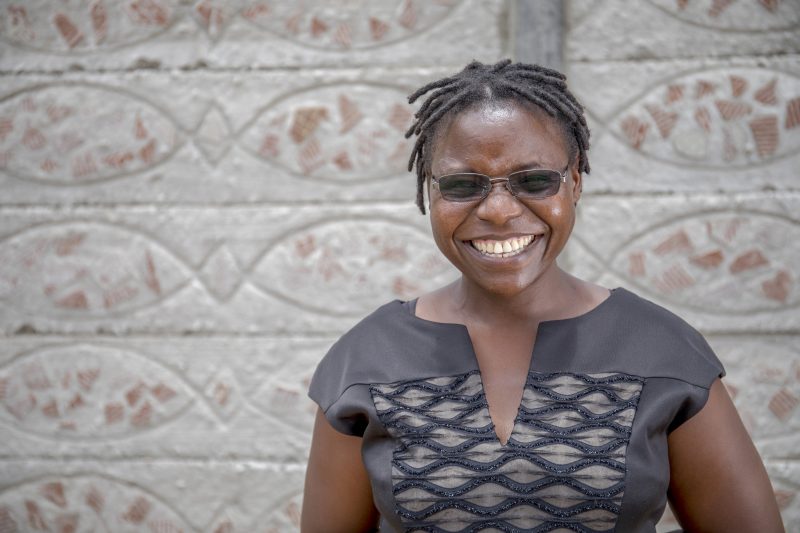
This project specifically looked at creating synergies with able bodied women shaped by our experiences and knowledge.
Anchored on a research-based movement-building model, DWI undertook historical mapping to establish the contribution of women with disabilities (WWDs) in Zimbabwe’s feminist movement. The findings of this research informed a position paper that looked at the collective experiences of WWDs and critical gaps that prevented their participation in feminist organising.
The findings established that a lot of organisations working and representing issues of WWDs are either male-led or are just integrating disability issues in their programming work to fit in the funding requirements of donors. However, WWDs have been doing work within the women’s rights movement, especially at the grassroots level where there is little or no documentation of their contribution to the women’s movement. This has come at a cost of leaving their participation at the periphery of the feminist movement.
A collaborative effort to strengthen the feminist movement between WWDs and able-bodied women is a new practice in Zimbabwe that can enhance knowledge in feminist advocacy.
We are not invisible
Notably, WWDs do not have strong organising and representation that can build their own agency in Zimbabwe. The absence of exclusive organising amongst women with disability themselves is almost non-existent, making it difficult to include their voices in the mainstream movement and strengthening the feminist agendas.
It is therefore not surprising that out of the greater population of WWDs, only nine feminist-oriented organisations have been identified to work exclusively on disability-oriented programming for women and girls. They are not only involved in establishing local disabled people’s organisations but are contributing to the growth of national-level bodies and inter-country linkages. There is a need to realize that WWDs are equally able to contribute to the development outcomes of Zimbabwe in their own form of organising.
As DWI, we believe that the creation of disability-inclusive and feminist-oriented partnerships will drive support and inform social change. Simply put, we realise that disability activism is an essential aspect of strengthening women’s movements.
We take a firm stance in calling for meaningful participation of women with disabilities in the women’s rights movement. There is rife discrimination in the day-to-day lives of WWDs mostly due to society’s misunderstanding of disability. It is quite unfortunate that this discrimination is present in spaces of organising within the women’s movement despite the milestones that have been achieved in influencing Zimbabwe to enact laws and policies on gender equality. The contribution of WWDs to such has been marginal, and mostly an afterthought to strategic inclusion.
Knowledge and thought leadership are key
Our position paper is modelled around the need to improve the participation of women with disabilities in movement building. The core components of this model are to increase knowledge production on disability activism, institutional support on disability-inclusive programming, disability rights education, and intra-movement advocacy.
The main aim of this paper is to boost thought-leadership through a guide that will enhance disability inclusiveness in feminist organising in Zimbabwe. This is a fairly new practice that will have its foundational aspects in the creation of an exclusive coalition for WWDs that will drive the agency of women and girls with disabilities. Its work can be potentially merged into the mainstream movement.
Moving from paper to action
An organising platform for WWDs is equally important in creating inspirational spaces for convening and learning as well as formalizing a disability-inclusive knowledge repository.
DWI commits to setting up a continuous platform for feminist dialogue between WWDs and able-bodied women so that collaborative efforts for organising are used for knowledge transfer and synergizing advocacy efforts as desired. This position paper in essence presents practical actions for strengthening the participation of WWD’s in feminist movement building.
It is our hope that this position paper will drive and motivate movement actors to take disability-inclusive feminist organising which gives women with disabilities solid opportunities to contribute especially where they are already have the power to do so.
You can download the position paper from this link: DWI position paper