My time at the 15th AWID forum: reconnecting and thriving
By Laura Brown

I was honoured to spend 4 wonderful days at the 15th AWID International forum from 2-5 December 2024, in Bangkok Thailand. The purpose of the forum was to bring together feminist, women’s rights, gender justice, LBTQI+ and allied movements, in all our diversities to connect, heal and thrive.
As I attended the forum, I was reflecting on the pace and progress of women’s rights around the world since the last forum in 2016 in Bahia, Brazil. I was only two months into my position as Programme Manager for Movement and Network Strengthening when I attended and with lots to learn from feminist activists’ lived experiences and my position of privilege as a white woman from the global minority and; the role I could play in service of feminist movements.
Looking back from Bahia to Bangkok
Inequality faced by women, girls and people of other genders was of course at the heart of the forum in 2016, but over the last 8 years, the backlash against fundamental hard-won rights has been increasing rapidly. Patriarchy is firmly embedded in ideologies of far-right and fascist groups, authoritarian governments, anti-gender movements and conservative forces which have been gaining ground across the world eroding democratic values and human rights at an alarming rate.
Since 2016 there have been escalating levels of gendered violence and regressive legal, social and political reforms such as the loss of the constitutional right to abortion in the USA. And the ban on sexual expression and gender identity in Uganda. For women in Afghanistan, almost every right has been stripped from them by the Taliban who came back into power in 2021, and they are disappearing completely from civic life.
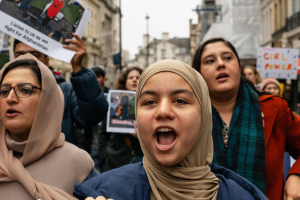
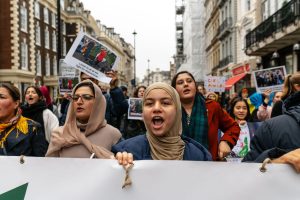
During the forum, our hosts drew our attention to the countries in conflict today where these oppressions are further compounded. I attended a side event on Palestine where we learnt about the intersection between patriarchy and colonial occupation. Palestinian women face strict social norms in their own society and very limited legal protections against violence coupled with sexual violence and degrading treatment by the occupying settlers.
We also heard from Sudanese activists who spoke about the lack of global attention given to the conflict in Sudan and the high rates of rape as a weapon of war. Women have reported contemplating suicide due to the ever-present threat of rape. Womankind partner the Strategic Initiative for the Horn of Africa (SIHA) works directly with Sudanese activists.
Healing and re-grouping
But while these bleak realities painted a grim focus in 2024, we were reminded of healing as a radical personal and collective response to the levels of trauma (direct or vicarious) and burnout being experienced by activists.
With over 3000 feminist activists and groups in attendance from all corners of the globe, there is no such thing as a feminist healing toolkit or blueprint. To further enable activists to explore healing, AWID created an environment of care for everyone attending.
A range of experiential sessions including morning integration to ground bodies and minds and qiqong were offered (a system of coordinated body-posture and movement, breathing, and meditation). Given the size and intensity of the event, AWID also created a low sensory zone offering a calm, noise free environment with soft furniture to relax in. I personally meditated most mornings as caring for ourselves and others is ultimately about honouring our intrinsic value as women, girls and people of other genders which is so often erased by patriarchy.
This space also offered free counselling to anyone who may have been triggered by any of the sessions on offer. We also had a gala dinner in the middle of the forum where you could dance till late; because what is the point of the revolution if you can’t dance?
Conversations also centred on the importance of funding care and healing in philanthropy as a critical part of feminist movement building. I attended an event co-convened by 6 Women’s Funds: the Mongolian Women’s Fund, FRIDA, TEWA , Women’s Fund Fiji and the Doria Feminist Fund. The funds had conducted collective research to strengthen the role that they play in advocating for and resourcing collective care in the feminist movement ecosystem. The collective of feminist funds developed an advocacy strategy as a tool for strengthening collective care systems within women’s funds, defining accountability mechanisms, and highlighting pathways for advocating for increased resources for collective care for grantee partners.
Womankind is a feminist funder in the feminist movement ecosystem and has embedded a focus on care of staff in our strategy and Theory of Change. Over the last 5 years, we have funded initiatives designed by partners on care and healing in their movements like the first ever lesbian feminist forum in Uganda (UGALEF) in 2021 which focused solely on creating a dedicated space for personal and collective care in the LBT movement.
Funding self and collective care within feminist movements is also often a core part of initiatives we fund with our dedicated movement strengthening funding stream.
We have a long way to go to fully ‘walk the talk’ but we continue to find opportunities to improve and our practice in this area, inspired by the those in the global feminist movement who have led the way, many of whom inspired us at the 15th AWID Forum in Bangkok.