Five years on: Afghan women and girls cannot wait another five years
By Womankind Worldwide
Five years ago, Amina* was 11 years old. She had just finished Year 6. Today, she should be just one year away from graduating from secondary school. Instead, she has spent the last five years at home. Now 16, Amina is no longer counting school terms or imagining what might come after graduation, she is watching the choices available to her steadily disappear. The future she imagined is being replaced by isolation, dependency and the growing risk of early marriage.
Across Afghanistan, thousands of girls share her story. Their education has been taken away, their opportunities are shrinking, and their futures are being put on hold not by their own decisions, but by restrictions imposed on them. This is what gender apartheid looks like.
Five years after the Taliban returned to power, Afghan women and girls continue to face some of the most severe and systematic restrictions on women’s rights in the world. A generation of girls have lost years of education. Women have been pushed out of workplaces and public life. Their freedom, choices, and ability to shape their own futures have been progressively restricted through a growing set of decrees and policies.
These are not temporary restrictions or isolated decisions. Together, they represent a deliberate system of exclusion that denies women and girls their rights and opportunities, with consequences felt across Afghan society. A girl kept out of school is not only losing an education; she faces greater risks of poverty, early marriage, and dependency. A woman prevented from working is not only losing an income; her family and community lose her skills, leadership, and contribution.
The international community has repeatedly condemned these restrictions and affirmed its commitment to Afghan women and girls. But five years on, statements of concern have not been enough to change the reality on the ground.
As Afghanistan has moved down the global agenda amid competing crises, shifting political priorities, and pressure on overseas aid, Afghan women and girls have continued to bear the consequences. While governments navigate complex political considerations, an entire generation is losing their education, opportunities, and the ability to shape their own future.
The greatest risk now is not only the loss of rights, but also the normalisation of their loss.
We recognise the complexities of international engagement with Afghanistan. But political realities cannot become the reason to accept the systematic exclusion of half the population. The rights of Afghan women and girls cannot depend on whether Afghanistan remains a priority in global politics.
Five years is long enough
Womankind stands with Afghan girls and women by contributing to the sustained presence of women’s rights organisations in the region through flexible funding. Together, we are working towards a feminist future where Afghan women and girls can participate socially, politically and economically- and not as second class citizens.
Our call to action
The international community must move from statements of concern to sustained and practical action:
- Keep women’s rights central to all engagement with Afghanistan. No discussion about Afghanistan’s present or future should take place without the meaningful participation of Afghan women. Their rights, safety, and freedom must remain a fundamental measure of progress.
- Provide flexible, direct and sustained funding for Afghan women-led organisations. These organisations continue to reach communities, provide essential services, preserve spaces for women’s leadership and create opportunities in one of the most restricted environments in the world. They require long-term support that reflects the risks and realities under which they operate, including the serious risks faced by staff and leaders. International donors must ensure that security concerns do not further restrict women-led organisations’ ability to operate or force them out of the spaces where they are most needed.
- Defend the right of every girl to formal education. Safe learning opportunities, scholarships and alternative education pathways remain essential while schools and universities are closed to girls and women. However, they must never be treated as substitutes for the full and unconditional restoration of girls’ and women’s right to formal education.
- Strengthen accountability. Governments and international institutions must support the documentation of violations, pursue available legal and diplomatic avenues and advance efforts to ensure that gender apartheid is recognised and addressed under international law. The passage of time must not turn systematic discrimination into an accepted reality and political normality.
The United Kingdom has identified Afghanistan as a focus country under its Women, Peace and Security National Action Plan. That commitment must be reflected in measurable action, transparent reporting and sustained investment.
As the UK determines its development priorities and aid allocations, Afghanistan must not become a forgotten crisis. Humanitarian assistance remains critical, but it cannot be the only measure of the UK’s response. It’sWomen, Peace and Security commitments must translate into sustained support for Afghan women-led organisations, protection of education opportunities, accountability for violations and meaningful participation for Afghan women in decisions about their country’s future.
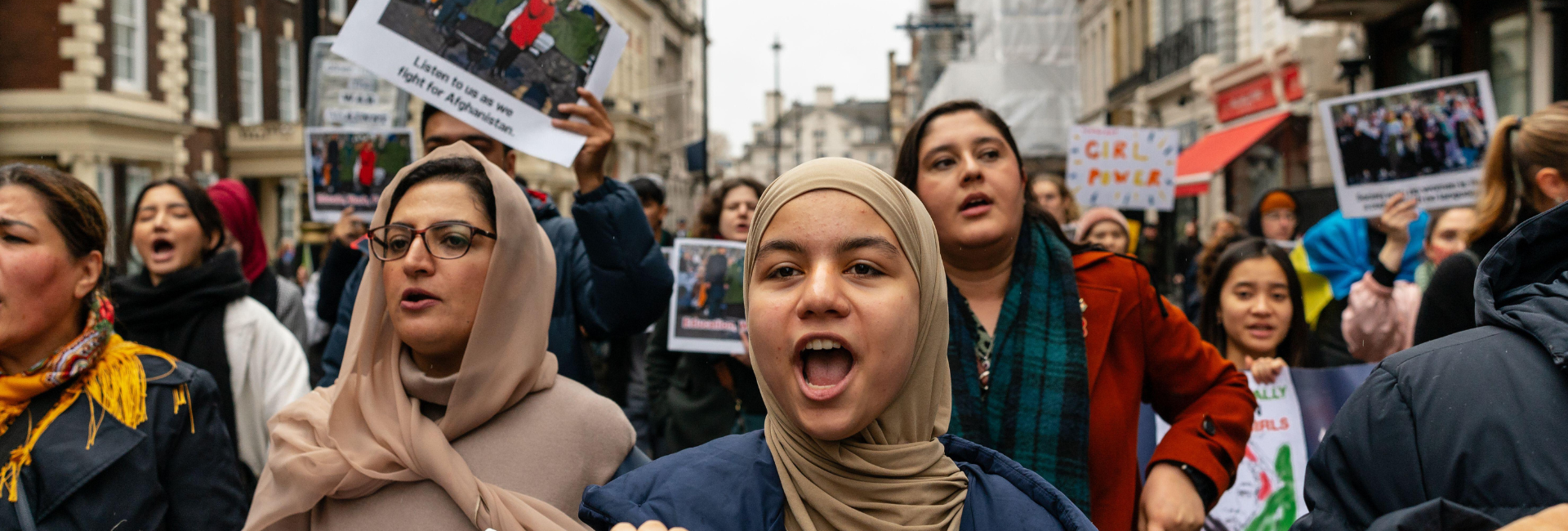
Afghan women are not asking the world to speak for them. They are asking the world to listen to them, stand alongside them and refuse to abandon them.
The next five years must not look like the last five. The choices made now will determine whether another generation of Afghan girls grow up with education, dignity and opportunities or with their future decided for them.
Amina* is a fictionalised character created to represent the experiences of multiple individuals.