Generation Equality: from bold commitments to transformative change
By Hannah Coombes

Last week nearly 50,000 government officials, UN representatives, philanthropists, civil society organisations and feminist and youth activists came together for the Generation Equality Forum in Paris. The event was a momentous culmination of almost two years of discussions on how to mark 25 years of the Beijing Declaration and Platform for Action and crucially how to advance gains made at the historic Beijing Conference on Women in 1995. Against a backdrop of the COVID-19 pandemic worsening inequalities and hitting women – and the most marginalised – hardest, and a rising anti-rights movement and authoritarianisms rolling back progress on women’s rights, the conversation was needed more than ever.
The energy around the Forum was inspiring and the commitments were bold: $40 billion of investment was pledged alongside strong policy and programme promises. For Phumzile Mlambo-Ngucka, Executive Director of UN Women, “the Generation Equality Forum marks a positive, historic shift in power and perspective. Together we have mobilised across different sectors of society, from south to north, to become a formidable force, ready to open a new chapter in gender equality”. But we’ve heard much of this before. How do we ensure these historic and bold promises result in tangible and transformative change for all women and girls in every corner of the world?
-
1. Meaningful, intersectional engagement of feminist movements in decision-making
Women’s rights organisations and feminist movements are on the frontlines, paving the way to gender equality and women’s rights. They know the issues that affect women and girls and are best placed to determine women’s rights needs and find the solutions that work for them. Any decisions made without them aren’t truly made for them. This was emphasised by activist and founder of youth collective Tremendas Julieta Martínez as she spoke alongside Hilary Clinton at the opening ceremony:
“We can’t just invite girls for the picture of just for inspirations speeches. We need to be part of the conversation.”
Indeed the most rallying cries throughout the forum were those made by feminist activists and UN Women recognised the commitment, passion and advocacy of civil society and youth activists. Undoubtedly the process benefited from commendable efforts to take an intergenerational approach, however the voices of the most marginalised were still excluded. Sex workers, trans and intersex people were underrepresented in the official programme, silencing the voices and experiences of their communities. Further, issues with accessibility, such as a lack of sign language interpretation or closed captions and an inaccessible registration process, excluded women with disabilities. While a hybrid event was necessary at this time, unequal access to technology across the world hinders true participation, with activists from the Global South most likely being left out of the conversations. Transformative change for all will not come without accessible and inclusive feminist spaces.
-
2. Direct, flexible funding to feminist movements in the Global South
Insufficient and unequal distribution of resources has been a key hurdle in implementing the Beijing Platform for Action, so the $40 billion committed by governments, UN agencies and philanthropists is an important step in realising real change. But we know that currently less than 1% of development aid and foundation grants reaches women’s rights organisations directly. The figure is even more woeful for organisations in the Global South and those working with marginalised communities such as LGBTQI+ and Indigenous people. Faith Lumonya of Akina Mama wa Afrika explained at our parallel event on ‘Resourcing women’s movements for a just and inclusive future’:
“Feminists don’t get the resources they need due to competition with institutions, the private sector and large international NGOs, government bodies disbanding like the loss of the UK Department for International Development, complicated applications and extensive reporting requirements.”
It remains unclear how much of the money committed will go towards women’s rights organisations but funding commitments must be as bold as the visions of feminist movements. At our event, Manisha Shrestha of Womankind partner Loom Nepal emphasised the need to shake up how funding works: “We need to rethink donor accountability, moving away from compliance and towards trust”. This is why we launched Her Voice Fund, an initiative to provide flexible funding to women’s rights organisations and activists in the Global South to resource advocacy work that will have the greatest impact for women they work with. The increased flexibility and minimal reporting requirements of the fund means that women’s rights organisations will have more time and resources to use their expertise to do what they do best – challenging systems of oppression and advancing women’s rights. We compel those distributing funds to ensure it reaches diverse feminist movements on the frontlines and the application and reporting requirements attached to that funding is appropriate for organisations often already overstretched. For years feminist organisations have been calling for core, long-term and flexible funding to enable them carry out sustainable and impactful work. This call can finally be answered if this money is provided as unrestricted funding.
-
3. Political will to turn commitments into action and accountability
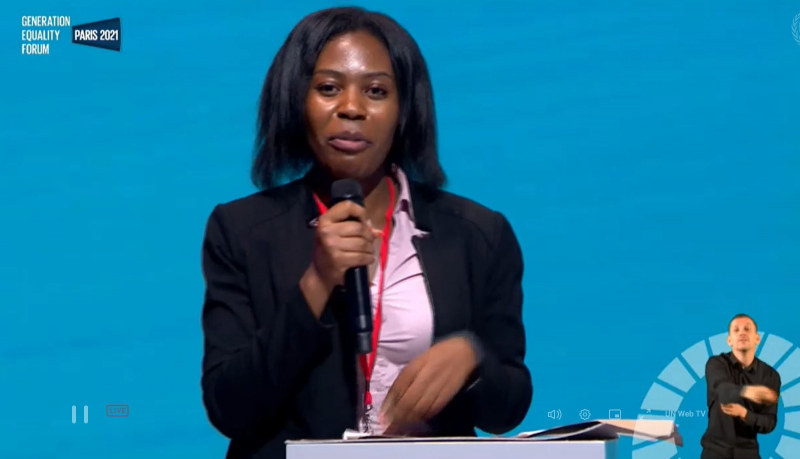
Throughout the forum, feminists underscored the importance of translating words in action. At the opening ceremony youth activist Shantel Marekera reminded us “being in this room is a privilege, watching online is a privilege, knowing about Generation Equality is a privilege. With privileged comes responsibility. We need change that is visible to all, not just those in the room!” Alongside the financial commitments made, shared action and mutual accountability is essential.
“It’s time to bridge the gap between what we say and what we do” concluded Twasiima Bigirma, Womankind Trustee, at our event launching Her Voice Fund.
We must now focus on the journey ahead. In mobilising girls and young women, Generation Equality signals the birth of a new generation and new leadership of women and girls to carry the torch forward. In a world of ever-increasing polarisation, the new generation of young feminists are encouraging radical and bold transformations: “the patriarchal, colonial, racist system does not work for us. We do not want to build back better, we want to build forward and different” said activist Aya Chebbi at the opening ceremony.