Resourcing for resilience: why flexible funding is key to the longevity of women’s rights organisations
By Dinah Musindarwezo, Director of Policy & Communications and Sarah Masters, Director of Programmes & Learning

COVID-19 has exposed existing inequalities and revealed the extent to which current global systems do not work, particularly for the most marginalised. Traditional development funding models are not exempt from this scrutiny. For years, we have stood alongside feminist organisations advocating for flexible funding, and in 2020 the pandemic made clear why traditional modes of funding must give way to long-term, core and flexible funding models.
Flexible funding: making women’s rights a reality
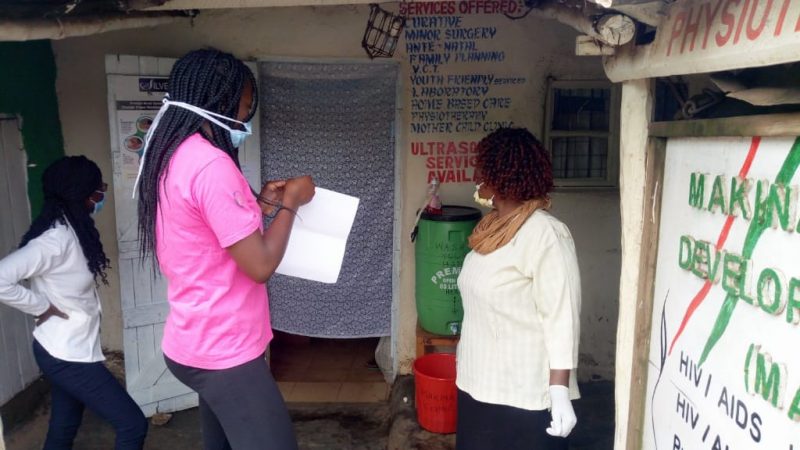
At the onset of COVID-19 came fear and uncertainty. But what soon became clear was the gendered impact of the pandemic, women and girls are bearing the brunt of the fallout. With the impacts of COVID-19 on women often overlooked by decision makers, women’s rights organisations (WROs) needed to play a key role to minimise the effects of the pandemic on women, girls and gender non-confirming people. WROs had to work quickly to adapt to new and increasing demands including providing personal protective equipment (PPE), food supplies and providing essential services such as specialised services for women and girls experiencing violence. Yet WROs operate on shoestring budgets with little or no flexible funding to facilitate them to adopt quickly to changing demands.
Through listening to our partners and hearing of the added pressure they were facing, one thing became clear – the need for flexible funding was vital. We moved quickly to set up the Womankind COVID-19 Resilience Fund to offer immediate small-scale flexible funding to 42 partners in our focus countries.
Shifting power
For true transformational change to occur, we need to disrupt existing structures and redress the balance. For decades resources for development have flowed from the Global North to the Global South with stringent conditions dictating how and when each penny should be spent. The notion that organisations based thousands of miles away from the frontlines know the issues and solutions better than women’s rights organisation operating in their own communities only perpetuates neo-colonial ideas of Global North supremacy and does little to tackle issues women and girls face.
At Womankind we’ve strived to do things differently for over 30 years. We know that our partners are best positioned to set their own priorities. They have the knowledge to provide solutions to the challenges women face in their communities and the expertise to decide how resources are used. With flexible, unrestricted funding, they can self-determine their agendas, respond to changes, seize opportunities, and cover their operating costs. The Womankind COVID-19 Resilience Fund provides our partners with the funds to carry out activities without the constraints of laborious and time-consuming reports, or being confined to rigid, immovable plans that no longer fit the needs of the community and the organisations that operate there.
The importance of self-determining your activities and remaining agile to change has become apparent during COVID-19. But the need for this goes beyond the pandemic. For WROs to be as effective as they can be, they need funding which allows them to set their own agenda based on the needs of their community.
Flexible funding challenges the status quo and shifts power to the WROs on the frontlines.
Under-resourced and under threat
As authoritarianisms seeking to curb women’s rights rise sharply, the need for women’s rights organisations has never been more urgent. Yet, in the face of rising demand for their services WROs are struggling to receive financial support. Despite increased funding commitments for gender equality in recent years, funding for WROs has decreased with only 1% of gender equality funds reaching WROs based in the Global South.
This practice continues during the pandemic as governments pledge millions of pounds for response and recovery, yet WROs at the forefront of the response are not engaged or consulted meaningfully in solutions or supported with resources. For WROs to be able to operate to the best of their ability they need access to long-term, core and flexible funding that ensures their sustainability beyond the pandemic.
Beyond words: solidarity as action
We hear a lot from governments and others about ‘building back better’ after the pandemic, but without resourcing for a feminist response we cannot effect the change that is needed. For years we have witnessed the successes of WROs and the movements they are part of when they can self-determine their agendas, respond quickly to emerging challenges and opportunities, and make change happen.
At Womankind, we remain committed to our partnerships with WROs and movements and to finding ways to secure more flexible funding. We continue to find practical ways to shift power to the Global South and challenge the narrative that our partners are passive recipients of development. Through flexible funding we actively acknowledge and support their role at the very centre of any possible solutions. In addition to funding flexibly and long term, we call on funders to encourage, support and contribute to WROs’ reserve and endowment funds to increase their financial security.
We face a critical point in the pursuit for women’s rights: we either break away from traditional funding models and see the expertise of women’s rights organisations in the Global South flourish, or we continue with the status quo and risk the collapse of vital WROs and the innovative solutions for change they bring.