The right to be difficult: Why feminists should lead
By Wanjiru Linda Kroeger

Each time a woman stands up for herself, without knowing it, without claiming it, she stands up for all women (Maya Angelou). This quote epitomizes the core of the feminist movement and every feminist at the frontline. We have seen it since time immemorial. Feminist leadership is crucial for achieving genuine and lasting gender equality.
Wangari Maathai alongside mothers of political prisoners camped in the Uhuru (Freedom) Park demanding and petitioning the release of their sons by the then authoritarian Moi Regime (Mothers Hunger Strike 1992, Kenya). When police attempted to disperse and beat them for exercising their right to protest and ask for the release of their children, they stripped naked and asked what kind of government beats women and more so their mothers. The officers, shamed and uncomfortable, left and the mother’s cause garnered much wider and nationwide support.
This example by the Late Maathai and other legendary feminists, whether they refer to themselves as such – epitomizes what feminist leadership looks like and what it can achieve, actual social and political change. Wangari went on to win a Nobel peace prize and through her activism added onto the blueprint on why feminists should lead in all spheres of life – public and private.
The case for advancing feminist leadership
From the local to the global level, women’s leadership and political participation remains restrictive and gains made are persistently under threat of regression with the growing anti-gender rhetoric amongst other systemic barriers rooted in patriarchy. This is why we must make the case for feminist leadership as key towards advancing leadership and participation by women and girls in all their diversity.
Women and gender diverse persons often face compounded biases in decision making spaces. Theyare frequently excluded from participating in decision making and consultation processes due to systemic perceptions that marginalize them. This is because of their gender, economic class, education, employment status, sexual orientation and as such enhance their vulnerability to harm, violence, harassment and abuse.
Even with key policy and legal frameworks such as affirmative action that create space for women to occupy decision making seats in government, deep seated patriarchal norms and practices still create a hostile environment for women political leaders to thrive and drive change here.
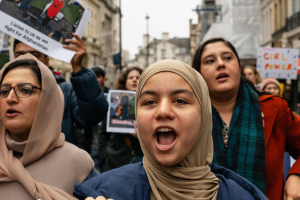
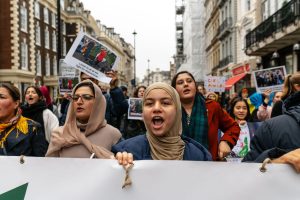
In Afghanistan, with the Taliban coming back into power, any form of participation of women let alone leadership in government, business, institutions and even the home is now surely non-existent. Anchored on harmful anti-gender and extremist religious ideology, women and girls in Afghanistan are being erased from private and public life as we know it. However, in the feminist spirit of revolt women and girls are still organising and adapting mechanisms to secure their lives and livelihoods, and we must all stand in solidarity to ensure we hold our ground, promote and protect the human rights of all.
A key approach is to lead from the margins. In the Ethiopian context Womankind partners Ethiopian Women with Disability National Association (EWDNA) and Ssiqqee Women’s Development Association (SWDA) have consistently led work advocating for and supporting the participation of women including women living with disability, in the labour force and at workplace. Under the AWESOME programme they have worked with women in factories providing feminist mentorship, facilitating skills development in personal development, economic and financial literacy. This work has resulted in women leading unions and participating in bargaining for better workplace conditions and even enumeration.
Collective power in solidarity
Another is feminist solidarity by coming together and through collective power agitating for expediency in advancing women’s leadership and participation. Additionally, we must leverage collective power to support the women and feminists already in positions of leadership and advancing the feminist agenda for all women and girls in all their diversity. Our collective strategy must straddle the spectrum of dialogue and dissent as needed.
A few months ago, in a country now blatantly influencing nationally and globally under a clear anti-gender and anti-rights agenda – Texas House Representative Nicole Collier spent two nights on the Texas House Floor, quite literally. Even in her elective leadership she found the space to protest when procedure and policy failed. Nicole, a democrat, refused to sign a ‘permission slip’ that essentially forced her to attend a session engineered to amend geographical boundaries.
The Redistricting Law will add more house seats to a predominantly Republican favoured area. Her protest encouraged other female legislators to retract and tear their signed permission slips and join her in the protest. Though it passed, the galvanising of support that resulted was impactful both in the state and in the USA. Very soon after this redistricting law passed. The state of California and the majority democrat led House of Representatives passed a similar law aimed at countering the unfair redistribution by republicans in Texas. ‘Aura for aura’ as Kenyan Gen Z revolutionaries would say, and a perfect example of protest, collective solidarity and allyship.
Women belong in all places where decisions are being made. It should not be that women are the exception (Ruth Bader Ginsburg). The world is changing across all spheres, and we seem to be in the eye of the hurricane with no room for reprieve. As such, in the feminist spirit we must stand ground with gains we have made and advance expediently to claim and reclaim our rights. Occupying and leveraging on feminist leadership and participation in public and private life is a befitting and integral response to the regression being envisaged all over the globe.
Wanjiru Linda Kroeger is a human rights lawyer and pan-African feminist passionate about women’s rights and gender equality. She’s the Policy and Advocacy Manager, Women’s Participation in Leadership at Womankind Worldwide