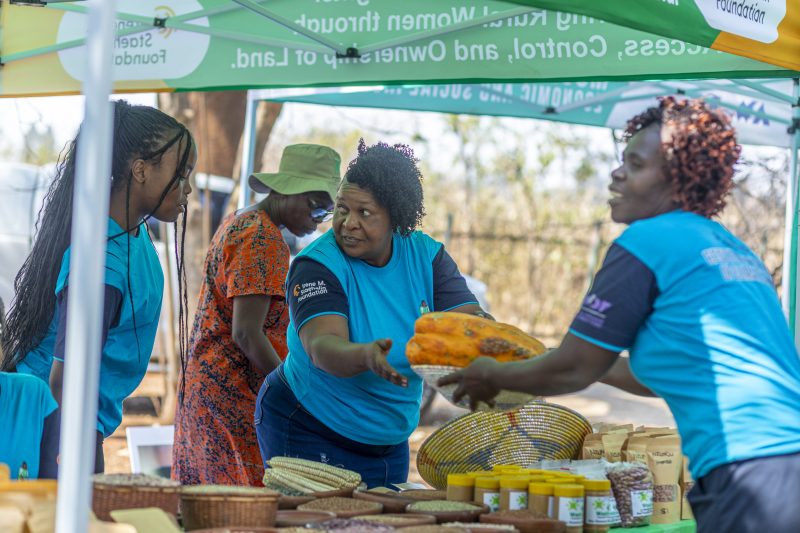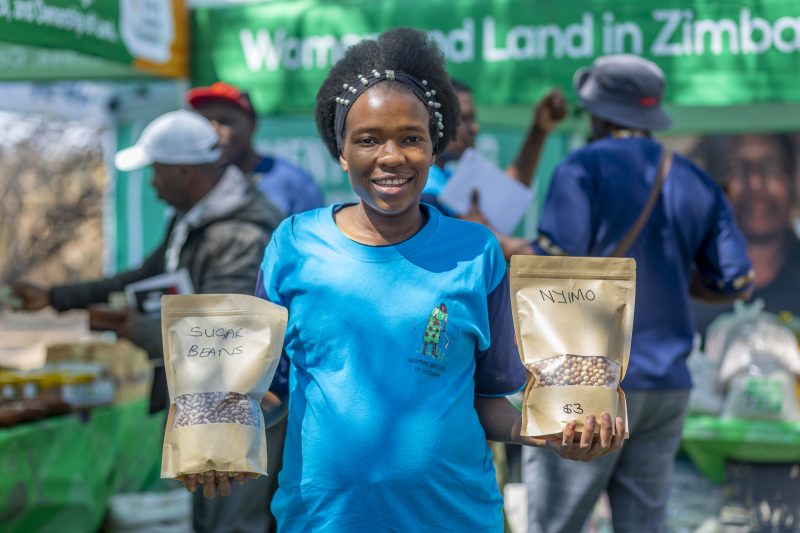
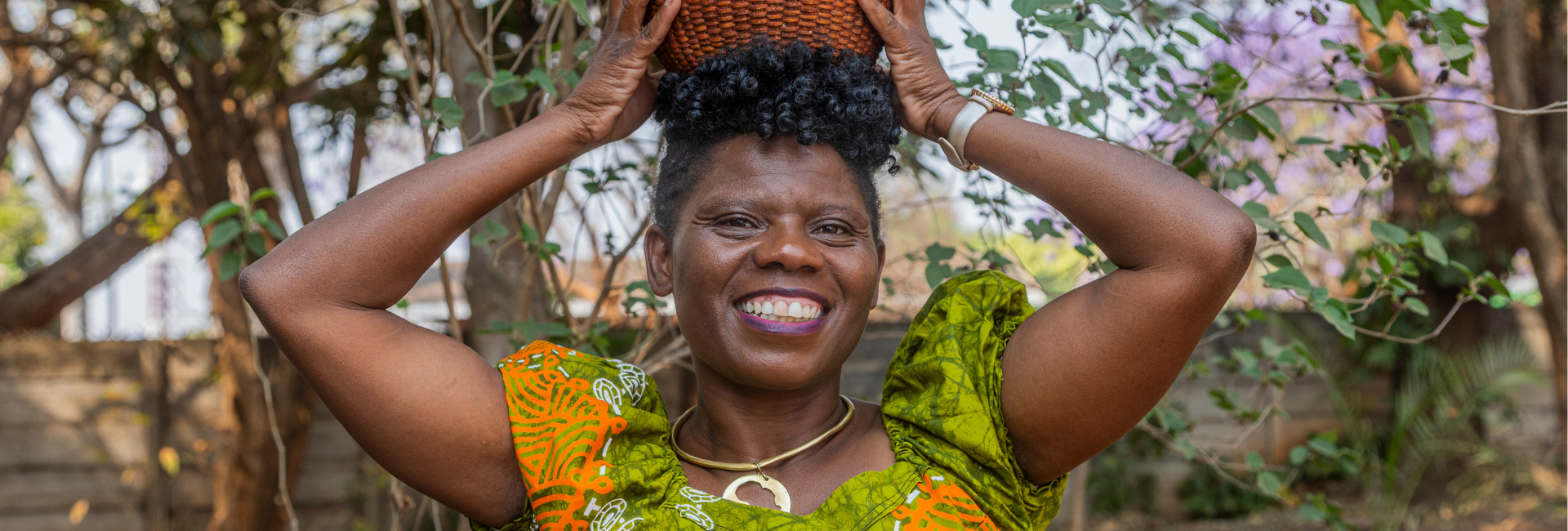
Gloria is part of the Women and Land in Zimbabwe team. She wears a green and orange patterned dress. She is holding a basket on her head and smiling.

Rural Women Rising in Zimbabwe

12 January 2026
By Hannah Coombes

In the lead up to 1998, there were 14 women in Zimbabwe who died by suicide. Leading up to their deaths, they were all facing the same situation: their husbands had taken the cotton produce that they worked hard to cultivate and the income generated from it too. The income from this cotton, was for the women to keep and it would have given them economic independence. When taking the money, the husbands claimed that they were the rightful owners of the produce because they are the owners of the land.  The women felt that they had lost their freedom and their independence. 

After witnessing the tragedy of these women’s deaths, a group of activists working on land rights joined together, in collective rage and resistance. Here, Women and Land in Zimbabwe (WLZ) was born. They began lobbying and campaigning for change and justice. 

Since then, WLZ has become the trusted voice on rural women’s rights and land rights in Zimbabwe. Across their decades of work, WLZ have seen many milestones. But one that has grown particularly strong roots, began in 2009 – the establishment of the Rural Women’s Assembly, also known as RWA. RWA began as a small movement of women, working together for the rights of rural women and their communities. Fast forward to today, and RWA is established in 28 of the 63 districts of Zimbabwe, has 43,728 members and has groups beyond Zimbabwe in Tanzania, Malawi, Zambia, Namibia, South Africa, Lesotho, Swaziland, Angola, Mozambique, Madagascar, Mauritius too.  

For the Women and Land in Zimbabwe team, the work is personal.

“Ever since I was a child, I had a vision of changing, of seeing an impact in communities, especially for the lives of women and girls. I have a background from a rural community, and I am a child of a single mother. When my mother was divorced, she went back to a rural home, but she was not given land. Because in our patriarchal society, when you are single, when you are divorced, when you are widowed, when you go back to your home, you are not regarded as a person, especially if you are a woman. Priority is given to the boy child. These are some of the injustices, the inequalities that exist within our societies that had always challenged me, and I thought that one day if I had an opportunity, I should also change these systems because they always undermine women. Being part of Women and Land in Zimbabwe is a safe place for me because we are pushing to fight injustice and inequalities. I’m glad that we are witnessing changes and witnessing impact. We are seeing women participating in spaces they used not participate in before. We are seeing women owning land, which was not something that would happen in the past. 

“The work that WLZ do, their vision to ensure that women have access and control over land really resonates with me having grown up in the rural areas and having seen the inequality that existed between my grandparents. That my grandfather owned literally everything, and he made decisions upon everything. And my grandmother was just working on the land without having a voice. So, when I came across an organisation talking about women in land, I researched them and I realised maybe I’ll be very useful in that space. My journey being part of Women and Land has fulfilled some of my personal goals in terms of impacting the lives of people living in rural areas. I’ve really made friends with some of the elderly women. I’ve tapped into the knowledge that they have and I’ve gained a lot of wisdom on how to relate to to people. With it being part of a very big movement, which is the Rural Women’s Assembly Movement in Southern Africa, I have not only forged connections with the team members, but I have also forged connections with the rural women in Zambia and Mozambique. And the knowledge that comes with that interaction, the networking, it really enriches you as an individual, and you get to learn more than what you had anticipated when you start work. 

“I also grew up in rural areas. My father worked for the city of Harare, and my mother used to stay with us in the rural areas. And then the father would be coming. Sometimes he would come every month, sometimes after two months. But it was my mother who was looking after the family and the fields. But when it comes to decision making in terms of what to grow, it was my father. My mother would wait for him to come and tell her what to do. And whenever the produce is produced, after harvesting, it was my father who would then determine what to do with it. Sometimes he would then command my mother to give your mother, my father’s mother or family, some of the produce. When we were now grown up, we would see that mother was not very happy with that. But because she wasn’t the owner of the land, she would then agree. So this coming to Women and Land, when I came here, I felt that I felt a sense of satisfaction because I grew up wanting to correct things. This was not correct. That what was happening at that time was not correct. So coming here is on my way of self-actualization, satisfaction. Yeah. I really enjoyed my being here. And most of my friends are the members of the room, as I said, that we work with. When you see us together with them, we will be talking, laughing, and sharing.”

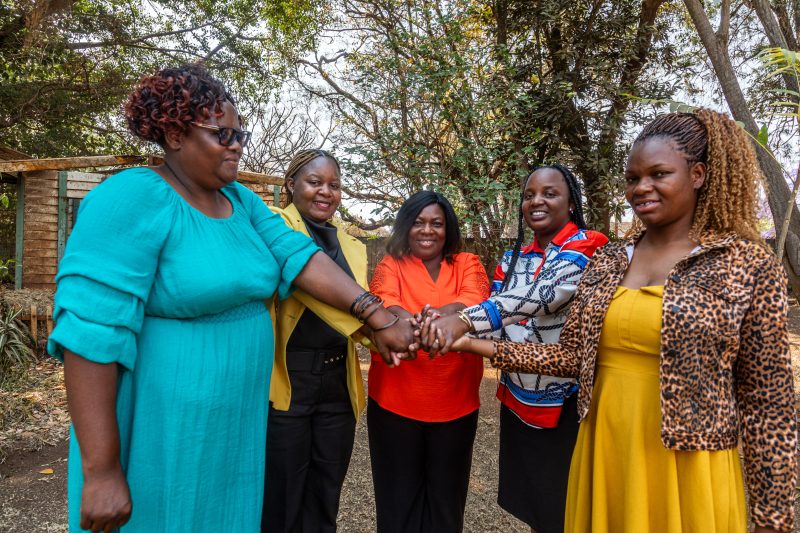
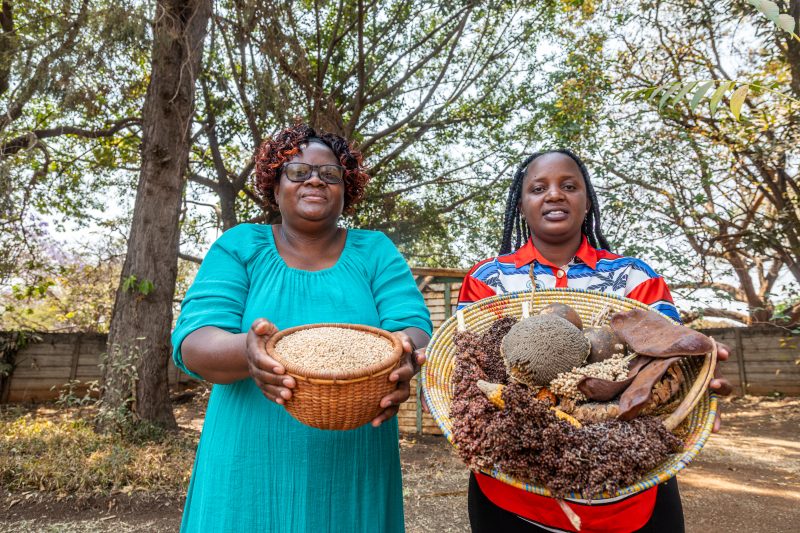
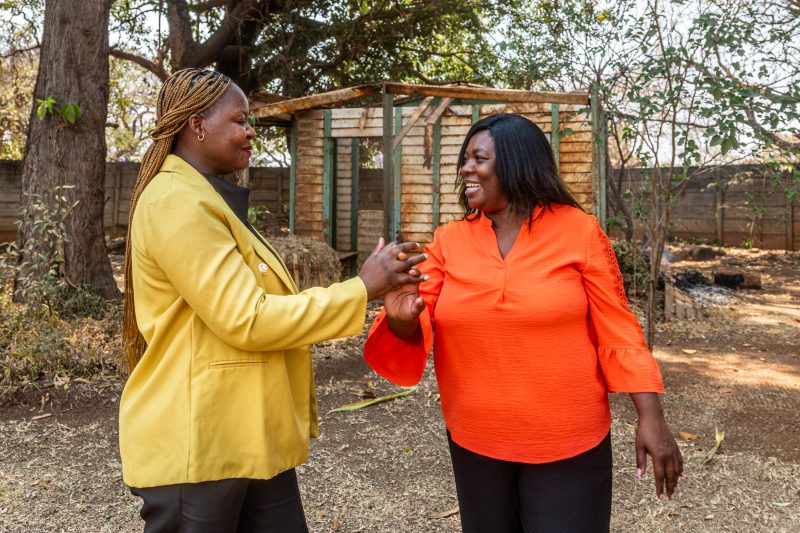
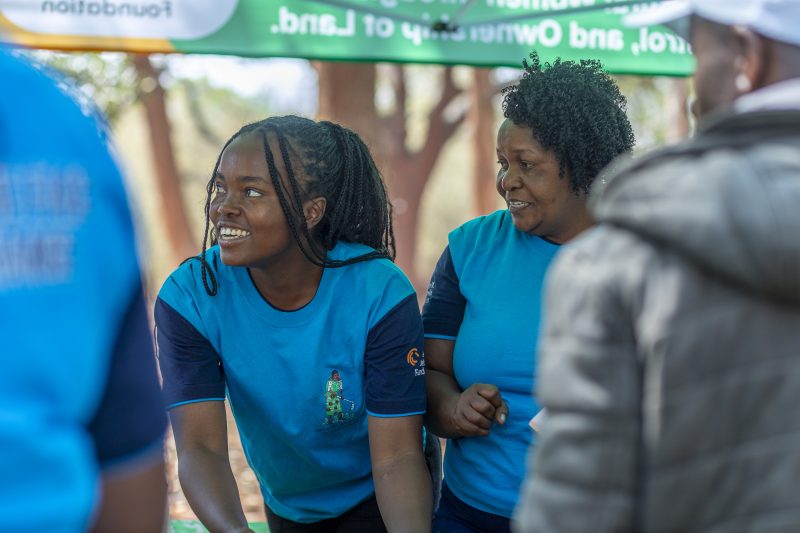
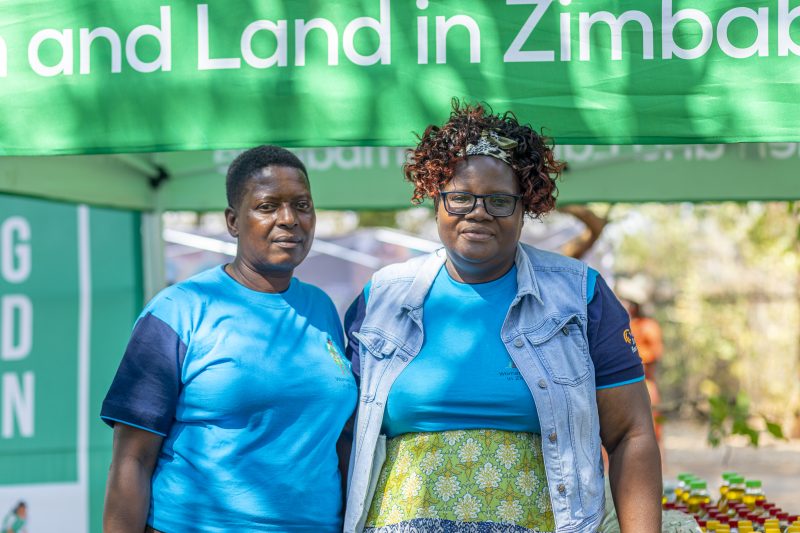
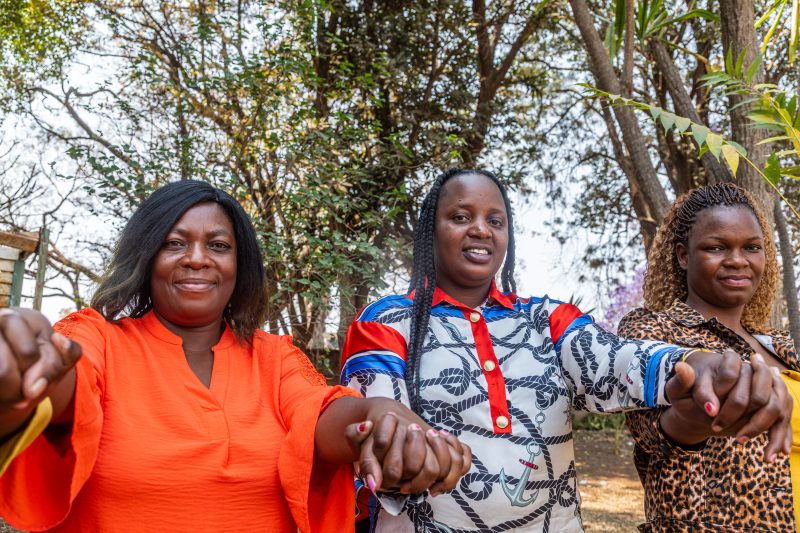
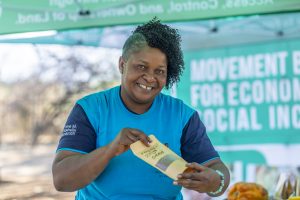
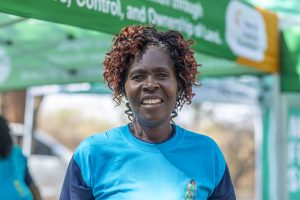
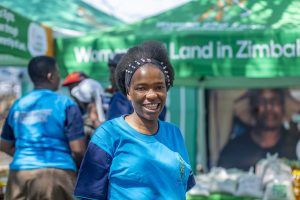
Photos by Charmaine Chitate for Womankind Worldwide From left to right: Tsitsi Ndwana, Gloria Makahul, Thandiwe Chidavarume.

The significance of the Rural Women’s Assembly

RWA is an example of a movement that has through sustained growth, become a recognised pillar within women’s rights and land justice spaces. RWA maintains organic structures at the grassroots level which means that the movement continues even when funding ebbs and flows. Central to RWA’s sustainable movement is feminist leadership, intergenerational dialogue and mentoring, and expansion of the movement to new members across the country. 

Thandiwe shared a key highlight of WLZ’s work, “we are influencing policies. When the country was reviewing the constitution in 2013, we influenced Chapter 16 of the Constitution of Zimbabwe to say that whenever land is being allocated, it has to be allocated equally between men and women. We also influenced statutory instrument 153 in 2014 in which we said land under settlement should be registered in both names, the names of the woman and the husband. And then we also went further to say after divorce, each partner should have an equal and undivided share. That is, the land should be divided equally between the husband and wife at divorce. And when one of the spouses dies, then the surviving spouse should be the rightful owner of that piece of land. This was a key piece of work around women’s land rights. “ 

Another key highlight for WLZ, is changing the mindset of the traditional leaders, particularly the villages and the chiefs.  

“Our movement is continuing to grow and continuing to be very powerful. We have seen a lot of women’s voices coming to the fore. Women demanding answers from the traditional leaders, traditional leaders taking up women’s cases in their courts, participating, and also women being able to defend other women. Or to support women to get fair judgment in the traditional leaders court.” – WLZ 

In September 2025, WLZ held RWA’s annual national meeting. 

“We had six chiefs from different districts. Having interacted with our national meeting, it was a platform where we brought together over 2,000 women from all the districts that we are operating in. All the chiefs who were present, voted to give women more land. And for us, it’s a milestone, because they now understand the importance of giving land access to women, of giving space for women’s voices when they want and wherever they are in any decision-making platforms. Although we still have some who are yet to understand where we are coming from, but so far we are happy with the progress that we have made so far through the movement.” – WLZ 

This meeting was supported by Womankind’s Movement Strengthening Fund (MSF). 

How the Movement Strengthening Fund has plugged into RWA

MSF is a flexible fund that supports not just what feminist movements do, but how they do it. 

Since 2021, MSF has supported WLZ at multiple moments and has plugged into WLZ’s movement by funding intergenerational leadership and mentoring development, increasing feminist political awareness through feminist schools and bootcamps, and annual meetings. All of this serves to make the work of the RWA movement and WLZ sustainable.  

“In Cycle 1 (2021) we requested funding to expand the leadership base where we wanted to have the older women allowing the younger women to take lead in the movement. We noted that it’s a long process. It’s not an easy process. It takes time.” – WLZ 

“In Cycle 4 (2024) we held the National Learning Bootcamp with the aim of learning and sharing experiences, exchanging ideas. In the group of the leaders we had the the older leaders, who are mostly the founders and the young women. We took that opportunity for them to meet, with the older women sharing their journey, their experiences in as far as the movement is concerned. The younger women, the younger leaders who are the mentees coming in with their technological skills and exposure. There is cross-pollination of ideas from the younger generation between the older generation.”  

Additionally, in the Feminist School (supported in Cycle 1 and 4), WLZ started to talk aboutwhat is feminism, who is a feminist, and what are the issues that we need to look at as we are feminist leaders. Together participants, explored how they can be feminist leaders as Members of Parliament, in churches, as counsellors and in other professions traditionally considered to be for men.  

“We also focused on the feminist principles of collective power. Because collective power is the one that can drive the movement. We looked at inclusivity and diversity of women in their expansive categories. Whether they are single, widowed, divorced, queer – feminist leaders are inclusive leaders. We also emphasised the issue of equity and justice, that in feminism, we are fighting for equity and justice. Overall, how can we utilise feminist leadership skills to keep and to grow and stand in the movement?” 

The future for RWA

As WLZ’s movement continues, MSF continues to be part of its journey. In Cycle 5 which is starting at the moment, WLZ will use their grant to continue strengthening RWA. They hope to make the RWA more intergenerational and inclusive by building on the peer mentorship program between older and younger members as well as monitoring, gathering and sharing data, hosting regional leadership seminars, and a national feminist convening. Their aim is to enhance feminist leadership capacity, foster intergenerational collaboration and embed inclusive feminist principles while strengthening the movement in Zimbabwe. 

“We want to continue to get into all these districts so that each and every rural woman in Zimbabwe is a member of the Rural Women’s Assembly. We will change the narrative of Zimbabwe.” – Thandiwe Chidavarume

If you feel passionately about investing in stronger feminist movements, please get in contact with us at the following address wmsf@womankind.org.uk.

Photos by Charmaine Chitate for Womankind Worldwide

Join the movement

Receive all the latest news from Womankind Worldwide and our partners straight to your mailbox.